

























Gold Price Today: Gold and Silver Sink on a Stronger Dollar and Rate Jitters After a Record Run

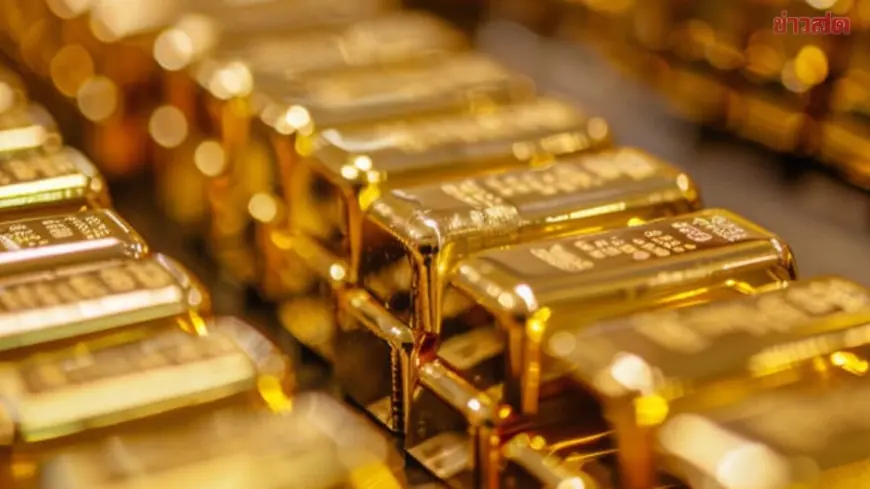
Gold price today is sharply lower in U.S. trading on Friday, January 30, 2026 ET, with silver falling even harder after both metals surged to fresh highs this week. The move is less about one single headline and more about a familiar combination: a stronger U.S. dollar, fast profit-taking after a vertical rally, and a sudden shift in how traders think interest rates might evolve.
Gold Prices Today and the Key Levels on the Gold Price Chart
Spot gold is trading in the upper $4,900s per ounce during the U.S. morning and midday session, down roughly 7% to 9% on the day after setting a record high near $5,595 on Thursday.
If you are reading the gold price chart for today, three zones matter most:
-
Support zone: roughly $4,950 to $5,000, where buyers tend to appear around a major round number
-
Intraday breakdown area: the stretch where gold sliced below $5,100 quickly, signaling forced selling and stop-loss activity
-
Resistance zone: the lower $5,300s to mid $5,400s, where rebounds can stall if traders keep selling rallies
Even with today’s drop, gold is still on track for a very strong January, which helps explain why the selling is so intense: when a market is crowded on one side, reversals can be violent.
Gold Futures: What the Front Month Is Signaling
Front-month U.S. gold futures have been trading around the low $5,000s, with a wide intraday range that has included roughly $4,950 on the low end and the mid $5,400s on the high end earlier in the session. That kind of range is a tell.
It usually means some mix of:
-
Leverage getting reduced quickly
-
Margin pressure forcing liquidations
-
Traders locking in gains after a multi-week surge
-
Thinner liquidity magnifying each push lower
Futures market activity has also shown signs of cooling versus the prior day, consistent with risk being taken down rather than added.
Silver Price Today: Bigger Percentage Drops, Bigger Drama
Silver price today is experiencing an outsized selloff, trading roughly in the low to mid $90s per ounce during the U.S. morning and midday session, down about 18% to 22% on the day. That follows a recent peak around $122, which highlights silver’s tendency to overshoot in both directions.
Silver often behaves like a high-beta version of gold. When risk appetite flips, silver can fall faster because it is more sensitive to leverage, liquidity, and the industrial-demand narrative that rides along with it.
What’s Driving the Move
Three forces are colliding:
Dollar strength
When the dollar rises, dollar-priced commodities can face mechanical pressure because they become more expensive for non-dollar buyers.
Rates and central bank expectations
Traders are rethinking the path of future interest rates after President Donald Trump said he plans to nominate Kevin Warsh to succeed Jerome Powell as chair of the Federal Reserve when Powell’s term ends. Markets interpreted the change as potentially less supportive for easy money over time, which can lift real yields and weigh on non-yielding assets like gold.
Positioning and profit-taking
The simplest explanation can also be the most powerful: gold and silver ran hard, hit fresh records, and invited late momentum buyers. A sharp reversal then turns into a cascade as stops trigger and winners take profits.
Behind the Headline: What This Is Really About
Context
Gold and silver have acted as the market’s pressure valve for inflation anxiety, geopolitical risk, and distrust in paper assets. The rally has also been fueled by large-scale, long-horizon buying that tends to care more about years than days.
Incentives
Short-term traders are incentivized to protect gains when volatility spikes. Longer-term buyers are incentivized to wait for stabilization so they can add without catching a falling knife. That mismatch creates air pockets: fewer bids precisely when sell orders accelerate.
Stakeholders
Retail holders care about whether this is a “dip to buy” or the start of a deeper reset. Futures traders care about margin and liquidity. Industrial silver users care about procurement timing. Producers and refiners care about hedging opportunities. Policymakers care because a disorderly metals move can be a symptom of broader stress in rates and currencies.
Second-order effects
If the selloff persists, it can tighten financial conditions for commodity-focused strategies, increase cross-asset volatility, and change the narrative from momentum to range trading. If it stabilizes quickly, it can reinforce the idea that dips are being bought aggressively in this cycle.
What We Still Don’t Know
-
How quickly nomination politics turn into a clear policy signal for rates
-
Whether the selloff is mostly leveraged futures liquidation or broader liquidation across physical and ETFs
-
How much physical demand shows up as prices fall, especially outside the U.S.
-
Whether silver’s drop feeds into industrial hedging flows that amplify volatility
What Happens Next: 5 Realistic Scenarios to Watch
-
Stabilization near $5,000 in gold
Trigger: multiple hours holding above the level with shrinking intraday ranges. -
A deeper flush lower
Trigger: the dollar keeps strengthening and rates expectations keep shifting higher, sustaining pressure on non-yielding assets. -
Fast rebound and short-covering
Trigger: selling exhausts itself and futures positioning flips, forcing shorts to buy back quickly. -
Silver continues to overreact
Trigger: liquidity remains thin and intraday stops keep cascading, even if gold steadies. -
A transition into choppy range trading
Trigger: the market decides the big January move is “done for now,” and price discovery shifts to a wide, noisy band rather than a trend.
Gold price today is a reminder that record highs can bring their own risks: when positioning gets crowded, the exit can be narrow. The next session or two matters most for whether this turns into a clean reset with strong dip-buying, or a broader de-risking that takes longer to heal.