
























Bruce Springsteen’s New Song “Streets of Minneapolis” Drops in 72-Hour Sprint, Fueling a National Clash Over Immigration Enforcement

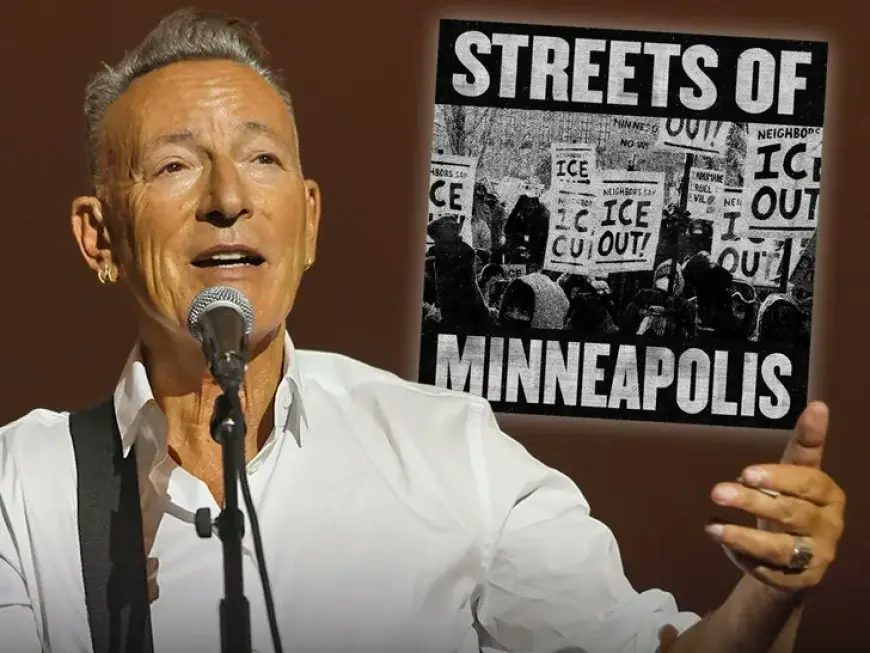
Bruce Springsteen released a new song, “Streets of Minneapolis,” on January 28, 2026 ET, unveiling it as a rapid-response protest track written, recorded, and published within days. The song is dedicated to Minneapolis, to immigrant communities, and to Alex Pretti and Renée Good, two people whose deaths this month have become flashpoints in a widening dispute over federal immigration enforcement tactics and the state’s escalating street protests.
The release matters because it breaks from the usual Springsteen playbook of album-era rollouts and long-form storytelling. This is a quick-turn intervention aimed at shaping the public mood while events are still raw—and it has already turned into a broader political confrontation, not just a music story.
What Happened: A Fast-Tracked Protest Release With Names, Place, and Time
Springsteen framed “Streets of Minneapolis” as a direct response to what he described as escalating fear and violence tied to federal enforcement activity in the city. By his account, the track was written on January 24, recorded on January 27, and released on January 28, 2026 ET—a compressed timeline that signals urgency over polish.
The song’s narrative centers Minneapolis in winter and places the listener amid protests, law enforcement presence, and grief. It also names Pretti and Good, cementing the song’s function as both memorial and accusation. The circumstances of the deaths remain disputed publicly, with competing claims circulating and investigations still developing, which is part of why the song is drawing intense reaction beyond fan circles.
Why “Streets of Minneapolis” Is Exploding: It’s Built for the Current Attention Economy
A topical song used to travel slowly—radio rotation, concert performances, critics’ reviews, then word of mouth. In 2026, the pathway is reversed: instant release, instant debate, instant search behavior.
That explains the surge in queries for “Bruce Springsteen new song” and for the song title itself. People aren’t only looking for how it sounds; they’re looking for what it alleges, what it implies, and how it positions blame. When a song is anchored to specific names and a specific city, it becomes a shortcut for a complicated, emotionally charged news cycle.
Behind the Headline: Incentives and Stakeholders in a Culture-Politics Collision
Springsteen’s incentive is clarity and moral positioning. He has spent decades using songs to argue over what America is and who it protects. But “Streets of Minneapolis” goes further in immediacy: he is trying to define the moment before official narratives harden and before attention moves on.
Other stakeholders have their own reasons to push back or amplify:
-
Federal agencies and political leadership have an incentive to defend operational legitimacy, especially if enforcement tactics are being questioned in courts and by local officials.
-
Minneapolis residents and protest organizers gain a cultural amplifier—something that can rally supporters and keep national attention fixed on local events.
-
Immigrant communities may see the song as a rare mainstream megaphone, while also worrying that heightened visibility can increase risk and scrutiny.
-
Music industry gatekeepers and venues face pressure around programming, promotion, and safety planning when a song becomes a political trigger.
This is why a four-minute track can spark a full-scale messaging fight. It compresses a policy argument into a human story—and human stories travel faster than policy.
What We Still Don’t Know: The Gaps That Will Decide Whether This Lasts
The song’s staying power will depend on facts and follow-through, not only sentiment. Key unknowns include:
-
Whether official findings about the events referenced in the song produce clear accountability outcomes or deepen public mistrust
-
Whether Springsteen performs the track live, which would dramatically expand its reach and intensify reactions
-
Whether federal and state leaders change tactics, messaging, or oversight in ways the public can verify
-
Whether additional artists or cultural figures join the debate, turning one release into a broader movement moment
Without those developments, the song could burn bright and fade quickly. With them, it could become a signature artifact of this political chapter.
Second-Order Effects: A Protest Song Can Change Behavior Even Without Changing Minds
Even if “Streets of Minneapolis” doesn’t persuade skeptics, it can still move the landscape:
-
It can mobilize turnout at demonstrations and community meetings by giving people a shared emotional frame.
-
It can raise reputational stakes for officials and agencies, forcing more careful public communications.
-
It can harden polarization, where debating lyrics replaces debating evidence—making consensus harder.
-
It can shift media and campaign incentives, encouraging more fast-turn cultural interventions designed to ride breaking events.
What Happens Next: Scenarios and Triggers to Watch
-
Anthem trajectory
Trigger: repeated use at protests, continued sharing, and a live debut that becomes a defining clip. -
Flashpoint then fade
Trigger: attention moves to a new crisis, leaving the track as a time-stamped document rather than an ongoing rallying cry. -
Escalating political backlash
Trigger: sustained official rebuttals, legal action, or high-profile statements aimed at discrediting the song’s framing. -
Broader cultural pile-on
Trigger: other major artists release responses or appear publicly in solidarity, expanding the story beyond one musician.
“Streets of Minneapolis” is not just a new Bruce Springsteen song. It is an attempt to seize narrative ground in real time—while the country is still arguing over what happened, who is responsible, and what the government is allowed to do in the name of enforcement.