

























China’s Economic Imbalance Revealed at World’s Busiest Port

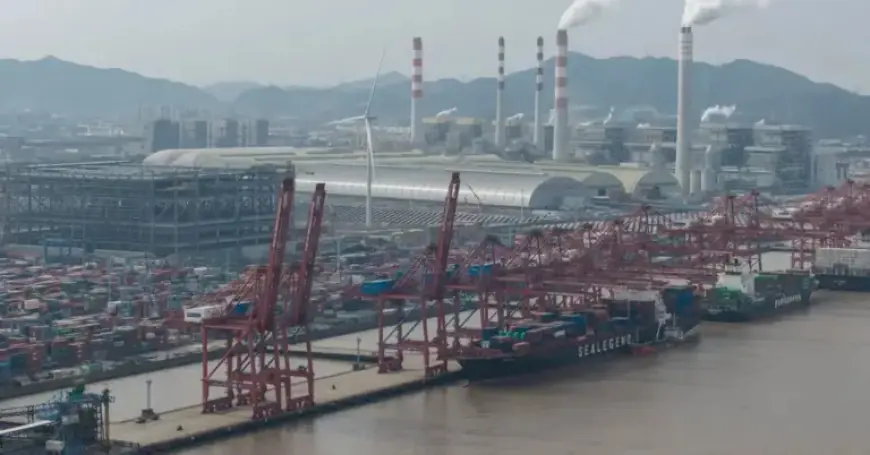
China’s economy presents a complex picture, characterized by significant growth on one hand and troubling challenges on the other. The port city of Ningbo, located south of Shanghai, embodies this duality.
Details of Ningbo’s Thriving Port
Ningbo’s port is the largest in the world by cargo tonnage, handling approximately 150,000 ships annually. This bustling hub is vital for importing oil, grain, and other resources while facilitating the export of manufactured goods.
- Annual ship handling: 150,000 vessels
- Largest port globally by cargo tonnage
Factories in Ningbo produce a wide range of products, showcasing China’s industrial strength. This activity has helped the country achieve a record trade surplus over the past year.
Anecdotal Evidence of Economic Decline
However, not far from the bustling port lies the historic Old Bund district, where a stark contrast to the port’s prosperity can be observed. Housing prices in this area have collapsed, with reports of stalled construction projects and diminished municipal spending.
In recent months, the Old Bund has become increasingly deserted, indicating reduced consumer confidence. Sarah Jin, a manager at a local toilet supply store, noted a significant drop in sales, exemplifying a broader trend of economic anxiety:
- Toilet store sales down by 33%
- Plumbing supplies outlet down by 70%
- Door seller’s business dropped 80%
Investments and Spending Decline
Government data illustrates the deepening troubles, with investments in fixed assets falling by 1.4% in 2024 and plummeting by 21.4% last year. Local governments, dependent on real estate revenue, have had to cut expenditures, with Ningbo’s spending decreasing by 5.6% recently.
Local Leadership Acknowledges Issues
Tang Feifan, the mayor of Ningbo, recognized these economic challenges, stating, “Consumption potential has yet to be fully unleashed.” Despite the struggles faced by the real estate sector, Ningbo’s export factories continue to thrive.
Shifts in Market Dynamics
Local businesses are adjusting to changing market conditions. High-tech toilet manufacturing, for instance, is a growing sector, as local factories have begun producing quality products that were once imported.
Despite these successes, the export sector faces its own challenges. Overcapacity and tariffs have strained profit margins, forcing companies to adapt.
Consumer Frustration
Economic difficulties have led to discontent among residents. Many have lost savings or are struggling to secure employment. Public expressions of dissatisfaction remain muted due to government restrictions, yet unfiltered frustrations are evident in conversations.
Residents like Yang express frustrations, summarizing, “Everyone is complaining about how hard it is to survive.” The contrasting realities within Ningbo serve as a microcosm of China’s broader economic landscape, offering insight into the nation’s rising tensions amidst growth.