

























Canada’s Changing Landscape: A New Reality Explored by The New York Times

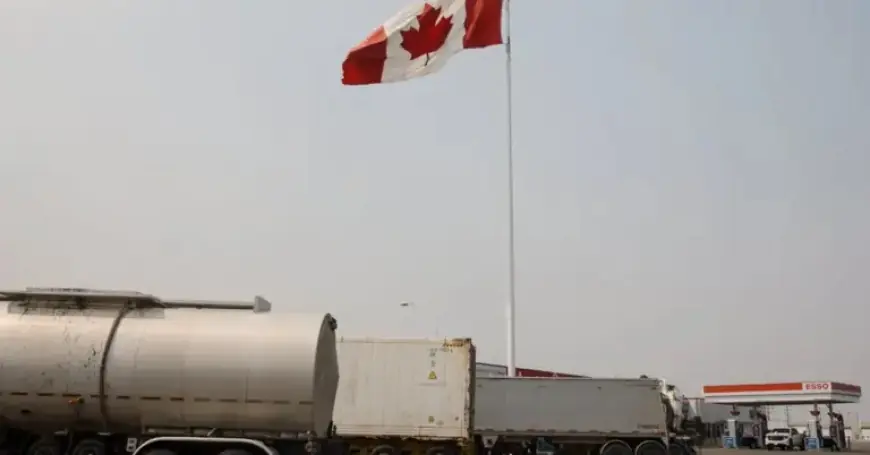
In the wake of shifting global dynamics, Canada’s response to an unpredictable United States serves as a potential blueprint for other nations. As articulated by Canadian Prime Minister Mark Carney during a pivotal speech at Davos, countries must adapt to an era where traditional power structures no longer guarantee stability.
Canada’s Strategic Shift
Carney’s speech resonated strongly with both leaders at Davos and Canadian citizens, showcasing a clear call for nations to rethink their dependencies on the U.S. He emphasized that the existing international order is fundamentally changing, urging countries to diversify their trade relationships and forge new alliances.
Trade Realities
- Canada’s extensive relationship with the U.S. includes an 8,891-kilometer border, the longest in the world.
- Approximately 68% of Canadian exports are directed to the U.S., a dependency that shapes its economy.
- Recent tariffs imposed by the U.S. on Canadian goods have prompted a reassessment of trading strategies.
In response to these shifts, Canada is actively seeking to reduce its reliance on U.S. markets. Carney’s recent agreements with China signify a move towards strengthening ties with other global players.
Approval and Public Sentiment
Polling following Carney’s speech revealed a notable increase in his approval rating, which rose to 60%. This suggests a strong public backing for a shift in direction. The Canadian populace appears to support initiatives to establish new trade routes while navigating the complexities of their geographic proximity to the U.S.
Diversification Efforts
Canada aims to double its trade with non-U.S. partners by the end of the decade. Recent data indicates that trade with other countries has increased by 13%, even as U.S.-bound trade declined by 4% in recent months.
Key Trade Statistics
- Canada now exports natural gas to Asia for the first time.
- The share of Canadian oil exports to countries outside the U.S. has risen from 2% to 10%.
- Despite tariffs, Canada remains a crucial supplier of rare-earth minerals and energy to the U.S.
Collaboration Among Middle Powers
Carney’s vision extends beyond Canada, advocating for collaboration among middle powers facing similar challenges. He suggests that acting collectively can provide a counterbalance to American aggression.
Expert Insights
Edward Alden, a senior fellow at the Council on Foreign Relations, reiterated that countries must unite to withstand external pressures. The potential for collaborative action could enhance their resilience against unilateral decisions imposed by larger powers like the U.S.
Carney’s message at Davos serves as both a rallying cry and a strategic framework for nations looking to redefine their global standing. By leveraging partnerships and fostering diversified trade, Canada is paving the way for a new model in international relations.