

























Pakistan vs Australia T20 at Gaddafi Stadium: Salman Ali Agha and Saim Ayub lift Pakistan after early wobble as Australia bloods new faces

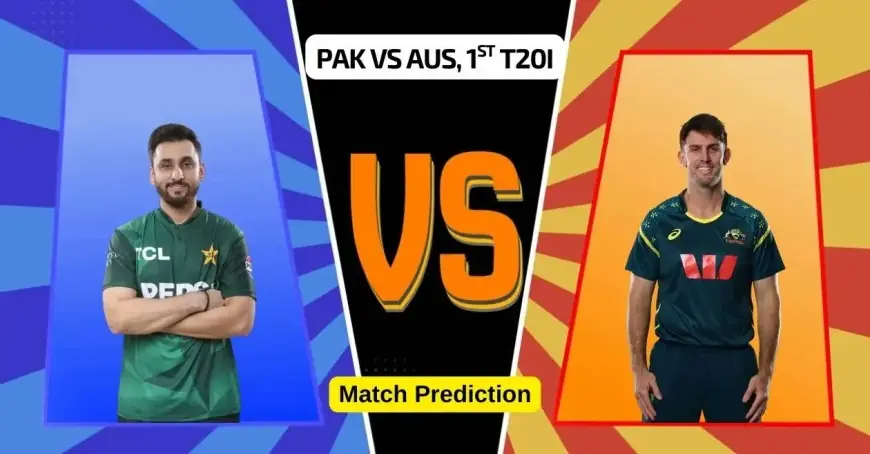
Pakistan vs Australia returned to Lahore in a fast-moving T20 series opener at Gaddafi Stadium on Thursday, January 29, 2026, with Pakistan choosing to set the pace after winning the toss in the early morning hours in USA Eastern Time. The match doubled as a selection stress test for both sides: Pakistan handed captaincy responsibility to Salman Ali Agha, while Australia leaned into squad depth and gave first T20 international caps to multiple players, including fast bowler Mahli Beardman.
The immediate storyline was momentum. Pakistan lost a wicket with the very first ball, then rebuilt sharply through Saim Ayub and Salman Ali Agha before Australia’s spin squeezed the middle overs and pulled the run rate back into a more manageable range.
Pakistan vs Australia match scorecard snapshot: Pakistan innings pressure points
At the 14.1-over mark of Pakistan’s innings, the score stood at 126 for 4, with the platform shaped by a rapid counterattack and then checked by spin.
Innings snapshot
-
Pakistan: 126 for 4 in 14.1 overs
-
Key batters: Saim Ayub 40 off 22, Salman Ali Agha 39 off 27, Babar Azam 24 off 20, Fakhar Zaman 8 not out off 13, Usman Khan 3 not out off 2
-
Fall of wickets highlights: Sahibzada Farhan out for 0 on the first ball, then wickets clustered around the middle overs
-
Key bowling figures: Adam Zampa 3 for 21 in 3 overs, Xavier Bartlett 1 for 12 in 2 overs
The shape of the innings mattered as much as the raw numbers. Pakistan’s best phase came when Ayub and Agha attacked early, forcing Australia to adjust fields and rotate options quickly. The turning point, though, arrived when Adam Zampa struck three times, removing two of the most dangerous set batters and dragging Pakistan toward a more cautious finish.
Australia vs Pakistan: why Mahli Beardman’s debut fits the bigger Australia plan
Australia’s selection signaled a deliberate bet on depth and versatility. With key players unavailable or managed for workload and fitness, the visitors used this Lahore stretch to test fringe combinations under heat, crowd noise, and high-scoring conditions.
Mahli Beardman’s inclusion was a clear example of that approach. He arrived with pace and recent form, but a debut in Pakistan is rarely a gentle introduction: the margin for error is small, and any bowler missing length can disappear quickly. Even without a wicket early, the real evaluation is whether a new quick can hold shape when batters attack from ball one, then recover with smarter options at the death.
That matters because Australia’s T20 structure increasingly depends on finding bowlers who can survive two tough overs at the top and still execute later, without needing perfect conditions.
Behind the headline: what’s really at stake for Pakistan and Australia in Lahore
This is not just “pak vs aus” on a scoreboard. It’s a rehearsal for selection calls and role clarity.
Context
Both teams are using this short, tight series to sharpen T20 identities. Pakistan’s decision to bat first after winning the toss underlined confidence in their batting depth and a desire to apply scoreboard pressure at home.
Incentives
-
Pakistan wants a stable middle-order engine: fast starts are common, but finishing efficiently is what wins elite T20s.
-
Australia wants proof that new caps can function in unfamiliar conditions, especially against wrist spin, change-ups, and pressure overs.
Stakeholders
-
Captains and selectors: every over becomes evidence for future roles.
-
Senior batters like Babar Azam: judged not only on runs, but on strike-rate management when spinners arrive.
-
Emerging players like Beardman and other debutants: judged on composure and repeatable execution, not just highlight moments.
Missing pieces
The biggest missing piece is the final innings arc: whether Pakistan turns 126 for 4 into a match-defining total, and how Australia’s chase responds to home bowling strength and any late-innings variation.
Second-order effects
A strong finish for Pakistan could reshape how opponents bowl them in powerplays, while an Australia win built on newcomers would accelerate a broader transition toward a deeper, more flexible T20 pool.
What happens next: realistic scenarios and triggers
-
Pakistan finishes above par: if the final five overs produce a surge without a collapse, Australia’s chase becomes a high-pressure test of intent versus risk.
-
Australia keeps it tight late: if the visitors limit boundary balls at the death, Pakistan’s early advantage could shrink into a defendable-but-chasable range.
-
Spin remains the lever: if Zampa’s impact is mirrored by Pakistan’s spinners, the chase could swing quickly through a two-over window.
-
A debutant steals a moment: one standout over, either with the ball or in the field, can change a match and selection narratives overnight.
The series continues at the same venue on January 31, 2026 and February 1, 2026, with each match scheduled to start at 6:00 AM ET, keeping the spotlight on how quickly both teams learn and adjust in the same conditions.