Government Shutdown 2026 Risk Rises as Senate Democrats Threaten to Block DHS Funding Bill

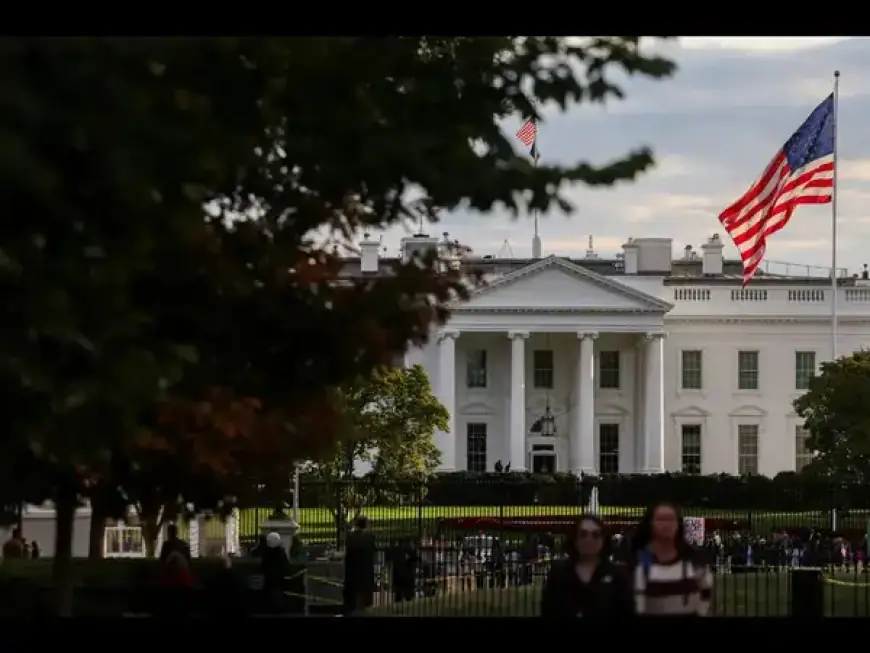
The government shutdown 2026 threat is growing in Washington as a funding deadline approaches and Senate Democrats signal they will not advance a Department of Homeland Security package without new limits on federal immigration enforcement. With current funding set to lapse at 11:59 p.m. ET Friday, Jan. 30, 2026, leaders are now racing to avoid what lawmakers increasingly describe as a partial government shutdown tied to the unfinished spending bills.
At the center of the standoff is the DHS funding bill, a broader fight over immigration enforcement, and whether Senate Democrats will accept a “clean” package or force changes first. Further specifics were not immediately available about whether negotiators have a finalized compromise text ready to move.
The deadline and what’s actually at stake
The current crunch is not a full-year budget debate in the abstract; it’s an on-the-clock decision about keeping parts of the federal government funded. Several Cabinet departments, including DHS, are operating under temporary funding that expires Friday night. If Congress does not pass full-year appropriations or a short-term extension, affected agencies must begin shutdown procedures.
DHS is a particularly high-profile pressure point because it covers a wide swath of day-to-day functions, including immigration enforcement, aviation security operations, disaster response coordination, and the Coast Guard. Even the perception of disruption can trigger anxiety for travelers, border communities, and local governments that rely on federal coordination during emergencies.
Some specifics have not been publicly clarified about whether congressional leaders will attempt a single all-in package at the last moment or split off DHS from the larger funding effort to keep most agencies running.
Schumer, Senate Democrats, and the DHS-ICE demands
Senate Democratic leader Chuck Schumer has framed the latest fight as a demand for guardrails on federal agents conducting immigration arrests, saying his caucus is unified around reforms tied to accountability and transparency. After a closed-door caucus discussion, Democrats publicly outlined a short list of conditions they want attached to DHS funding, including tighter rules for patrol operations, enforceable conduct standards, and requirements aimed at making agents identifiable during enforcement actions.
Democrats have pointed to recent fatal incidents involving federal agents in Minneapolis as the immediate catalyst for their hardened stance, arguing that Congress should not approve DHS funding without what they describe as baseline law enforcement standards.
The White House has rejected the idea of linking immigration enforcement reforms to the near-term funding deadline, arguing that policy talks should be handled separately from keeping agencies open. The administration’s position effectively dares Democrats to either accept the existing framework or risk being blamed for a shutdown driven by last-minute demands.
Key terms have not been disclosed publicly, including what enforcement language—if any—could be added quickly enough to pass both chambers before Friday night.
Angus King and the House “seven” who helped the bill pass
One name complicating the Senate math is Angus King, the Maine independent who caucuses with Democrats. King has said he will not support a government funding package if it includes ICE funding in its current form, even as he has also emphasized that Congress does not have to stumble into a shutdown.
That matters because keeping the government open often requires a bipartisan coalition in the Senate, and a small number of defections can change what leaders have to negotiate.
On the House side, the DHS measure cleared earlier in the month with help from seven Democrats who crossed party lines to help it pass. Among them was Tom Suozzi, who later acknowledged backlash and said he regretted the vote in light of the recent controversies surrounding federal immigration operations. The House episode is now feeding a broader Democratic argument: that the party’s base expects a tougher line on DHS and ICE funding, even when the alternative is a shutdown showdown.
How a partial shutdown works and what the next vote could decide
When appropriations expire, agencies follow shutdown plans that separate “excepted” activities—work tied to safety, security, and certain legally required functions—from “non-excepted” work that must stop. In practice, that can mean some employees continue working without immediate pay certainty, others are furloughed, contractors face work stoppages, and routine administrative functions slow or halt until funding is restored. Even if front-line operations continue, the secondary effects can stack up quickly across procurement, training, hiring, and support services.
The real-world impact lands on multiple groups at once. Federal employees and contractors can face furlough uncertainty and delayed work orders. Travelers and airlines worry about bottlenecks if aviation security staffing and support functions tighten. Communities hit by disasters watch FEMA-related readiness and coordination closely. And state and local law enforcement agencies can be pulled into new operational strain if federal immigration activity changes abruptly or if coordination rules shift.
The next verifiable milestone is a Senate procedural vote expected Thursday, Jan. 29, 2026 ET, which will signal whether leaders can move the broader funding package forward, split off DHS, or pivot to a short-term DHS extension to buy negotiating time. After that, the hard deadline remains Friday night: if no agreement is enacted by 11:59 p.m. ET Jan. 30, a partial shutdown would begin as affected agencies implement their lapse plans.