























Fairfax County Public Schools faces storm recovery, new safety tech, and sweeping boundary and budget decisions

Fairfax County Public Schools is juggling three major pressures at once: getting students back on track after storm-related closures, rolling out new school-safety technology, and implementing the first divisionwide boundary changes in decades while a new multibillion-dollar budget proposal moves through public review.
FCPS has been operating in recovery mode this week after multiple weather disruptions, and district leaders are also asking families to prepare for changes that will reshape where some students attend school starting this fall. Further specifics were not immediately available on how many additional schedule adjustments could be needed if winter weather lingers into early February.
Storm closures push the quarter deadline and trigger meal support
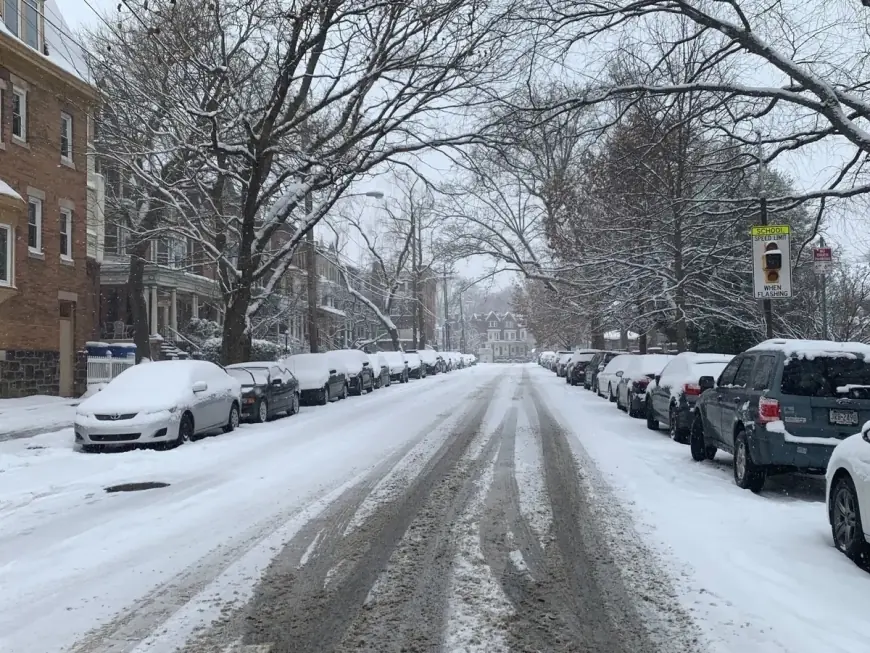
The district’s snow response has gone beyond a simple “closed or open” call. After the weekend storm, Fairfax County Public Schools closed schools for multiple days and adjusted academic timelines to protect grading and assessment windows.
One of the biggest immediate changes is the end-of-quarter calendar. The final day of the second quarter was moved to Tuesday, February 3, giving teachers additional time to complete assessments and finalize grades, while pre-scheduled student holidays remained in place.
FCPS also announced meal kit distribution for children under 18 during the closure stretch, with pickups offered from late morning to early afternoon on several days this week. The district said children do not need to be present for pickup and that no proof of eligibility or identification is required, a step aimed at reducing barriers for families managing food insecurity during unexpected days off.
A new emergency response system adds wearable panic buttons in schools
Alongside weather recovery, FCPS is beginning implementation of a new emergency response system across school buildings designed to speed coordination when staff need immediate help.
Here is how the system typically works in practice. Sensors installed throughout a building help locate where an incident is occurring, and staff members are issued wearable emergency response buttons that can be activated quickly and discreetly. When a button is pressed on school property, alerts are routed to the district’s security operations center, school personnel, and local emergency services, allowing responders to identify the location within the building faster than a general call from a hallway or classroom.
District leaders have emphasized that the tool is not a replacement for calling 911, but an added layer of support when a phone is not immediately available or when speaking aloud may not be safe or practical. Some specifics have not been publicly clarified, including the full rollout timeline building by building and how quickly staff training will be completed across all sites.
Boundary changes approved for fall, ending split feeders and attendance islands
In a decision that has been building for more than a year, the School Board approved a comprehensive set of boundary adjustments that will reassign hundreds of students to different schools beginning in fall 2026.
The approved plan impacts 1,697 students, most of them elementary-aged, and is intended to reduce long-standing issues created by decades of small, piecemeal boundary tweaks. The package targets split feeders, where a school sends students to multiple middle or high schools, and attendance islands, where a pocket of a neighborhood is zoned differently from surrounding streets. The plan also addresses overcrowding.
A key structural change is that boundary reviews are now expected on a regular cycle, with the district moving toward revisiting boundaries every five years rather than waiting decades between major divisionwide efforts. District leaders have also indicated some neighborhoods are slated for earlier review than the five-year cycle, with future recommendations anticipated next year.
A $4.1 billion budget proposal returns the focus to pay, staffing, and class size
While boundaries reshape enrollment patterns, a separate debate is unfolding over money. The superintendent has presented a proposed fiscal year 2027 budget of $4.1 billion, placing staff compensation and core instructional supports at the center of the request.
In the plan, most new spending is tied to pay and benefits, with a stated goal of supporting recruitment and retention while honoring bargaining commitments. The proposal also aims to reduce class sizes and restore certain instructional and student-support positions that were cut after last year’s funding disputes. Enrollment is projected at 176,133 students for the 2026 to 2027 school year, still below pre-pandemic levels even though FCPS remains the largest district in Virginia.
This budget process will now move through public review and county negotiations, where final funding decisions depend heavily on the county transfer to schools. A public hearing on the school budget is scheduled for February 10, with an extension to February 11 if needed, and the county’s next major budget milestones later this winter will set the tone for what ultimately gets funded.
What it means for families, staff, and the broader community
Two groups are feeling the impact immediately: families, who are balancing childcare and transportation as storm closures and calendar changes ripple through routines, and staff, who face the operational load of reopening buildings, catching up instruction, and learning new safety procedures. Students are affected both academically, through shifted quarter deadlines, and socially, as boundary changes can alter feeder patterns, friendships, and commutes starting next school year.
The next verifiable milestone is the February budget public hearing, followed by the county’s spring budget votes that determine the final transfer to schools. Until then, FCPS is managing near-term winter disruptions while laying the groundwork for longer-term changes in safety operations, school assignments, and spending priorities.