
























Claire Danes and Hugh Dancy Step Back Into the Spotlight After Danes Details Her “Meltdown” Over a Surprise Pregnancy

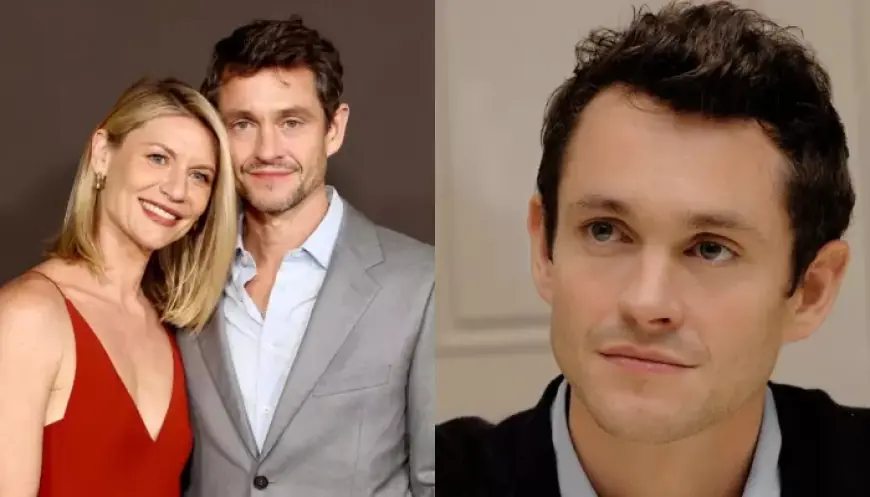
Claire Danes and Hugh Dancy are drawing fresh attention this week after Danes spoke candidly about learning she was unexpectedly pregnant at 44, describing an immediate emotional “meltdown” that left her in tears and scrambling to call her doctor. The interview, released early Wednesday, January 28, 2026 ET, has ricocheted across entertainment and parenting conversations because it cuts against the polished, certainty-forward way celebrity family life is usually presented.
Danes, who has generally kept her private life tightly contained, framed the moment as both physically surprising and socially complicated. Her comments also put the couple’s current season of life into sharper focus: they are raising three children while both remain active, in-demand performers, with careers that require long hours, travel, and public-facing promotion.
What Claire Danes said about the surprise pregnancy and their youngest child
In the interview, Danes described being stunned that she could conceive at 44, and said her reaction was not simply fear about health or logistics, but also embarrassment and shame tied to how older motherhood is judged. She emphasized that the pregnancy was unplanned and emotionally disorienting, especially after fertility struggles earlier in her parenting journey.
Danes and Dancy share three children: an older son born in 2012, a second son born in 2018, and a daughter born in 2023. Danes also revealed the daughter’s name publicly during the same conversation, a small detail that nonetheless signals how carefully the couple manages what they share, and when.
The honesty of Danes’s account is what made it newsy. It wasn’t a birth announcement or a red-carpet reveal. It was a description of a real internal reaction that didn’t fit the expected script of gratitude and instant joy.
The context: a famously private marriage with two busy careers
Danes and Dancy met while working together in 2006 and married in 2009. Over the years, they have kept their relationship largely out of the publicity machinery that follows many high-profile couples, occasionally appearing together but rarely turning their marriage into a brand.
Professionally, Danes has remained a prestige TV mainstay, most recently headlining a thriller limited series released in late 2025. Dancy continues to play a lead role on a long-running network legal drama that is currently in its newest season. That combination means their household is shaped by two demanding production calendars rather than one star career and one supporting schedule.
Danes’s comments also underscored a practical reality many parents recognize: having children spaced far apart can be both joyful and exhausting. She spoke about the strangeness of parenting across stages at once, with one child approaching adolescence while another is still in toddlerhood.
Behind the headline: why celebrities talk about IVF, age, and motherhood now
This moment is not just a celebrity overshare. It sits at the intersection of culture, commerce, and advocacy.
Context matters. Conversations about fertility, IVF, miscarriage, and “advanced maternal age” have moved from taboo to mainstream in the last decade, partly because more people are delaying parenthood and partly because public figures have normalized sharing these experiences. Danes’s interview lands inside that bigger shift.
Incentives are layered:
-
For Danes, candor can be a form of control. By naming the feelings herself, she prevents strangers from defining the story as either miracle-only or scandal-only.
-
For the entertainment ecosystem, personal disclosures can boost attention during promotion cycles, even when the topic is not directly tied to a role.
-
For audiences, stories like this function as permission slips, making private emotions feel less isolating.
Stakeholders extend beyond fans. People navigating fertility treatment, older pregnancy, and postpartum mental health often feel judged or invisible. When a recognizable figure speaks plainly about shame and fear, it can reduce stigma and encourage people to seek support earlier.
Second-order effects can be meaningful. Greater openness can push workplaces to treat pregnancy and parenting as a normal part of career trajectories rather than a disruption. It can also fuel a more realistic public understanding of fertility, which is often distorted by myths about age, “luck,” and what medical intervention can and cannot do.
What we still don’t know
Even with Danes’s unusual candor, the most important details remain private, by choice:
-
The medical specifics of her pregnancy and prenatal care
-
How the couple structures childcare and work travel while both are filming
-
Whether Danes plans to speak more about fertility treatment timelines beyond what she has already shared
-
How much of this openness is a one-time reflection versus a broader shift in how she engages publicly
That privacy boundary is part of the story. In an era of constant disclosure, Danes and Dancy still appear to be deciding, case by case, what belongs to the public and what does not.
What happens next: realistic scenarios to watch
The most likely next steps are less about drama and more about how celebrity interviews ripple outward:
-
More targeted advocacy conversations
Trigger: sustained public attention around fertility and older pregnancy narratives. -
Increased promotion for Danes’s current work, with family questions following her press appearances
Trigger: continued awards-season visibility and interview bookings. -
A recalibration in how the couple discusses parenting publicly
Trigger: if the response reinforces that selective openness can be met with empathy rather than intrusion. -
A renewedattachments storyline around Dancy’s schedule-heavy TV role
Trigger: production demands that keep him visible weekly while Danes cycles through limited-series projects.
For now, the headline is simple: Claire Danes and Hugh Dancy are being talked about again, not for a scandal or a surprise breakup, but for a rare, unvarnished description of how complicated joy can feel in real life—especially when the world expects certainty from people it only sees in snapshots.