
























NPR Reveals Trump Administration’s Secret Easing of Nuclear Safety Rules

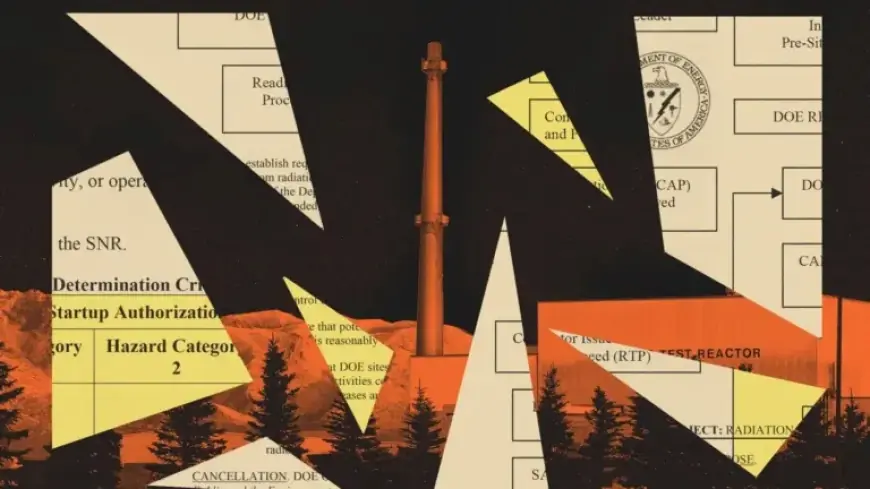
The Trump administration’s recent revisions of nuclear safety regulations have gone largely unnoticed, raising significant concerns among safety experts. According to documents obtained by Filmogaz.com, these changes were implemented in secrecy and primarily aim to facilitate the swift development of new nuclear reactor designs.
Key Changes in Nuclear Safety Regulations
The U.S. Department of Energy (DOE) has revised nuclear safety directives that govern various operations of reactors. The modifications have reportedly omitted key safety protocols and reduced the volume of regulatory documentation significantly.
- Over 750 pages of requirements have been eliminated.
- The new rules reduce safety measures concerning radiation exposure for workers.
- Protections for groundwater and environmental safety have been loosened.
- Main safety roles and standards, such as having designated engineers for critical safety systems, have been removed.
Goals of the Revised Regulations
These changes were primarily motivated by the ambition to accelerate the construction of at least three experimental commercial nuclear reactors by July 4, 2026. Industry leaders, including major tech companies like Amazon and Google, back this initiative, hoping to create a reliable power source capable of fueling advancements in artificial intelligence.
Criticism and Concerns
Experts have expressed profound concern regarding the lack of public knowledge surrounding these changes. Christopher Hanson, former chair of the Nuclear Regulatory Commission, and Edwin Lyman, a director at the Union of Concerned Scientists, criticized the DOE’s approach. Lyman remarked that these modifications could dismantle the robust regulatory oversight crucial to preventing nuclear disasters such as the Three Mile Island incident.
- Secrecy undermines public trust in nuclear safety.
- The relaxed standards may lead to increased risks for workers and the environment.
- Potential violations of existing environmental laws due to looser regulations.
The Path Forward
Despite reassurances from the DOE that safety remains a priority, the swift timeline and secretive nature of the revisions pose a threat to overall nuclear safety. Research reactors generally require careful construction processes that extend beyond the ambitious deadlines set forth in the new regulations.
As the DOE continues to revise safety instructions for the Reactor Pilot Program, the implications of these regulatory changes will likely resonate within both the nuclear power sector and the broader public arena. The steps taken thus far highlight a significant shift in regulatory philosophy that could yield unforeseen consequences.