

























Alberta Approves $900M Borrowing for Provincial Oil and Gas Agency

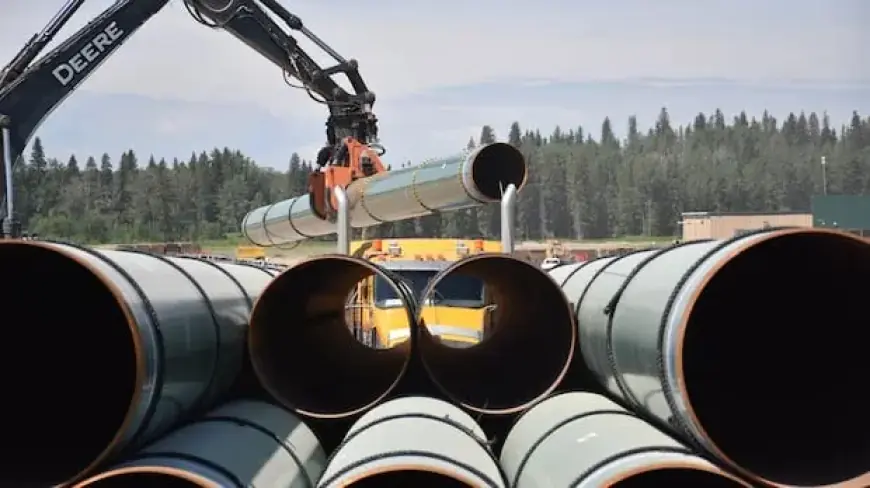
Alberta has given the green light for its oil and gas agency to borrow up to $900 million for market investments. This strategic move aims to attract private investment, particularly for a pipeline to the British Columbia coast.
Details of the Borrowing Authorization
The borrowing authorization applies to the Alberta Petroleum Marketing Commission (APMC) and acts as a line of credit for the Bitumen Royalty-In-Kind (BRIK) program. This program, introduced last March, focuses on enhancing hydrocarbon marketing activities.
- Amount authorized: $900 million
- Purpose: Hydrocarbon marketing activities
Potential for Pipeline Investment
Richard Masson, a former CEO of APMC, believes this move may position APMC as a potential proponent for constructing a northwest coast pipeline. However, a spokesperson from Alberta’s department of energy clarified that this line of credit is not related to any pipeline projects, present or future.
Masson pointed out the inherent risks associated with pipeline development, citing the industry’s cautious approach due to factors like the oil tanker ban in B.C. and opposition from Coastal First Nations. His comments highlight the difficulties companies face when considering extensive pipeline investments.
Building Trust with Investors
The new borrowing authority allows the finance minister to raise funds through government securities for APMC. Masson noted that this could help mitigate financial risks for private investors, attracting them to invest in the pipeline.
- APMC can backstop private investors
- Limits investor financial risks
While APMC is unable to fund the pipeline construction directly due to the terms of the energy agreement, the potential for government-backed guarantees may entice private developers.
The Bitumen Royalty-In-Kind Program
The BRIK program enables the provincial government to collect its royalties in barrels instead of cash. This allows Alberta to sell bitumen directly to the market, enhancing its negotiating power with foreign refineries, especially those owned by governments.
Robert Johnston from the University of Calgary’s School of Public Policy has suggested that the line of credit primarily focuses on developing marketing capabilities in the U.S. and Asia through existing infrastructures.
Rationale Behind the Program
Experts believe that this borrowing capacity will support increased oil volumes in current pipelines, crucial for completing planned expansions. Notably, expansions are underway on both Enbridge’s system and the Trans Mountain pipeline.
Despite these expansions, Masson clarifies that changing how bitumen royalties are collected is not necessary. Instead, the agency can enhance throughput by purchasing oil to utilize existing pipeline capacity efficiently.