

























Discovery Unveils Potential Ice-Cold Future for Earth

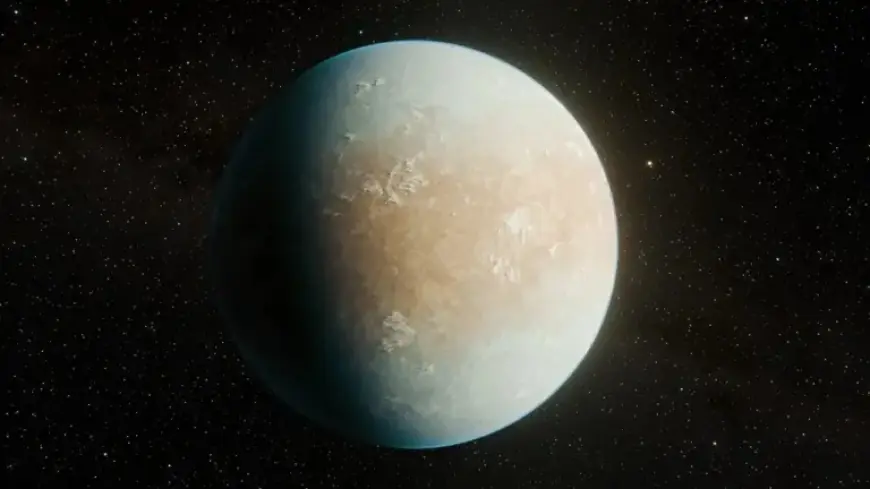
The discovery of a candidate planet named HD 137010 b has sparked intrigue among scientists, as it may offer insights into the Earth-like exoplanet landscape. This rocky planet, slightly larger than Earth, is positioned approximately 146 light-years away from our solar system.
Potential Ice-Cold Future for Earth: Planet HD 137010 b
Researchers believe that HD 137010 b could be colder than Mars, which experiences average temperatures of about minus 85 degrees Fahrenheit (minus 65 degrees Celsius). The new candidate planet orbits a cooler and dimmer Sun-like star, HD 137010, which means HD 137010 b might only receive about a third of the sunlight that Earth enjoys. As a result, its surface temperature may hover around minus 90 degrees Fahrenheit (minus 68 degrees Celsius).
Key Characteristics of HD 137010 b
- Orbital Period: Approximately one year, similar to Earth’s.
- Location: About 146 light-years away in the K-dwarf star system.
- Temperature Estimates: Predicted to be colder than Mars, potentially reaching minus 90 degrees Fahrenheit.
- Habitability: Potentially lies within the star’s “habitable zone.”
As an “exoplanet,” HD 137010 b has been noted for its intriguing properties. It could be the first such planet with Earth-like features that passes across a Sun-like star, making it an accessible target for detailed study.
Data Collection and Future Observations
The initial discovery was made during NASA’s Kepler Space Telescope second mission, known as K2. Scientists identified the planet from a single “transit,” which is when the planet crosses its star, casting a shadow that can be observed from Earth. The duration of this event was about 10 hours.
To confirm its existence, astronomers need to observe multiple transits. However, due to its similar orbital distance to Earth, such events are rare. Efforts could rely on NASA’s Transiting Exoplanet Survey Satellite (TESS) or the European Space Agency’s CHEOPS for further observations.
Habitability Potential
While the prospects of HD 137010 b may seem bleak due to its potential icy conditions, some researchers suggest it might still harbor life. With a thicker atmosphere rich in carbon dioxide, the planet could maintain surface water and possibly temperate conditions.
- Chances of Habitability:
- 40% chance of being within the “conservative” habitable zone.
- 51% chance of being in the broader “optimistic” habitable zone.
- Probability of Being Beyond the Habitable Zone: Approximately 50%.
This promising discovery has been detailed in a paper published on January 27, 2026, in The Astrophysical Journal Letters. The research team, led by Ph.D. student Alexander Venner from the University of Southern Queensland, highlights the importance of continued observations to validate the existence and characteristics of HD 137010 b.