
























Vera Zvonareva headlines an Australian Open late-round mix of veteran grit, new partnerships, and fresh coaching storylines

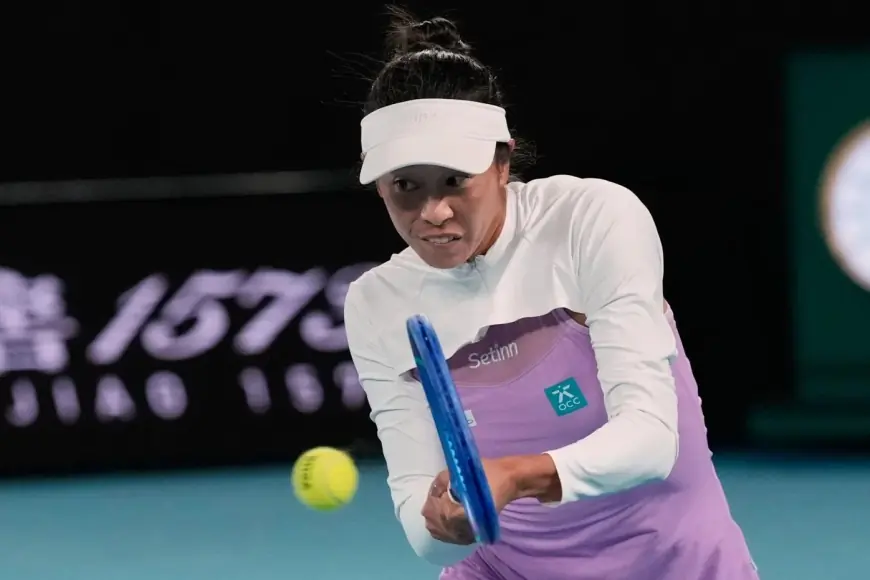
Vera Zvonareva is back in the spotlight at the Australian Open, and the storyline is bigger than a single match. At 41, the former world No. 2 is making a late-tournament push in doubles with Ena Shibahara, while other threads in Melbourne have kept attention on the modern game’s constant churn, from nationality changes to parent-coaches like Bryan Shelton in the player box.
Further specifics were not immediately available on how long Zvonareva plans to keep a full singles schedule alongside doubles, but her stated focus has leaned toward extending her doubles career.
Zvonareva tennis comeback gains momentum with Ena Shibahara
Zvonareva and Shibahara have played their way into the women’s doubles quarterfinals, giving the partnership a serious spotlight on one of tennis’s biggest stages. Their run has included a comeback-style win over Asia Muhammad and Erin Routliffe, turning a one-set deficit into a three-set victory to keep the campaign alive.
The pairing is also notable for what it represents: Zvonareva, a longtime tour fixture with deep Grand Slam experience, teaming with Shibahara, a proven doubles specialist who has built her résumé through consistent results and sharp net instincts. Some specifics have not been publicly clarified about how the two structured their partnership schedule heading into Melbourne, but the on-court dynamic has looked built for fast hard-court conditions.
Their next test comes against home hopes Kimberly Birrell and Talia Gibson, a wildcard duo that has ridden crowd energy and aggressive returns to reach the last eight. A full public timeline has not been released on any longer-term plans for the Shibahara-Zvonareva pairing beyond this tournament, but the immediate aim is clear: win one more match and reach a Grand Slam semifinal.
Mechanism-wise, doubles at majors rewards clarity and repetition. Teams typically win by defining two or three patterns they can execute under pressure, then drilling them into muscle memory: where to serve on big points, when to poach, and how to protect the weaker wing during rapid-fire exchanges. The scoring format, with tiebreak pressure and momentum swings, often favors teams that simplify decisions and trust their first move.
Potapova tennis run ends with tight margins, and a new flag beside her name
Anastasia Potapova has been another name drawing attention in the women’s draw, both for her tennis and for the broader context around her. Potapova recently changed nationality from Russia to Austria, and she carried that fresh designation into a high-profile match against world No. 1 Aryna Sabalenka in Melbourne.
Potapova pushed Sabalenka to the limit before falling in two tiebreak sets, a result that underscored how thin the margins can be at the top. She had chances to extend the contest, including multiple set points in the second-set tiebreak, but couldn’t convert. Key terms have not been disclosed publicly around the administrative details and timing that typically accompany a nationality switch, but the competitive reality remains the same: the player still has to win the points that decide the match.
For fans, Potapova’s performance landed as a reminder that strong form can still end abruptly at a major when the draw delivers an elite opponent early. For players, it reinforces the tactical challenge of facing a top seed whose baseline power and composure can hold up even on an off day.
Bryan Shelton’s role shows how coaching has become part of the story
Bryan Shelton has also been in the conversation in Melbourne, reflecting the growing visibility of coaches, especially when the coach is also a parent. Shelton, a former pro and a long-time college coach, stepped away from collegiate coaching to work full-time with his son Ben Shelton, and he has been a steady presence through Ben’s deep run at the Australian Open.
Ben Shelton’s campaign ended in the quarterfinals against defending champion Jannik Sinner, a straight-sets loss that still confirmed Ben’s status among the sport’s most dangerous young talents. The match also highlighted how coaching in modern tennis is about more than tactics. A coach’s influence often shows up in preparation, emotional steadiness, and plan discipline, because in-match communication is limited and the player must execute alone.
This matters because the sport’s top tier is increasingly defined by details that don’t always make highlight reels: return positioning, selection under pressure, recovery discipline, and the ability to reset after losing a tight set. Parent-coaches face an added challenge of separating the professional relationship from the personal one, especially at a Slam where every moment is amplified.
What this mix means for the tournament, and the next milestones
Two groups feel the impact most directly: players and teams trying to manage careers across a packed calendar, and fans who increasingly follow tennis through the ongoing narratives of partnerships, coaching dynamics, and off-court changes that shape on-court performance. Tournament organizers are also affected, because late-round storylines drive scheduling decisions and crowd attention, particularly when local wildcards are still in play.
The next verifiable milestone is the women’s doubles quarterfinal featuring Ena Shibahara and Vera Zvonareva, with a semifinal berth on the line later this week. On the singles side, Ben Shelton’s exit sets up the men’s semifinal picture, while Potapova’s close loss marks a reference point for how quickly a season’s momentum can swing at the sport’s biggest events.