Quinton Aaron, The Blind Side Actor Who Played Michael Oher, Hospitalized After a Fall as “Blind Side” Debate Resurfaces

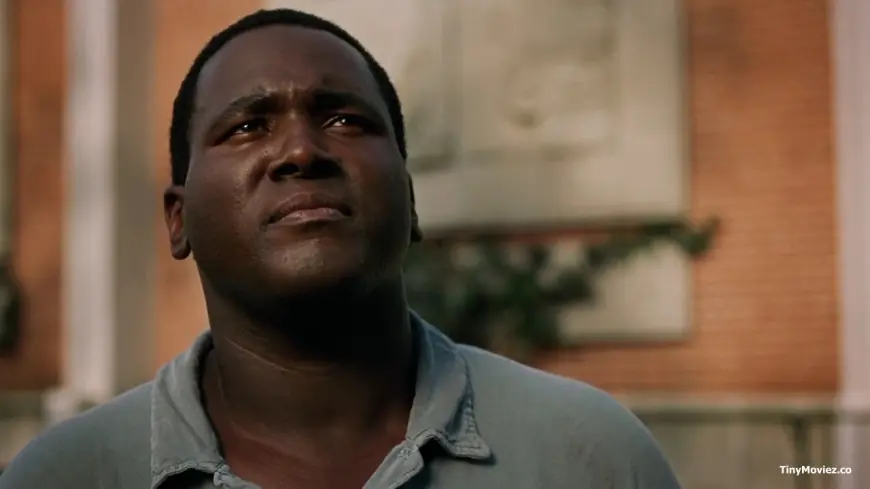
Quinton Aaron, the actor best known for portraying Michael Oher in The Blind Side, was hospitalized this week after a medical emergency at home, prompting an outpouring of concern from fans and renewed attention on the film and the real-life story behind it. The situation remains fluid, with key details still developing.
The news lands at a moment when The Blind Side has already been under a brighter, more skeptical spotlight for years—because the movie’s feel-good framing collided with a real-world legal dispute over the relationship it dramatized.
What happened to Quinton Aaron, and what’s confirmed so far
Reports that surfaced Monday afternoon ET say Aaron was taken to a hospital after collapsing at home and suffering a fall. A representative has described him as stable, but some accounts have suggested he required intensive care measures. As of Tuesday morning ET, there has been no single, definitive public medical update that resolves the gap between those descriptions.
What is clear is that Aaron’s hospitalization is being treated seriously and that his family and representatives have asked for privacy while acknowledging public support. Until a medical team or authorized spokesperson provides a fuller statement, the responsible framing is simple: he is hospitalized, his condition has been described as stable by a representative, and other details are still not confirmed.
Why this hits differently in 2026: The Blind Side, Michael Oher, and a story still in dispute
Aaron’s name is inseparable from The Blind Side because the film became a cultural shorthand for “true story inspiration.” But the real Michael Oher has been trying to wrestle that shorthand away from his identity.
In 2023, Oher petitioned a Tennessee court to end a conservatorship that gave the Tuohys legal control over certain decisions and financial matters. The conservatorship was terminated later that year, but disputes about money, consent, and representation continued to play out in court filings and public statements. Court records also show that a later attempt by the Tuohys to seek further review in Tennessee was dismissed as untimely in August 2025—another sign the conflict has not been a clean, quick wrap-up.
That unresolved backdrop matters because it changes how audiences interpret everything connected to The Blind Side: the film’s “based on a true story” aura, its portrayal choices, and the emotional incentives it offers viewers. Even when the immediate headline is about Aaron’s health, the public conversation tends to slide back into the broader reckoning around the story he helped bring to screens.
Behind the headline: incentives, stakeholders, and the cost of turning a life into a brand
The incentives around The Blind Side were always powerful: inspirational sports stories are commercially reliable, awards-friendly, and easy to market. But those incentives can also flatten complicated realities into a clean moral arc, and that creates downstream conflicts when real people feel misrepresented or undercompensated.
The stakeholders now extend far beyond a single family and a single former player:
-
Quinton Aaron is a working actor whose public identity is disproportionately tied to one role, meaning any personal crisis becomes news through that lens.
-
Michael Oher remains the living subject of a story he says distorted his intelligence and agency, with real reputational and emotional consequences.
-
Sandra Bullock is linked to the film’s legacy through an awards-winning performance, even though she was not responsible for the underlying agreements or later disputes.
-
The public has shifted: audiences now expect more transparency about “true story” adaptations, and social norms are less forgiving of narratives that appear to trade complexity for uplift.
Second-order effects are already visible. Each new headline—whether legal filings or a health scare—pushes the film back into circulation as an argument, not just a movie. That can influence how studios approach life-rights agreements, how courts and lawmakers talk about conservatorships, and how viewers interpret stories about poverty, race, and adoption-adjacent arrangements.
What we still don’t know
Several key pieces remain missing as of Tuesday ET:
-
The precise nature of Aaron’s medical emergency and whether he is expected to recover quickly
-
Whether any earlier health issues are connected to this incident
-
Whether Oher’s broader legal dispute is nearing resolution or still headed for prolonged litigation
-
Whether any parties involved will make new public statements as this week unfolds
What happens next: realistic scenarios with clear triggers
-
A formal medical update (most likely)
Trigger: a statement from Aaron’s family or a verified representative clarifying his condition and expected timeline. -
Privacy-first silence, with limited details
Trigger: the family prioritizes recovery and releases only minimal “stable/thank you” updates. -
A renewed cycle of “Blind Side” debate online
Trigger: viral reposting of old clips and arguments about the film’s portrayal of Oher and the Tuohy relationship. -
More scrutiny on conservatorship oversight
Trigger: lawmakers or advocates cite the Oher case as an example in broader reform discussions. -
A re-centering on the difference between actor and subject
Trigger: public reminders that Aaron’s role does not make him responsible for disputes about the real-life story.
Aaron’s hospitalization is the urgent human story right now. But it’s also a reminder of how one film can attach itself to multiple real lives—and how, in 2026, audiences are less willing to accept a simple inspirational narrative when the real-world aftermath is still unresolved.