
























Carney Responds to Trump: Canada Rejects China Free Trade Deal

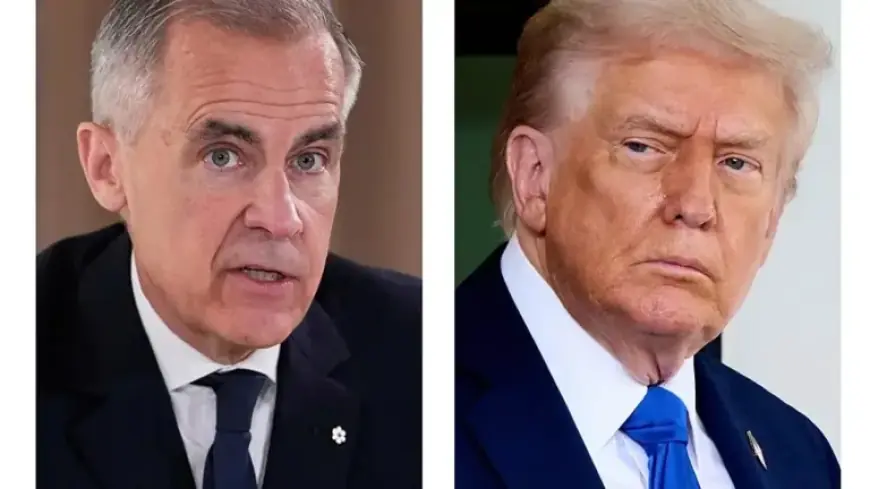
Canadian Prime Minister Mark Carney has firmly stated that Canada will not pursue a free trade agreement with China. This declaration follows a warning from U.S. President Donald Trump regarding potential 100% tariffs on Canadian goods should Canada engage in a trade deal with China.
Canada Rejects China Free Trade Deal
During a recent address, Carney clarified that Canada’s agreement with China only addresses existing tariff issues in certain sectors. He emphasized that under the current trade framework with the U.S. and Mexico, Canada is committed to not entertaining free trade deals with non-market economies without prior notification.
Trump’s Threats and Claims
President Trump continued to voice his disapproval of potential Canadian trade relations with China. He expressed his concerns on social media, asserting that Canada is allowing China to undermine its economy. Trump’s comments included warnings that China could significantly influence the Canadian market, jeopardizing its core industries.
Additionally, Trump highlighted a video featuring the Canadian Vehicle Manufacturers’ Association, which warned that Canada’s auto industry relies heavily on access to the U.S market. He characterized the potential deal with China as “a disaster” for Canada, fearing it would cause businesses to relocate to the U.S.
Recent Trade Developments
In 2024, Canada responded to U.S. tariffs by imposing its own 100% tariffs on electric vehicles from China, along with a 25% tariff on steel and aluminum. China’s reaction included similar tariffs on Canadian canola oil and seafood. However, during a recent visit to China, Carney modified the tariff on Chinese electric vehicles in exchange for reduced tariffs on Canadian exports.
- Initial annual cap of 49,000 Chinese EVs entering Canada at a 6.1% tariff rate.
- Expected increase to 70,000 vehicles over five years.
- Initial cap represents 3% of total Canadian vehicle sales, around 1.8 million annually.
Carney also mentioned that China is anticipated to invest in the Canadian auto industry within three years, a move viewed as critical for maintaining competitive manufacturing capabilities.
International Implications
Carney’s position aligns with a broader strategy among middle powers to forge alliances against the dominance of larger nations. In a recent speech at Davos, he urged countries to unite to counteract coercion from major powers without directly naming Trump.
This ongoing dialogue reflects Canada’s careful balancing act between maintaining its economic interests and navigating pressures from its southern neighbor amid a tumultuous geopolitical landscape.