























Canada Halts China Trade Deal Talks Amid Trump’s Tariff Threats

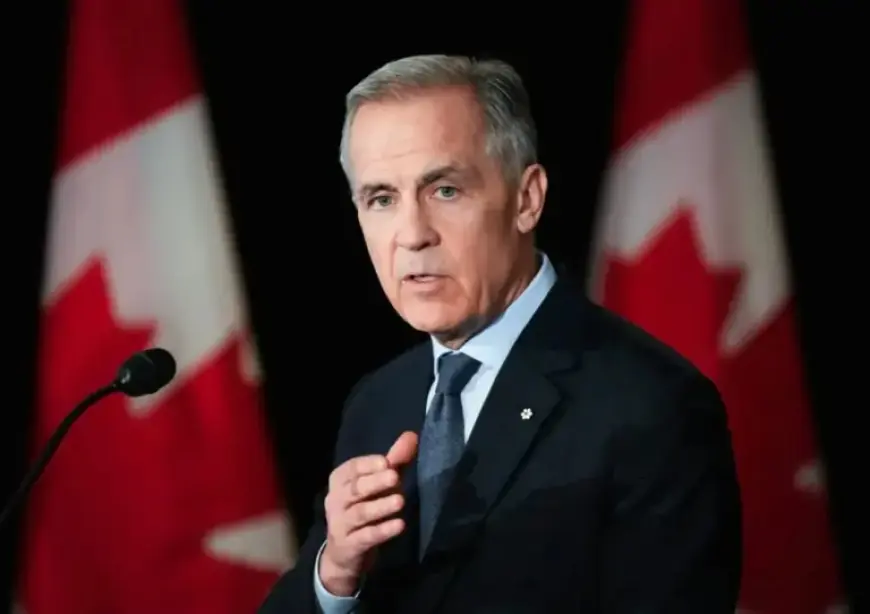
In a significant escalation of trade tensions, Prime Minister Mark Carney of Canada announced that the country will not pursue a free trade agreement with China. This declaration follows a stern warning from U.S. President Donald Trump, who threatened to impose a steep 100% tariff on goods brought in from Canada if it engages in a trade deal with Beijing.
Canada’s Trade Stance
Carney clarified that Canada’s recent tariff agreement with China only addresses specific sectors impacted by previous tariffs. He emphasized that Canada remains committed to the United States-Mexico-Canada Agreement (USMCA), which restricts formal trade agreements with nonmarket economies without prior notification, stating, “We have no intention of doing that with China or any other nonmarket economy.”
Trump’s Response and Threats
Trump reacted critically to Canada’s potential trade engagement with China. He claimed on social media that Canada is allowing China to gain influence over its economy, warning that Canada could become a conduit for Chinese products into the U.S. market. He stated, “If Carney thinks he is going to make Canada a ‘Drop Off Port’ for China to send goods and products into the United States, he is sorely mistaken.”
Tariff Responses and New Agreements
- In 2024, Canada imposed a 100% tariff on electric vehicles from China, along with a 25% tariff on steel and aluminum.
- In retaliation, China levied a 100% import tax on Canadian canola oil and a 25% tariff on pork and seafood.
- During a visit to China, Carney negotiated a reduction in tariffs on Canadian products in exchange for lowering tariffs on Chinese electric cars.
Carney introduced an initial cap of 49,000 Chinese electric vehicles, with the tariff rate set at 6.1%. This cap will gradually increase over five years, with expectations that China will invest in Canada’s auto industry within three years.
Concerns Over the Auto Industry
Experts, including the CEO of the Canadian Vehicle Manufacturers’ Association, have voiced concerns about the viability of Canada’s automotive sector without access to the larger U.S. market. The CEO indicated that the Canadian market alone cannot support large-scale manufacturing from China.
Meanwhile, Trump’s administration continues to maintain pressure on Canada, highlighting the importance of a cooperative relationship within the context of USMCA negotiations. U.S. Treasury Secretary Scott Bessent expressed doubts about Carney’s approach, suggesting it could jeopardize Canada’s trade position.
International Relations Dynamics
Amid rising tensions, Carney has emerged as a proponent for middle powers to collaborate and counteract the pressures from larger nations. Speaking at the World Economic Forum, he emphasized the necessity of unity among these countries to safeguard their interests.
As the trade dispute unfolds, the implications of Canada’s stance on China and its relationship with the U.S. remain closely watched by international stakeholders. Carney’s commitment not to pursue trade deals with China reinforces a cautious approach towards navigating the complex global economic landscape.