Kyle Rittenhouse and Sean Strickland: a gym visit that exposed MMA’s growing culture clash

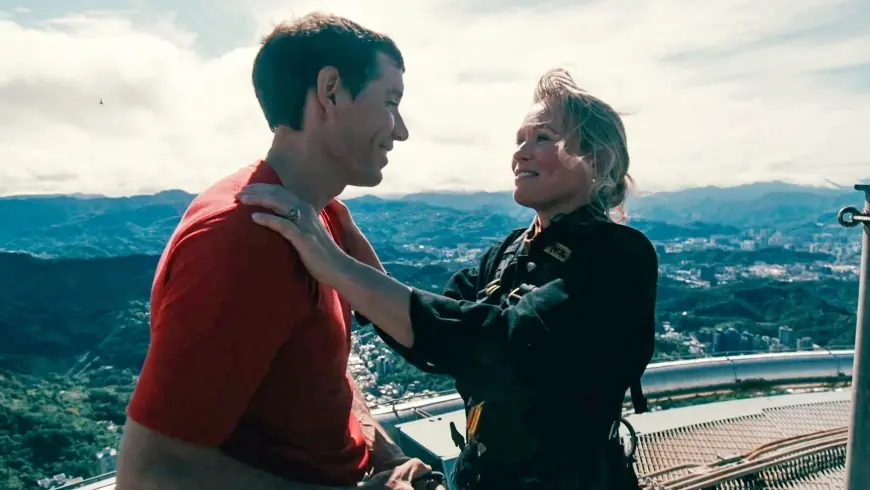
In recent days, a brief appearance by Kyle Rittenhouse at a Las Vegas fight gym with Sean Strickland has turned into a loud proxy battle over politics, branding, and boundaries inside combat sports. The immediate impact isn’t about punches thrown in a cage—it’s about reputational collateral: gyms that rely on sponsor relationships and public goodwill, fighters who market themselves as authentic but risk alienating teammates, and a fan ecosystem primed to treat any controversy as content. What’s still unclear is whether this remains a fleeting social-media flare-up or becomes a longer-running fracture inside Strickland’s training orbit.
A flashpoint built on proximity, not policy
MMA gyms operate on a fragile kind of trust. Training partners simulate violence together, often while nursing injuries, and the social contract is simple: show up, work, keep it professional. Drop an intensely polarizing public figure into that environment and the room changes instantly—especially if some fighters view the visit as a publicity stunt rather than a personal introduction.
That’s essentially what unfolded after Strickland brought Rittenhouse to a gym session in Las Vegas. Video and firsthand accounts circulating online show a heated confrontation in which at least one UFC fighter objected to Rittenhouse’s presence and demanded he leave. The dispute wasn’t framed as a security issue as much as a values and optics issue—who gets welcomed into a shared workspace, and who decides.
For Strickland, whose public persona has long leaned into blunt talk and provocation, the moment fits a recognizable pattern: he pushes into the line of controversy, then dares critics to prove it matters. For teammates and gym leadership, the question is more practical: does this create distraction, endanger training cohesion, or drag the facility into political crossfire?
What happened at the gym
The central facts are straightforward. Rittenhouse visited the gym with Strickland. A confrontation followed. Voices rose, and the tone turned hostile, with the objection centered on Rittenhouse being there at all. Clips spread fast, and the incident became a topic across MMA social channels within hours.
Beyond that, details vary in emphasis: some posts paint the scene as a principled refusal to train around a political symbol; others frame it as performative outrage. What’s consistent is that the conflict wasn’t an isolated comment—it was a direct challenge in the room, in front of other fighters, captured on video.
The episode also arrived at an inconvenient time for Strickland’s professional calendar. He’s slated to headline an upcoming UFC event against Anthony Hernandez on February 21, 2026, a fight widely treated as a make-or-break step toward another title run. Any disruption to camp chemistry—sparring partners, coaches, training focus—has real consequences in a sport where preparation is the product.
Why Rittenhouse still triggers this kind of reaction
Rittenhouse remains one of the most polarizing figures in American public life after the 2020 Kenosha shootings and his 2021 acquittal on homicide-related charges. In practice, that means his presence is rarely read as neutral. Even people who insist they’re “not political” often react to him as a symbol—either of self-defense, vigilantism, gun politics, media narratives, or all of the above.
When a sports figure invites someone like that into a gym, it’s almost guaranteed to be interpreted as a statement, even if described as a personal choice. That’s why the argument wasn’t simply “I don’t like him.” It was “why is he here,” aimed at the person who brought him.
The broader pattern: MMA’s identity fight in real time
Combat sports has always had room for loud personalities, but the business is different now. Fighters build platforms, gyms rely on brand partnerships, and footage from private spaces becomes public within minutes. The Strickland–Rittenhouse episode is a clean example of that tension: an “in-gym” moment that used to stay in-house now becomes a national argument about values and visibility.
Here are the practical pressure points this incident exposes:
-
Team cohesion vs. individual branding: a fighter’s personal guest can become everyone’s problem.
-
Gyms as private workplaces: training spaces aren’t public stages, but they’re treated like them.
-
Sponsor sensitivity: controversy can be “engagement,” until it threatens deals.
-
Safety and distraction: even if no violence occurs, tension can change how people train.
-
Promotion incentives: outrage often outperforms highlights online, which rewards escalation.
What happens next depends on two signals
First: whether fighters at the gym treat the confrontation as a one-off and move on, or whether relationships remain strained enough to affect Strickland’s camp. Second: whether Strickland doubles down publicly—turning the incident into a recurring narrative—or lets it fade to keep focus on his February fight.
Right now, the incident reads less like a single clash and more like a snapshot of where MMA culture is heading: a sport built on physical confrontation increasingly shaped by social confrontation, where the biggest battles sometimes happen before anyone touches gloves.