

























Ultra-Thin Fiber Chips Integrate Computing Seamlessly into Clothing

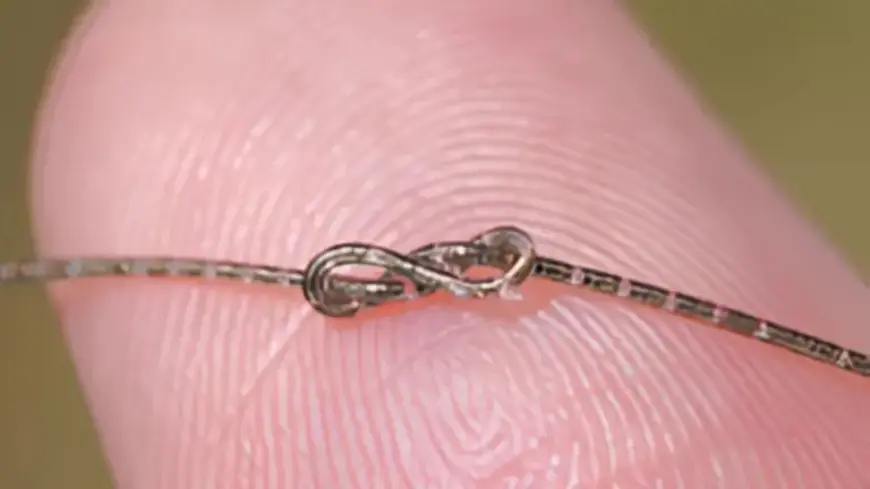
Chinese researchers have made significant strides in integrating computing into clothing through the development of ultra-thin fiber chips. These fully flexible fiber chips are capable of embedding complete electronic circuits within strands as fine as human hair. This innovation brings electronic textiles closer to functioning akin to computers and displays, while retaining qualities such as softness, stretchability, and machine washability.
Breakthrough in Fiber Integrated Circuits
The research, conducted by a team at Fudan University in Shanghai and led by Peng Huisheng from the Chinese Academy of Sciences, challenges traditional approaches to electronic circuits. For over a decade, the team has reimagined how circuits can exist beyond rigid silicon wafers. Instead of affixing flat chips to fabric, they’ve successfully created computing systems that seamlessly become part of the fabric itself.
Innovative Design and Structure
- The fibers incorporate complete electronic circuits on elastic substrates.
- Each fiber measures about the thickness of a human hair.
- Transistor density reaches 100,000 per centimeter, matching standard industry levels.
At current laboratory settings, these fibers have proven capable of supporting meaningful computing tasks. A one-millimeter fiber chip can integrate tens of thousands of transistors, providing information-processing capabilities similar to medical implant chips. Furthermore, a single-meter fiber could potentially integrate millions of transistors, approaching the performance of traditional computer CPUs.
Advanced Functionality and Durability
Unlike previous fiber electronics that primarily focused on energy delivery and sensing, these new fibers serve as complete microcomputer systems. Each strand includes resistors, capacitors, diodes, and transistors, which are intricately connected for high-precision operation. They can process both digital and analog signals, and even perform neural-style computing for tasks like image recognition.
- Designed for real-world conditions, FICs endure over 10,000 bending and abrasion cycles.
- They can stretch up to 30% and twist at 180 degrees per centimeter.
- Fibers remain functional after over 100 wash cycles and tolerate temperatures up to 100°C (212°F).
- They withstand compression underneath heavy loads, such as a 15.6-tonne truck.
These characteristics eliminate the need for bulky external chips or wiring in smart clothing, paving the way for sleek and functional designs.
Future Prospects for Smart Textiles
The research team has formulated over 30 types of functional fiber devices over the past decade, ranging from energy storage and power generation to biosensing technologies. They have also showcased early scalable manufacturing methods in the lab, indicating a potential for mass production utilizing existing infrastructure.
According to the researchers, this ultra-thin fiber technology is a significant step toward creating interactive patterns for advanced applications, including brain-computer interfaces, smart textiles, and virtual-reality wearables.
The findings were published in the journal Nature, marking a milestone in the evolution of textiles integrated with computing capabilities.