























Blake Lively and Jameela Jamil become unlikely co-headliners as private texts spill into a public legal fight

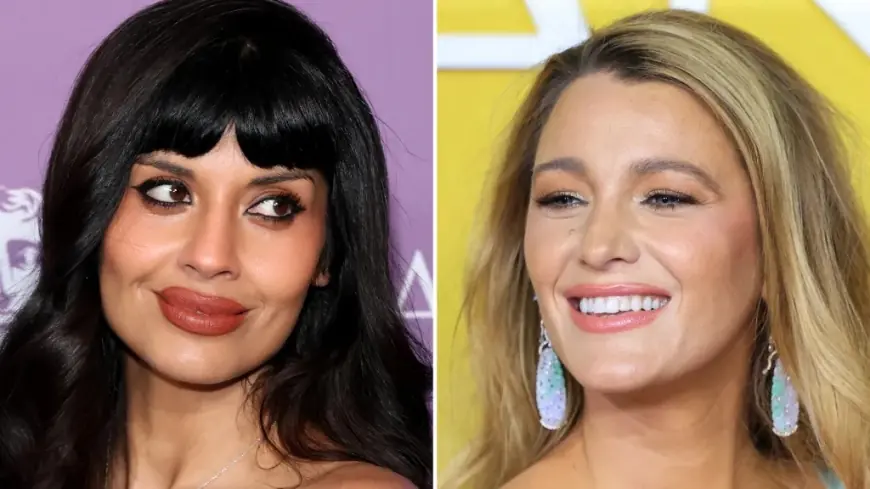
A celebrity lawsuit rarely stays contained once court filings start opening up, and this week’s ripple effect has pulled Blake Lively and Jameela Jamil into the same headline cycle—whether either wanted it or not. The immediate impact is reputational: a dispute that began as a workplace conflict around a film has expanded into a broader referendum on loyalty, feminism, and the ethics of private conversations becoming public exhibits. The uncertainty now isn’t only legal. It’s how much collateral damage the next round of disclosures could create.
The new risk isn’t the gossip—it’s the precedent
The defining feature of the moment is the mechanism: private messages surfaced inside unsealed court documents, instantly turning casual, emotional language into permanent public record. That shifts the stakes for everyone orbiting the case. When texts and emails become evidence, side characters can become central characters overnight, and nuance is the first thing to disappear.
For Jamil, the risk is being reduced to a single phrase from an old group chat rather than the fuller context of what she says she was reacting to. For Lively, the risk is that every newly revealed message—whether it strengthens her claims or simply adds drama—invites another wave of argument that competes with the core allegations she has made about conduct on set. And for the wider industry, it’s a reminder that the “private” layer of a production (publicists, friends, venting, strategy talk) can be dragged into open court with minimal warning.
A lawsuit can be about workplace boundaries and alleged retaliation. Online, it quickly becomes a morality play—complete with teams, purity tests, and the expectation that everyone involved must have had perfect judgment at all times.
What happened: unsealed texts pull Jameela Jamil into Lively’s It Ends With Us dispute
The current flare-up traces back to unsealed filings connected to Lively’s lawsuit against Justin Baldoni, her co-star and the film’s director. Among the materials made public were text messages from August 2024 between Jamil and Jennifer Abel, a publicist tied to Baldoni at the time. In those messages, Jamil used harsh language about Lively, including calling her a “villain,” and at one point employing the phrase “suicide bomber,” as she vented frustration over the public-facing campaign around the film.
Once those messages circulated widely, Jamil responded publicly in a series of remarks emphasizing that her comments were private, that she did not pile onto the broader online backlash at the time, and that disagreeing with another woman does not invalidate her feminism. She also framed the situation as unsettling—less because of the criticism itself and more because of how easily private speech can be repurposed as a weapon inside a public narrative.
All of this is unfolding alongside active legal maneuvering. A January 22, 2026 hearing addressed efforts to knock out parts of Lively’s case, and the dispute remains scheduled for a May 18, 2026 trial date. More filings may be unsealed as arguments continue, which keeps the story in a volatile phase: each new document can reframe the last.
Here’s the practical reality of why the story keeps growing even when no one “does” anything new:
-
Court disclosures arrive in batches, not in clean story arcs.
-
Texts are read without tone, relationship history, or context.
-
The public treats legal exhibits as character evidence, not just factual evidence.
-
The louder the online reaction, the more incentive there is to spin or counter-spin.
Blake Lively and Jameela Jamil are now linked by the same dynamic: a legal fight that’s expanding beyond the original dispute, turning private reactions into public artifacts, and leaving everyone involved to manage consequences that don’t fit neatly into a courtroom timeline.