

























Expert Highlights Positive Aspects of Discreet Taiwan-US Cooperation

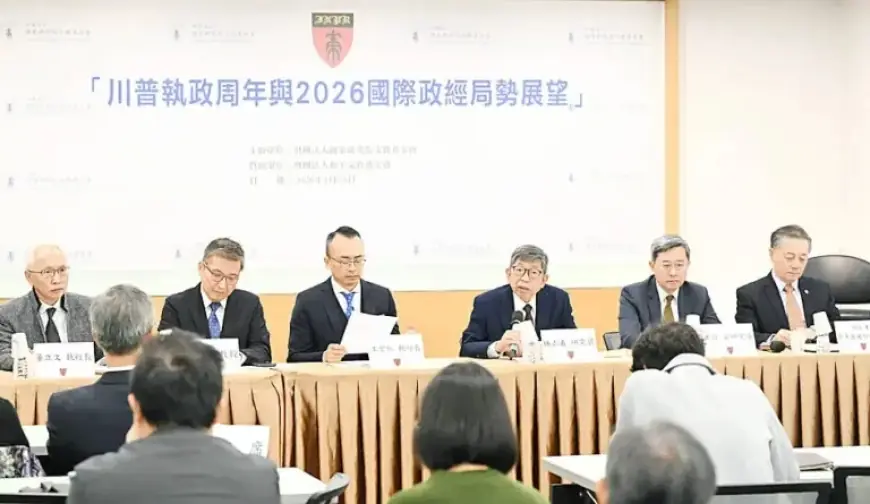
A recent seminar in Taipei brought together experts to discuss the evolving dynamics of Taiwan-US cooperation. Attendees included former Pentagon official Tony Hu and Institute for National Policy Research executive director Kuo Yu-jen. They shared insights on the implications of current military relations and the regional security landscape.
Positive Aspects of Taiwan-US Cooperation
Tony Hu, a former US Air Force lieutenant colonel, pointed out that the stability in Taiwan-US military cooperation is a positive sign. He noted that while there has been no major escalation this year, the lack of conflict may indicate a more stable regional security environment.
Hu emphasized that military interactions between Taipei and Washington have significantly advanced. Many cooperative actions now deemed routine were not possible before Xi Jinping’s presidency began in 2013. These developments reflect adjustments in US military engagement with Taiwan, responding to perceived threats from China.
Predictions and Insights
Kuo Yu-jen highlighted the impressive advancements in US intelligence and counterintelligence as a crucial aspect of military reforms during Donald Trump’s presidency. He anticipates further political shifts within the Chinese People’s Liberation Army as Xi Jinping may initiate purges ahead of the upcoming Lunar New Year.
- Increase in Chinese gray zone tactics around Taiwan is expected.
- A more stable international environment is predicted for 2026.
- Reduction in global uncertainties due to various worldwide events.
Dong Li-wen, CEO of the Foundation on Asia-Pacific Peace Studies, noted that the current international security climate appears less turbulent compared to previous years. He cited the resolution of the COVID-19 pandemic and a stalemate in the Russia-Ukraine conflict as stabilizing factors.
US Political Landscape Impact
Experts acknowledged that although US policies under Trump remained influential, it is unlikely that military actions would reach the intensity of previous years. Dong suggested that nations have adjusted to Trump’s tariff policies, reducing the probability of significant economic shocks.
Lin Cheng-yi, a research fellow at Academia Sinica, highlighted that the international community is becoming more accustomed to Trump’s governing style. However, he warned that midterm elections on November 3 could present significant challenges for the administration, potentially resulting in political backlash.
In conclusion, while the current state of Taiwan-US military cooperation may not signal abrupt changes, experts see it as a reflection of a more stable and adjusted geopolitical landscape. Concerns remain regarding US domestic politics and its influence on future international relations.