





















Skyscraper Live safety: why a 24-hour weather delay may be the most important “safety feature” of all

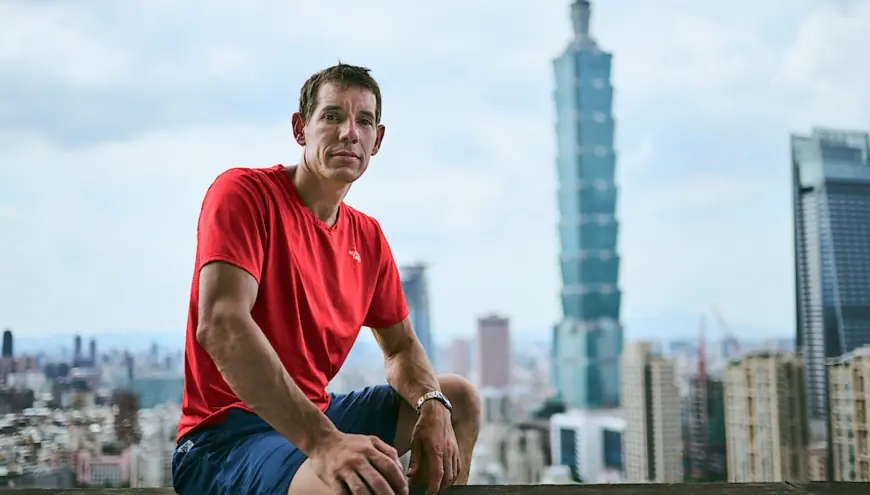
“Skyscraper Live” is built around a contradiction: it’s promoted as a live, no-second-takes spectacle, yet its entire viability depends on saying “not today” when conditions drift even slightly out of tolerance. That tension snapped into view when the Taipei 101 climb was pushed back by roughly a day because of rain. The postponement did more than reshuffle a streaming schedule—it highlighted what “safety” can mean in an event where the climber has chosen to go without a harness or safety net.
Safety in a no-rope climb is really a series of hard stop decisions
The most misunderstood part of Skyscraper Live is the word “safe.” In normal climbing, safety means redundancy: ropes, anchors, belayers, back-ups. Here, the central risk—falling—isn’t engineered away. Instead, safety becomes a framework of controls around the attempt:
-
A strict go/no-go threshold based on real conditions, not hype
-
Shared authority to halt the attempt before it starts, or before it continues
-
Route planning that minimizes unknowns, even if the climb remains extreme
-
Broadcast safeguards that protect viewers from the worst moment, even if they can’t protect the climber from the physics of height
That’s why the rain delay matters. It demonstrates the event’s “safety” isn’t a slogan; it’s a willingness to accept disappointment as the price of risk management. On a glass-and-steel façade, even light moisture can turn reliable holds into slips, and wind can change how secure a stance feels on narrow edges.
What the production is doing—without pretending it removes the danger
The stated safety measures for the live broadcast focus on controlling the variables that can be controlled, while acknowledging the climb itself is intentionally uncompromised.
1) Weather as a hard boundary
The climb was postponed for roughly 24 hours after persistent rain near the scheduled start. That’s not a minor production choice: it’s the clearest signal that traction and visibility are treated as non-negotiable.
2) Dual-consent “stop” authority
The climb’s approval isn’t described as a single-person call. The decision structure gives both the climber and the production team the ability to refuse to proceed. Practically, that reduces the pressure to “perform through it” when conditions or readiness don’t feel right.
3) A broadcast delay for worst-case scenarios
A roughly 10-second delay has been built into the live feed so coverage can cut away if a catastrophic incident occurs. This is about viewer protection and editorial control, not physical protection—but it’s a notable part of how a live platform manages a high-stakes, real-time event.
4) Building geometry that changes (but doesn’t cancel) risk
Taipei 101 isn’t a blank vertical wall. Its structure includes repeating setbacks and balcony-like intervals. Those features can reduce exposure in specific sections compared to a sheer face, but they don’t make a fall “manageable.” They simply alter the probability and the consequences depending on where a slip happens.
5) The climb’s unique “human-made” challenge
Even for an elite free-solo climber, a skyscraper introduces unfamiliar stressors: repetitive movements over long stretches, less organic variation in holds, and surfaces that behave differently under humidity, dust, or rain. In this context, safety becomes endurance management as much as move-by-move precision.
Mini timeline (safety-relevant moments)
-
Jan. 23, 2026: Original scheduled live window
-
Near start time: Rain forces a postponement decision
-
Jan. 24, 2026 (U.S. evening): Rescheduled live broadcast window (which corresponds to Jan. 25 in Taiwan)
-
Forward signal: If conditions shift again—rain, gusts, low visibility—the event can be delayed further rather than “forced”
The key point viewers should understand before tuning in
This is not a stunt where hidden rigging quietly turns it into a controlled performance. The “safety” architecture described around Skyscraper Live is primarily preventive and procedural: choose the right day, confirm readiness, preserve the right to stop, and ensure the broadcast can cut away if something goes terribly wrong.
That doesn’t make it risk-free. It makes it risk-aware—which is a fundamentally different promise.
A quick viewer-facing checklist
-
Expect weather-driven uncertainty right up until the attempt begins
-
Understand the 10-second delay exists to prevent broadcasting a tragedy, not to prevent one
-
Recognize that postponements are not “production drama”; they’re the main evidence of safety governance in a no-rope climb
In a live event built on extreme exposure, the most responsible choice may look anticlimactic: postponing, pausing, or calling it off. And that may be the most honest safety message the broadcast can send.