

























Scientists Uncover Major Issue with Solid-State Batteries

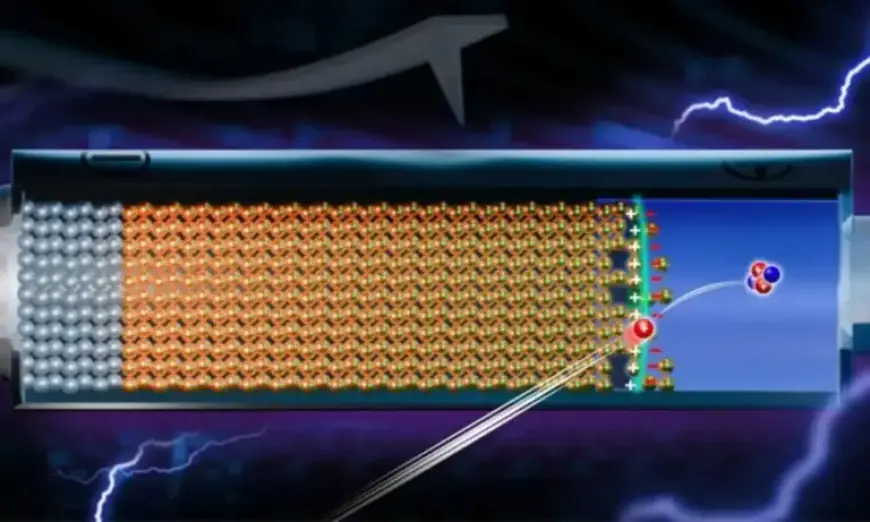
Recent research has unveiled significant issues affecting the efficiency of solid-state batteries, which are crucial for the next generation of electric vehicles. A study conducted at the Max Planck Institute for Polymer Research (MPI-P) in Mainz reveals that a microscopic barrier forms at the interfaces within battery cells, impacting fast-charging capabilities.
Understanding the Core Issue
The research, led by Dr. Rudiger Berger, investigates the behavior of lithium ions in these solid batteries. It highlights how the interactions at the battery’s boundaries can create resistance, thereby throttling performance even in advanced prototypes. In essence, the ion flow is hindered each time it crosses a boundary, leading to the accumulation of what researchers call a “space charge layer.” This phenomenon creates an electric field that opposes the movement of ions, which can significantly slow down both the charging and discharging processes.
Innovative Research Techniques
To address the hidden barriers within solid-state batteries, the team employed a variety of cutting-edge techniques. They utilized Kelvin probe force microscopy to observe voltage changes at the buried interfaces while the batteries were operational. This sophisticated method allowed researchers to visualize the local surface voltage across the battery’s cross-section.
- Voltage maps were correlated with a charge layer at the positive electrode, measuring as thin as 0.000002 inches.
- Nuclear reaction analysis provided further insights by counting lithium below the surface without dismantling the battery.
Challenges of Solid-State Designs
Despite confirming the relationship between the interface and lithium concentration, challenges remain. The resolution of the depth measurements is limited, staying at just a few millionths of an inch. Researchers opted for a thin-film battery design to maintain clear interfaces and avoid complications that arise in traditional commercial cells.
Impact of Resistance on Performance
The research clearly indicates that even a minor layer of resistance can dramatically affect a battery’s performance by increasing wasted energy as heat during charging and discharging. The study found that thick solid ion-conducting layers are particularly detrimental, underscoring the need for improved materials.
Design Solutions for Enhanced Efficiency
Engineers are exploring various methods to mitigate the issues posed by the interface build-up. Strategies include:
- Altering the material composition of the positive electrode.
- Applying thin buffer coatings to minimize charge mismatches.
- Changing grain sizes and incorporating intermediate layers to promote even charge distribution.
A Real-World Advantage
A review of the research highlights the potential benefits of solid-state cells, including higher energy density and enhanced safety. However, challenges remain, especially regarding the rigidity of solid surfaces, which creates gaps and charge build-ups that ultimately waste energy.
Looking Ahead: The Future of Solid-State Batteries
While the findings offer a foundation for developing more advanced battery technologies, real-world applications introduce additional complexities. Everyday use can alter interface charging patterns, particularly during fast-charging scenarios and temperature fluctuations. Researchers emphasize that moving from thin films to particle-based electrodes will be critical for maintaining efficiency without compromising battery capacity.
By identifying and addressing the nanoscale charge build-up within operational cells, this research not only resolves longstanding debates but also offers a path forward for improving the safety and effectiveness of high-energy batteries.
This important study is published in ACS Nano and could have far-reaching implications for the future of electric vehicles.