Naomi Osaka Moves Into the Australian Open Third Round as Tense Handshake Spurs “Fair Play” Debate

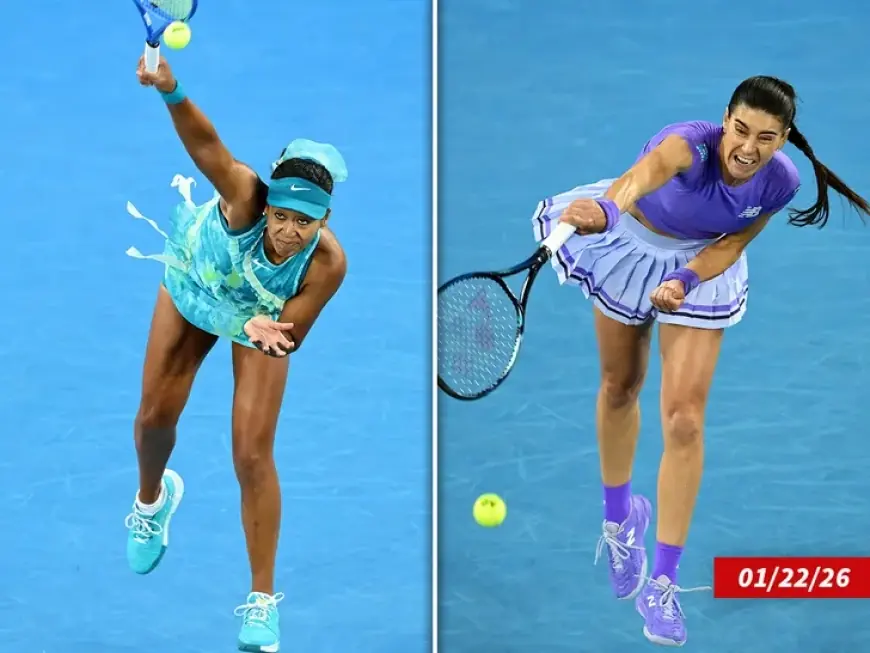
Naomi Osaka is through to the Australian Open third round after a three-set second-round win that delivered two storylines at once: a resilient on-court response in a tight match, and a post-match net exchange that reignited tennis’s long-running “fair play” arguments. The result keeps Osaka’s campaign moving forward in Melbourne, but the conversation around her has widened beyond tactics and into how players handle emotion, rhythm, and respect under Grand Slam pressure.
Osaka’s victory over Sorana Cîrstea finished 6–3, 4–6, 6–2, a scoreline that reflects a match of momentum swings. Osaka started efficiently, dipped in the second set, then reasserted control late—exactly the kind of pattern that separates early-round survivors from deep-run threats. Yet the moment that traveled fastest afterward wasn’t a forehand winner or a service hold; it was the handshake.
Naomi Osaka vs. Sorana Cîrstea: the match that tightened, then snapped open
The contest played like two matches stitched together. In the opening set, Osaka looked composed in her patterns—first-strike tennis, clean service games, and decisive returns at key moments. The second set shifted as Cîrstea found more depth and timing, stretching rallies and disrupting Osaka’s preferred rhythm. By the third, Osaka settled back into the basics: higher first-serve intent, earlier ball contact, and more assertive court positioning that kept points on her terms.
That closing-set reset matters for Osaka’s larger Australian Open outlook. In recent seasons, her best tennis has often come when she simplifies—serve plus one, early returns, and clear shot selection under pressure. A three-set win that ends with a firm final-set statement suggests she’s building match toughness, not just collecting routine scores.
What sparked the handshake drama and why it became a “fair play” talking point
The post-match exchange at the net appeared notably brief and chilly, and Osaka spoke afterward about being caught off guard by how it felt. The wider “fair play” angle revolves around one of tennis’s most sensitive gray areas: perceived distractions during play. Players can feel an opponent is affecting timing—through noise, movement, or other rhythm breakers—without there being an obvious violation that an umpire can easily police.
When that kind of friction simmers, it often surfaces at the handshake because it’s the first moment of direct interaction once adrenaline peaks and the match is finished. Tennis has a strong cultural expectation that the net exchange looks polite and neutral, even if the last two hours were tense. Any deviation from that script becomes its own headline, especially at a major where every camera angle is studied.
Osaka’s apology and what it signals about the spotlight she’s under
After initial post-match remarks added fuel to the debate, Osaka followed up with an apology, emphasizing that she doesn’t like disrespecting people and that she regretted how her comments came across. In today’s tennis environment, that sort of recalibration is almost part of the event itself: players speak quickly, clips circulate instantly, and a single phrase can outgrow the match it was meant to describe.
For Osaka, there’s an extra layer. Her return to sustained competition has been watched closely, and each round is treated as a test of both form and composure. That means small moments—body language, a handshake, a comment—carry disproportionate weight. The apology is less about conceding a point of etiquette and more about removing noise so the tournament remains the central story.
Why this matters for Naomi Osaka’s next match
Grand Slams reward emotional efficiency. A player can’t spend two days processing a viral handshake clip; the draw keeps moving. The key question now is whether Osaka converts the attention into focus or lets it linger as background tension.
Here’s what typically decides which way these situations go:
-
Fast start in the next round: early holds and a quick break opportunity can shrink external chatter into irrelevance.
-
Close scoreline late: if the next match becomes a grind, every minor interaction—between points and at changeovers—gets magnified again.
-
Clear tactical identity: when Osaka commits to first-strike patterns, she tends to look calmer; hesitation is when frustration creeps in.
The other storyline: Naomi Osaka’s Australian Open presence beyond the scoreboard
Osaka’s Melbourne run has also come with heightened attention to her walk-on style and overall presentation—part of the modern reality where elite tennis is both sport and spectacle. For Osaka, that attention has often been double-edged: it underscores her star power, but it also widens the lens, making non-tennis moments feel consequential.
What her second-round win ultimately did is restore competitive momentum. It wasn’t a perfect performance, but it was a functional one: absorb a swing, re-center, and take control when it counts. If Osaka keeps doing that, the handshake episode becomes a footnote. If the next round is turbulent, it becomes a reference point.
Either way, Naomi Osaka remains one of the tournament’s most scrutinized figures—because her tennis is compelling, her career arc is still unfolding in real time, and her smallest moments tend to become everyone’s biggest conversation.