Marta Kostyuk at Indian Wells: 3 Telltale Signals Ahead of a High-Stakes Rybakina Test

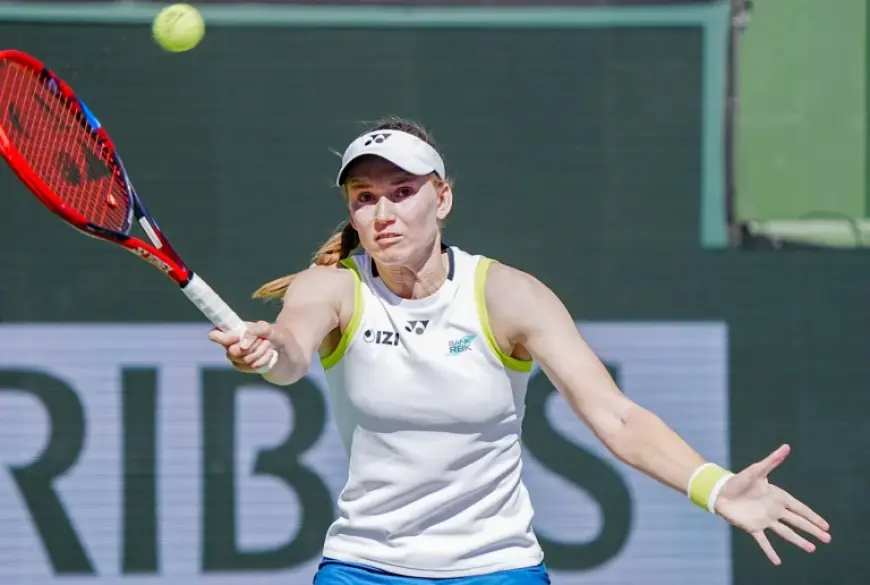
On day six at WTA Indian Wells, marta kostyuk finds herself in a matchup that can quietly define a tournament week: a third-round meeting with 2023 champion Elena Rybakina, with the round of 16 on the line. The intrigue is less about hype than about clues—what the early rounds revealed, what the head-to-head suggests, and what lingering physical uncertainty could mean when margins tighten on these desert courts.
Indian Wells day six context: a third-round hinge with round-of-16 stakes
Day six offers a slate of third-round action framed by a simple question: who advances to the round of 16? In that mix, the Rybakina–Kostyuk contest stands out because it pairs a recent champion’s track record in the desert with an opponent described as tricky and competitive, capable of mixing shots effectively.
For marta kostyuk, the significance is structural as much as it is psychological. Third rounds at Indian Wells can function like a hinge: the winner moves into the second week, where matchups often become more about recovery, tactical detail, and the ability to reproduce a level under pressure than about surprise value. This is why even the limited public signals from earlier rounds matter.
Marta Kostyuk vs Elena Rybakina: what the form notes actually imply
The clearest immediate datapoint is the contrast in recent match narratives described in the day-six preview. Kostyuk “cruised past Taylor Townsend, ” a phrasing that signals control—whether through clean execution, steadier service games, or simply a matchup that allowed her to stay on top of points. Rybakina, by comparison, “survived a tough test against Hailey Baptiste, ” saving three set points in the opener.
Those details set up three practical signals that can shape how this third-round match plays:
- Energy and rhythm: A straightforward win can preserve physical reserves and keep patterns clear. A tense escape can still build confidence, but it can also leave questions about how quickly a player settles in the next match.
- Pressure tolerance: Rybakina’s escape required defending set points. That can be interpreted as a positive sign of resilience, yet it also underscores how narrow the edge can be if an opponent sustains pressure.
- Style friction: Kostyuk is described as mixing shots effectively, a trait that can disrupt players who want predictable tempo. Whether that disruption is enough depends on how consistently Rybakina’s primary weapons land.
None of these points guarantees a result; they simply describe where the leverage might appear. The match is framed as one where Rybakina’s serve and forehand, when “click” on these courts, can put her in a category “few can compete” with. That sets a demanding bar for any opponent, including marta kostyuk, because it implies that the contest may hinge on whether Rybakina reaches that level early or gets pulled into variation.
Head-to-head gravity and the “physical questions” factor
The preview also introduces two forces that can coexist: dominance in the head-to-head and uncertainty about physical readiness. Rybakina is said to “dominate their head-to-head, ” a phrase that matters not only for prediction purposes but for the strategic starting point. Players who have repeatedly won a matchup often begin with a clearer sense of what patterns hold up under stress.
At the same time, the same set of notes indicates Rybakina is “still rebuilding after a Dubai retirement, ” and that the recent three-setter “hints at lingering physical questions. ” Those points do not establish injury specifics or a medical status; they simply mark that the champion’s baseline certainty is not total. In a tournament where conditions and court familiarity can reward confident first strikes, even small uncertainty can widen the tactical runway for the opponent.
That’s where the matchup gets analytically interesting: Kostyuk’s “tricky” and “competitive” profile suggests she can make an opponent play extra balls, change the look of rallies, and force decisions. If physical comfort is not perfect, decision-making often becomes more conservative—or more rushed—depending on the player. The preview’s logic, however, still leans toward Rybakina: “her class and desert history should carry her through. ”
For marta kostyuk, the path to altering that expected arc is implied rather than stated: maintain the disruptive variety that makes her difficult, and ensure that the match does not become a pure serving-and-forehand showcase on Rybakina’s preferred terms.
Broader ripple effect: why this match shapes the day-six narrative
Indian Wells day six is not only about a single marquee name; it’s a day defined by contrasts in form, physical condition, and matchup fit across the draw. The same set of day-six notes highlights concerns about a mid-match back issue for Sonay Kartal after a medical timeout, and a composed serving display from Madison Keys that included landing 76% of first serves and saving eight of nine break points. Those kinds of details are the currency of the third round: not the season-long résumé, but what is happening right now on these courts.
In that landscape, the Rybakina–Kostyuk match functions as a stress test for two different narratives. For Rybakina, it is a measure of whether the rebuilding phase can still produce the decisive, clean tennis associated with her desert success. For marta kostyuk, it is a chance to validate that an efficient win over Townsend can translate into sustained disruption against an opponent with a strong matchup history.
By the end of the day, the result will do more than decide a round-of-16 spot: it will clarify whether the tournament’s established power lines are holding or whether variation and competitive grit can force a recalculation in the desert. If Rybakina’s serve and forehand find their highest gear early, the pathway looks straightforward. If not, the match may become an examination of how long marta kostyuk can keep the questions coming—and whether the champion has all the answers under day-six pressure.