Fani Willis shut out of $16.8 million fee fight as Fulton County steps in: the disqualification that still controls the money

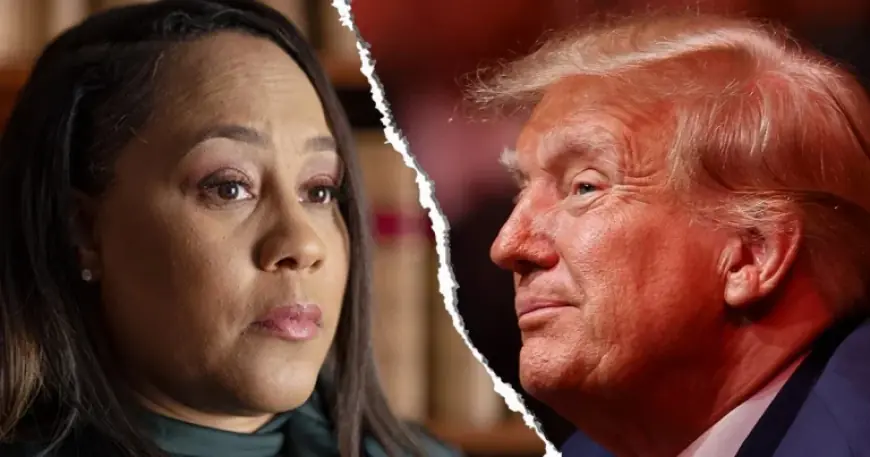
In a ruling that keeps the consequences of disqualification alive long after the criminal case ended, fani willis and the Fulton County District Attorney’s Office were blocked from joining a nearly $17 million attorney-fee dispute brought by President Donald Trump and other former defendants—while Fulton County itself was allowed into the case because any payment could ultimately land on taxpayers.
Why did Judge Scott McAfee block Fani Willis from intervening?
On Monday, Fulton County Superior Court Judge Scott McAfee rejected the Fulton County District Attorney’s Office’s attempt to intervene in litigation over attorney’s fees and costs sought by 14 former defendants, including President Donald Trump. The total requested amount is $16, 853, 810. 28.
McAfee’s order centered on a procedural and legal barrier: the Fulton County District Attorney’s Office remains disqualified from the underlying prosecution and therefore cannot re-enter the dispute to argue over consequences tied to that prosecution. The judge wrote that the office failed to show it had a legal right to intervene and emphasized that the office was “wholly disqualified. ”
The ruling also stated that the interests the district attorney’s office cited—including potential financial impacts on the office’s budget—are already represented in the case because the state is represented by a district attorney pro tempore appointed after the disqualification. In McAfee’s framing, that appointment means the state’s position is already before the court without the disqualified office returning to defend decisions that are now legally tainted by the conflict finding.
McAfee additionally noted that many arguments raised by the Fulton County District Attorney’s Office would require defending prosecutorial decisions that the Georgia Court of Appeals had deemed compromised by a conflict of interest that created an “appearance of impropriety” and undermined public confidence.
How did the racketeering case collapse into a taxpayer-stakes fee battle?
The attorney-fee dispute stems from the collapse of a sweeping 2023 racketeering indictment brought by Fulton County District Attorney fani willis against former President Donald Trump and more than a dozen allies. Prosecutors alleged a coordinated effort to overturn Georgia’s 2020 presidential election results, including the creation of alternate electors and pressure on state officials.
That case later unraveled after the Georgia Court of Appeals disqualified Willis and her office over a conflict of interest involving her relationship with a special prosecutor hired to work on the case. After Willis was removed, the prosecution was ultimately dropped. The dispute now before the court turns on a newly enacted Georgia law that allows defendants to recover attorney’s fees and costs when a prosecutor is disqualified.
In this litigation, 14 former defendants are seeking reimbursement under that law, transforming what was once a high-profile criminal prosecution into a high-dollar financial fight. Judge McAfee described the issues as procedurally uncharted, noting “novelty abounds” as the court confronts questions about how to evaluate whether the requested fees—spanning multiple defendants—are reasonable.
The law described in the court filings is identified as Senate Bill 244, signed by Georgia Gov. Brian Kemp on May 14, 2025. It created a mechanism for defendants to seek reimbursement for legal fees after prosecutorial disqualification. The same bill also set compensation for wrongful imprisonment at “$75, 000 for every year of wrongful imprisonment. ”
Why is Fulton County allowed in when the DA’s office is not?
Although the court shut out the Fulton County District Attorney’s Office, McAfee granted Fulton County’s request to intervene. The county argued it has a direct financial stake because it provides most of the funding for the district attorney’s office. McAfee agreed with the underlying premise and wrote that the “financial buck appears likely in some form to eventually stop at the county’s desk, ” signaling that county government—and by extension taxpayers—could bear the burden of any court-ordered payment.
The court also indicated the county could provide insight into budget issues and the funding relationship between the district attorney’s office and local government—an issue now central to the next phase of litigation. The posture of the case effectively splits participation: the disqualified prosecuting office cannot take a direct role, while the county can appear to argue over financial exposure and fiscal mechanics.
Separately, after McAfee’s order was filed, Willis’s office submitted a motion for a “certificate of immediate review, ” a procedural step signaling an intent to seek higher-court consideration of the ruling that kept the office out of the fee dispute.
For now, the court’s message is clear: disqualification is not a past-tense label—it is an active constraint. Even with the underlying racketeering prosecution dismissed, the financial aftershock continues, and the next legal battle will proceed with Fulton County at the table while fani willis and her office remain on the outside looking in.