Wyatt Teller and the Browns’ new guard deal: what Zion Johnson’s arrival signals up front

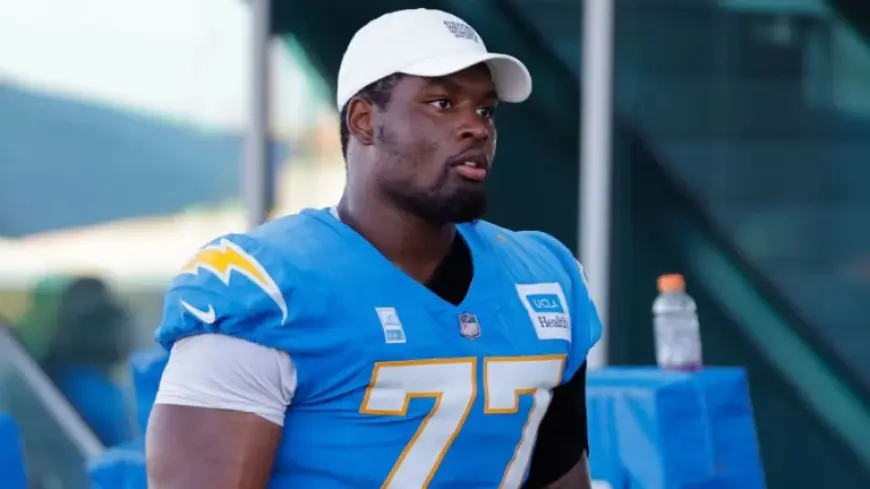
wyatt teller sat at the center of Cleveland’s offseason conversation the moment the Browns reached an agreement Monday with free agent guard Zion Johnson. The deal — three years, $49. 5 million, with $32. 4 million guaranteed — reads like a clear statement: the interior of the offensive line is a priority, and the plan is to change what the front looks like in meaningful ways.
What did the Browns agree to with Zion Johnson?
The Browns and Zion Johnson reached agreement Monday on a three-year, $49. 5 million deal that includes $32. 4 million guaranteed. Johnson is a free agent guard, and the agreement was shared publicly through his representatives, agents Alan Herman and Jared Fox, in comments carried by Adam Schefter.
Johnson becomes the second major addition to the Browns’ offensive line this offseason. Last week, Cleveland agreed to a trade with the Houston Texans to acquire tackle Tytus Howard. Together, those moves put the offensive line at the front of the Browns’ roster agenda.
How does Wyatt Teller relate to Cleveland’s reshaped interior line?
In a room where a veteran presence can matter as much as a depth chart, wyatt teller now sits alongside a newcomer arriving with both a strong recent season and clearly defined areas for improvement. The Browns’ agreement with Johnson is not a small add-on; it is a long-term commitment with substantial guarantees, suggesting the team views him as more than competition or insurance.
The available facts do not specify how Cleveland will align its starters, nor do they spell out which guard spot Johnson will occupy. What is clear is that Johnson has experience on both guard positions, and the Chargers briefly played him at center during training camp and the preseason. That flexibility gives Cleveland options, even if the eventual plan is not yet public.
For a line room, options can mean stability — or change. The Browns’ offseason has already included a major tackle addition in Tytus Howard, and now a high-value interior signing. That is a pattern of investment, not a one-off decision.
What kind of player is Zion Johnson right now?
Johnson’s 2025 season in Los Angeles was defined by durability and a step forward in run blocking. He was the Chargers’ most durable player in 2025, playing 100% of the team’s offensive snaps except in Week 18, when coach Jim Harbaugh benched most starters. The season was described as the best year of Johnson’s career as he evolved into one of the league’s top run blockers.
In run blocking, Johnson finished ranked second in run block win rate at 79. 3%. But the same evaluation also points to a sharper contrast in pass protection. He struggled in pass blocking, particularly against defensive line stunts. He ranked as the fifth-worst guard in pass block win rate at 87. 4%, and he played a role in quarterback Justin Herbert being the league’s most pressured and hit quarterback.
Johnson also had a career low of three penalties called on him in 2025. That detail matters in the margins: fewer penalties can reflect cleaner technique, steadier decision-making, or simply fewer breakdowns that officials spot — but the trend line is positive on discipline.
Johnson entered the league as a first-round pick out of Boston College in 2022. Over four seasons, he has started throughout his time in Los Angeles. The Chargers chose to let him test free agency after four years rather than pick up his fifth-year option, and Cleveland’s agreement with him now sets his next three years on a new line in a new system.
What else changed for Cleveland this offseason — and why it matters
Even with the offensive line additions drawing the headlines, the Browns also moved on defense, agreeing to a two-year contract with linebacker Quincy Williams. Williams, 29, finished last season as the New York Jets’ longest-tenured defensive player, a distinction he inherited after his younger brother, Quinnen Williams, was traded to the Dallas Cowboys last November.
Williams’ most recent season included challenges. He was denied a contract extension before last season, and his play slipped below its usual standard. He missed four games with a shoulder injury, was briefly demoted upon his return, and finished with fewer than 100 tackles for the first time in five seasons with the Jets.
The combination of moves — investing heavily in the offensive line while adding an experienced linebacker — sketches a broader offseason approach: reinforce premium areas with proven players, then bet on coaching and fit to raise the floor of performance.
For Cleveland’s offense, the line emphasis is straightforward. A tackle acquired by trade and a guard signed to a multi-year guaranteed deal is an attempt to build sturdier edges and a stronger interior simultaneously. In that context, the conversation naturally widens to the incumbents already in the room, including wyatt teller, because the value of a new contract often lies in the ripple effects it creates.
What happens next?
What is not yet specified in the public facts is how Cleveland will deploy Johnson week to week, how quickly he will settle into the team’s protections, or how the coaching staff will address the pass-blocking issues noted in his evaluation. Those are football questions that will be answered through practice reps, game planning, and the ongoing health of the unit — details that have not been provided here.
What is already settled is the direction: Cleveland has acted, twice on the offensive line, and committed significant resources to do it. In the months ahead, the Browns will be asking Johnson to bring his 2025 durability and run-blocking effectiveness to an offense that clearly wants more dependability up front, while refining the pass-protection areas that were exposed in Los Angeles.
If the Browns’ offseason is a story about building a sturdier foundation, then the next chapter will be about whether the pieces fit together the way the contracts suggest they should — and how figures like wyatt teller help define what “better up front” looks like once the games begin.