Justice Ketanji Brown Jackson Criticizes Supreme Court’s ‘Warped’ Emergency Case Process

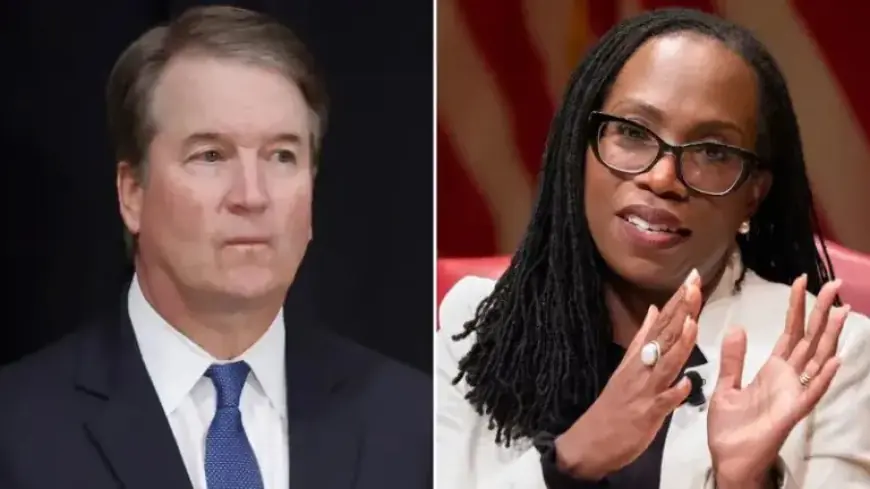
Justice Ketanji Brown Jackson recently criticized the Supreme Court’s approach to emergency cases, labeling it a “warped” process. Her comments shed light on the court’s handling of high-profile controversies and the implications for the justice system.
Concerns Over the Supreme Court’s Emergency Docket
During an event at a federal courthouse in Washington, DC, Jackson expressed concern over the increasing involvement of the Supreme Court in emergency cases. She remarked that this trend represents an unfortunate shift compared to previous decades. Jackson stated, “This uptick in the court’s willingness to get involved with cases on the emergency docket is a real unfortunate problem.”
Growing Tension Among Justices
Justice Jackson’s remarks came during a discussion where she shared the stage with Justice Brett Kavanaugh. Their dialogue highlighted differing perspectives on the reasons behind the rise in “shadow docket” rulings. While Kavanaugh pointed to executive actions prompted by a gridlocked Congress, Jackson held the court’s willingness to grant emergency motions accountable for the situation.
- Jackson noted that this process harms both the court and the nation.
- She has voiced similar concerns in previous written dissents.
- Kavanaugh emphasized that criticisms of the emergency docket may overlook the need for urgent rulings.
The Impact of Recent Cases
Both justices refrained from discussing specific cases during the event. However, the Supreme Court has been notably favorable to emergency appeals under President Donald Trump’s administration, approving 80% of these cases. This contrasts sharply with the Biden administration’s experience.
Jackson remarked that the Supreme Court’s current handling diverges from what it used to be. She referenced a time when motions were not automatically entertained as they are now. The interaction took on a more serious tone when US District Judge Paul Friedman inquired about the court’s emergency docket and its implications.
Recent Controversies and Decisions
A week prior to the discussion, the court issued emergency orders in politically charged cases. These included:
- Blocking a California education policy that protects students’ gender expression privacy.
- Supporting a Republican congresswoman’s appeal to stop redistricting efforts.
These decisions faced sharp rebukes from the liberal justices, with Justice Elena Kagan remarking, “Today’s decision shows, not for the first time, how our emergency docket can malfunction.”
In conclusion, Justice Ketanji Brown Jackson’s critique of the Supreme Court’s “warped” emergency case process underscores growing frustrations with how vital legal matters are handled. As the court continues to navigate these complicated issues, the balance between judicial efficiency and thorough consideration remains a critical point of discussion.