BFS Crypto Coin Price Today: Why “BFS” Is Moving Wildly and Why Your Price May Not Match Anyone Else’s

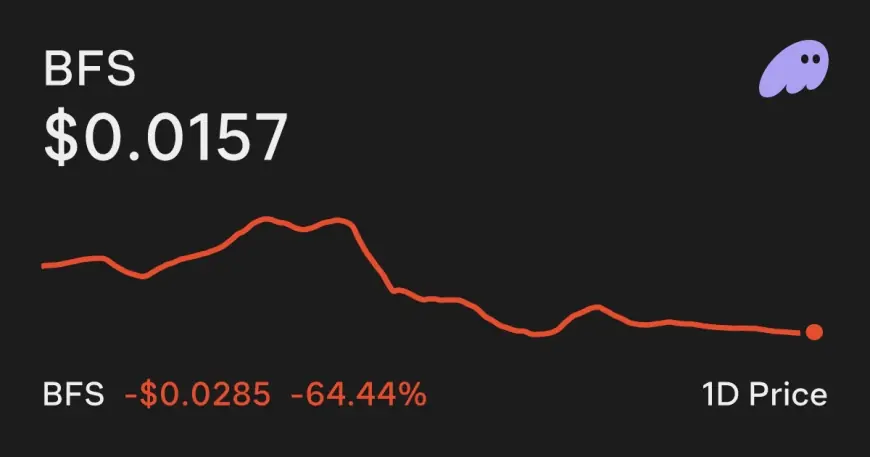
BFS crypto coin price trackers are flashing conflicting numbers today because “BFS” is not a single, universally unique coin across the market. In the past 24 hours, the most-followed “BFS” listings have shown sharp intraday swings—from prints in the $0.01–$0.06 zone for one Solana-based BFS listing—while other tokens that also use the BFS ticker are trading nearer $0.02 or even fractions of a cent, depending on the contract and liquidity pool you’re actually looking at. That mismatch is the story: BFS price action is volatile, and the ticker is overloaded.
If you’re checking “BFS price” and seeing a number that doesn’t line up with a friend’s screenshot, you may both be right—because you may be looking at different BFS contracts.
BFS crypto coin price today: the latest price picture in plain English
In the last 24 hours (through January 21, 2026), the BFS ticker has been associated with:
-
A higher-volume Solana BFS listing that has shown rapid spikes and drops, with some trackers showing intraday highs around $0.06–$0.07 and pullbacks toward the low cents.
-
Another Solana BFS token variant trading far lower (sub-$0.001 in some pools), reflecting a very different market cap and liquidity profile.
-
A separate “BFS” listing on other platforms that appears effectively inactive or priced inconsistently due to thin markets.
Because these tokens share a ticker, “BFS coin price” can look dramatically different depending on which listing your app surfaced first.
-
BFS price has been highly volatile in the last day, with large percentage moves in short windows.
-
Multiple “BFS” contracts exist, especially on Solana, and they do not share the same liquidity, holders, or market cap.
-
Some BFS pairs show healthy trading volume, while others show thin liquidity, where a single trade can swing the price.
-
A viral narrative has helped fuel short-term speculative flows, but the token identity confusion is amplifying it.
-
The safest way to track BFS is by contract address + chain, not by ticker.
Why BFS price may be “falling” on one chart and “pumping” on another
This is the core issue: ticker collisions. Unlike large-cap assets with one dominant market identity, small-cap tokens often reuse tickers, and some wallets/explorers will display whichever token is trending or whichever pool is most active.
Two practical reasons you’re seeing contradictions:
1) Different BFS contracts on the same chain
On Solana alone, “BFS” appears across multiple contracts and pools. Some trackers show BFS tied to a contract beginning 2k8yZa…, which has been quoted around the $0.016–$0.02 region at points, while another BFS variant linked to a contract beginning AQsj… has printed near $0.001 or lower in certain snapshots. These are not the same asset.
2) Liquidity and pool selection can rewrite the “price”
Even for the same token, the “price” depends on which pool your tracker prioritizes. A shallow pool can show eye-catching moves that don’t reflect where most trading is happening. That’s how you get a situation where one feed shows BFS ripping to the mid-cents while another shows a much lower number: they may be indexing different pools, or one may be lagging after rapid repricing.
What’s driving the BFS buzz right now
In the past day, BFS has been pulled into the familiar meme-token cycle: a burst of attention, heavy trading in a short window, and amplified social chatter around “the next big run.” The narrative heat can attract fast money, which in turn increases volatility and makes “BFS crypto coin price” trend even harder—especially when large buys hit small-liquidity markets.
One additional accelerant: BFS has circulated alongside influencer-themed speculation (even when no official connection exists). That type of association tends to create short-lived momentum spikes—followed by abrupt reversals when early buyers take profits or liquidity shifts to the next trending ticker.
How to check the right BFS price in 60 seconds
If you only do one thing, do this:
-
Confirm the chain (Solana, BSC, Ethereum, etc.).
-
Match the contract address from the token you hold in your wallet.
-
Check liquidity (if it’s tiny, expect extreme slippage and wild candles).
-
Compare at least two independent trackers for the same contract/pool.
-
If you’re swapping, preview price impact before confirming.
This avoids the most common trap: buying “BFS” based on a chart that belongs to a different BFS.
A quick historical note: the crypto market has seen repeated waves of ticker re-use—especially during meme cycles—where multiple tokens share the same symbol and retail traders get routed into the wrong contract. The result is always the same: confusion, sudden price dislocations, and a higher risk of costly mistakes during fast-moving sessions.
FAQ: BFS coin price
Why is BFS coin price different on different apps?
Because multiple tokens use the BFS ticker. Prices can also vary by which liquidity pool the app prioritizes.
Is BFS price falling today?
One BFS listing has shown sharp pullbacks after intraday spikes, while other BFS variants have moved differently. The direction depends on the exact contract you’re tracking.
How do I know I have the “real” BFS?
There isn’t one universal “real” BFS. The “real” one is the contract you actually hold—verify it by chain + contract address.
BFS is a textbook example of why “coin price” is not a ticker-only question in 2026. If volatility stays high, the next signals to watch are simple: whether trading consolidates around one dominant pool, whether liquidity deepens (reducing violent swings), and whether the viral narrative fades or reignites. The closer you track BFS by contract and liquidity—rather than by ticker—the safer your decisions will be in the next round of moves.