


















Commission Proposes New Democratic-Leaning Congressional Districts

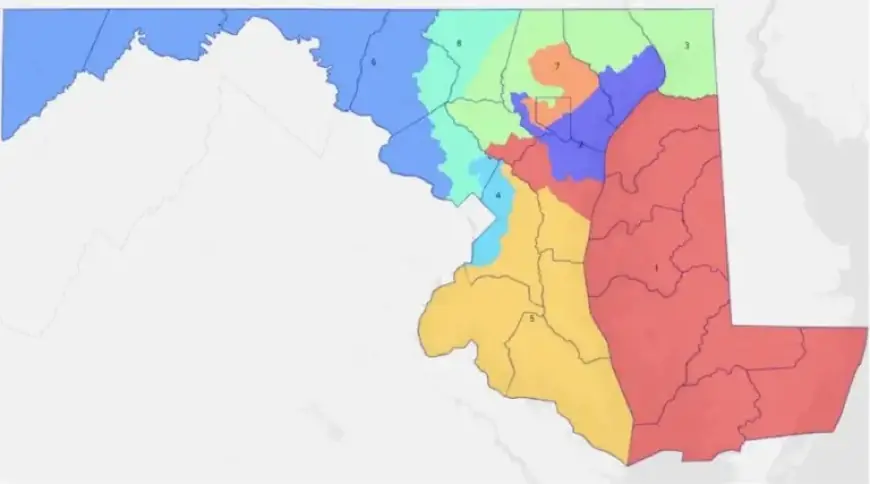
The Maryland redistricting advisory commission has made a significant recommendation regarding congressional district boundaries. Governor Wes Moore’s commission aims to enhance Democratic prospects in the upcoming elections. This new proposal could enable Democrats to secure all eight congressional seats in Maryland.
Key Changes to Congressional Districts
The proposed map notably alters the 1st Congressional District. Currently held by Republican Andy Harris, this district now stretches across the Chesapeake Bay, integrating more liberal areas from Anne Arundel and Howard counties. This shift connects Ocean City with Columbia, creating a new landscape for voters.
Impact on Other Districts
In addition to the changes in the 1st District, several other districts in Central Maryland will also see adjustments. Despite these shifts, they appear to remain favorable for Democratic candidates. Presently, Democrats control seven of Maryland’s eight congressional seats.
Commission and Legislative Process
The proposed map is now headed to the General Assembly for deliberation, although its passage is uncertain. Senate President Bill Ferguson, a Democrat from Baltimore, has voiced his opposition to the redistricting effort. Ferguson claims that most senators align with his viewpoint against the changes.
- Senate President Bill Ferguson opposes the new map.
- Republican Ray Morriss also voted against the proposal.
- Democratic votes came from Senator Angela Alsobrooks, Del. C.T. Wilson, and former Attorney General Brian Frosh.
Ferguson has labeled the commission’s chosen map as “objectively unconstitutional.” He argues that the districts lack population balance and fragment communities more than the current configuration. In contrast, Frosh defended the map’s legality, asserting it adheres to key geographic and political boundaries.
Legal Challenges Ahead
Maryland Republicans plan to contest any new maps, anticipating legal battles that could prolong the process. These lawsuits might impinge on deadlines related to Maryland’s June primary elections.
Public Input and Transparency
Alsobrooks, who led the commission, emphasizes that the redistricting process has been open to public participation. Members previously held public sessions for testimony before gathering for a private meeting to finalize their recommendations.
Governor Moore, addressing reporters, expressed confidence in the transparency thus far and assured that public involvement would continue throughout the legislative process. “This vote is not the end of public input — it’s a next step forward,” Alsobrooks remarked.
Context of National Redistricting Trends
Maryland’s redistricting proposal aligns with a broader national trend of partisan redistricting efforts, particularly intensified since former President Donald Trump’s call for redrawn Republican-friendly districts in Texas. As states navigate these changes, Maryland stands out with its strategic manipulation of boundaries aimed at political advantage.
The adjustments proposed in Maryland’s congressional districts underscore the intricate interplay of politics and representation. It remains to be seen how the upcoming discussions in the General Assembly will unfold and whether these transformations will stand up to legislative and judicial scrutiny.