One Piece Season 3 chatter grows as Season 2 cast expands and reviews rise

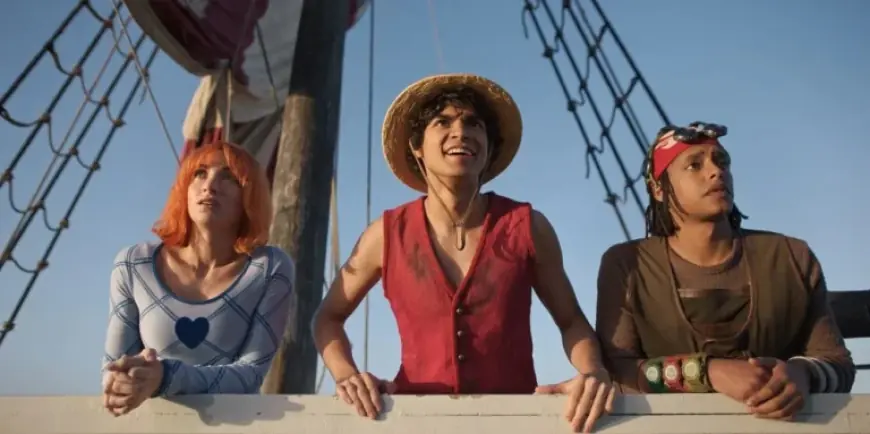
Netflix’s live-action series has a clear, confirmed next step: Season 2 of “One Piece” premieres March 10, sending Monkey D. Luffy and the Straw Hat Pirates into the Grand Line with new characters and higher ambitions. That widening ensemble and the early critical response pointing to bigger scale and stronger effects are already shaping the direction of travel for one piece season 3 expectations: more world, more faces, and more pressure to balance scope with character focus.
Season 2’s March 10 premiere sets the next benchmark for One Piece Season 3
Season 2 is positioned as an expansion point for the story, both geographically and in cast. The new episodes begin as the Straw Hats “enter the Grand Line, ” described as a dangerous and unpredictable stretch of sea where the world’s most powerful pirates chase glory and treasure. Season 1 ended with Luffy assembling his core crew—Roronoa Zoro, Nami, Usopp, and Sanji—after defeating Arlong and claiming their ship, then leaving the East Blue behind to set their sights on the Grand Line.
The cast details underline what is already locked in for this phase of the adaptation. Iñaki Godoy leads as Monkey D. Luffy, with Emily Rudd as Nami, Mackenyu as Roronoa Zoro, Jacob Romero Gibson as Usopp, and Taz Skylar as Sanji. The character notes also clarify where Season 2 starts emotionally and narratively: Nami is “now fully part of the Straw Hat crew, ” Zoro leaves determined to grow stronger after barely surviving a duel with Dracule Mihawk in Season 1, and Sanji has chosen to follow his dream of finding the All Blue after leaving Baratie.
For forecasting purposes, March 10 functions as the immediate measurement point. It is the moment when the show’s newly expanded roster, the Grand Line setting, and the production’s bigger ambitions become the baseline against which any one piece season 3 conversation gets framed—whether by viewers prioritizing character arcs or by critics weighing scale, pacing, and the practicality of adapting an ever-growing story.
Eiichiro Oda, the Grand Line, and early reviews signal an expansion-driven trajectory
Two forces in the current context point in the same direction: an adaptation committed to scale, and feedback that frames Season 2 as a successful escalation. Eiichiro Oda’s involvement as a consultant is explicitly cited alongside Season 1’s reception, with a Certified Fresh Tomatometer score of 86% and a Popcornmeter score of 95%. That starting point matters because the Season 2 reception described in early reviews is not cautious; it is “even more effusive with praise, ” with repeated emphasis on ambition and expansion.
Review excerpts consistently return to a few concrete signals: Season 2 is called “bigger, better, and more ambitious, ” “jam-packed with standout additions, ” and marked by a major jump in special effects “both in volume and quality. ” Another thread is structural: rather than replicating the original serialization’s lengthy pacing, Season 2 “compresses some of its worldbuilding” so audiences can understand characters and conflicts more cohesively. The same set of comments also highlights “more ambitious action sequences and political intrigue, ” and notes the cast feels more comfortable in their roles, with Godoy singled out for bringing the “exuberance, silliness, charm, and drive” expected of Luffy.
These details, taken together, establish a trajectory: the live-action “One Piece” is leaning into bigger scope while actively managing adaptation constraints, particularly pacing and clarity. The Grand Line is framed as a place of “strange islands, powerful enemies and potential allies, ” which inherently implies more characters and more moving parts. When reviewers also describe a season that avoids “hitting capacity” even with an expanding ensemble, it becomes a visible signal that the production’s current strategy is growth with guardrails.
one piece season 3 scenarios emerge from Season 2’s scope-and-focus tradeoff
If the current Season 2 trajectory continues… the strongest signal is continued appetite for expansion, because the context ties praise directly to scale: bigger stakes, bolder choices, more world, and effects that increase in both volume and quality. The cast is described as a “massive selling point, ” and Season 2 is characterized as an “effective expansion of the story’s world, ” populated by fun characters with infectious energy. In that lane, one piece season 3 expectations would likely center on the same ingredients that reviews elevate now: ensemble additions that feel like “standout” arrivals, and action that remains “intense and kinetic” while staying easy to follow.
Should the scope continue to expand faster than character time… the context already supplies a potential friction point: one reviewer’s “small gripe” that the expanded scope and roster mean individual character arcs are “not quite as tightly written. ” That is not presented as a failure, but it is a clear tradeoff that comes with a jam-packed approach. If that tension grows, it could shape the next phase of audience expectations around whether the show can keep compressing worldbuilding for cohesion without flattening personal journeys—especially when Season 1’s ending and Season 2’s beginning are explicitly anchored in character milestones for Luffy, Nami, Zoro, Usopp, and Sanji.
The next confirmed signal is simple and immediate: the March 10 premiere of Season 2. What the context does not resolve is any concrete plan, timeline, or creative direction for one piece season 3 itself. Still, Season 2’s specific combination of expanded ensemble, Grand Line escalation, and reviews praising ambition creates a grounded expectation that the show’s near-term conversation will revolve around how well bigger can remain coherent.