Norway Wartime Property Seizures: Why 13,500 Owners Are Getting Notices and What It Means Next

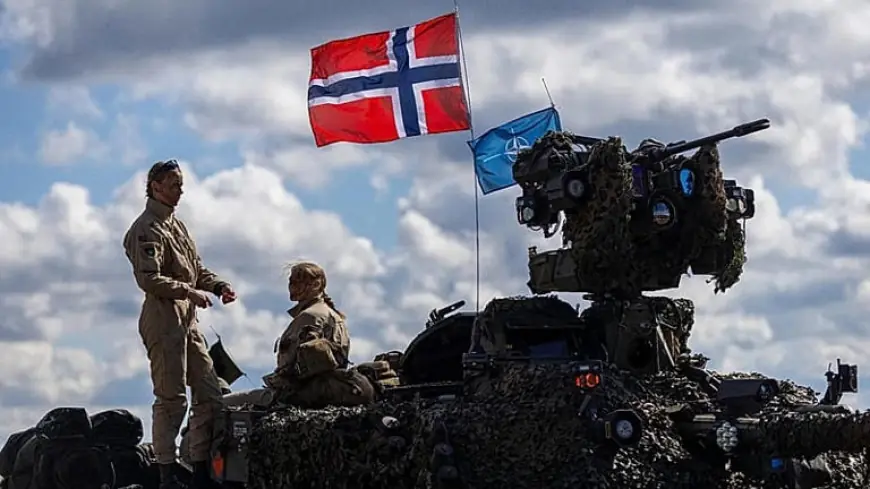
Norway is sharpening its “total defence” posture by formally notifying thousands of citizens and businesses that specific private assets could be requisitioned if the country faces war or a severe security crisis. The move has drawn attention because it puts a long-standing wartime power into everyday language: your building, boat, vehicle, or equipment may be earmarked for national defence use if the situation escalates.
For 2026, the armed forces plan to issue roughly 13,500 “preparatory requisitions,” a figure that signals scale and system, not a sudden grab. Most of these notices are administrative planning tools, but they also mark a clear shift toward practical readiness in a tense regional environment.
What “Norway wartime property seizures” means in practice
In Norway’s framework, a wartime property seizure is better understood as a requisition: a legal mechanism that allows military authorities to take over or direct the use of civilian resources that are deemed necessary for defence. The preparatory version is issued in peacetime to pre-identify resources and reduce delays if a crisis turns into conflict.
Key points being emphasized by the military:
-
The notice has no practical effect in peacetime beyond informing the owner that an asset is being planned for possible use.
-
The preparatory requisition is generally valid for one year at a time.
-
A large share of the 2026 notices are renewals rather than brand-new designations.
This is less about taking property tomorrow and more about building a registry of usable assets that can be activated quickly if national authorities decide it’s necessary.
Which assets are being targeted for wartime requisitioning
The notices are not limited to homes. The emphasis is on assets that can materially support logistics, transport, storage, engineering, and coastal operations. Categories commonly included in preparatory planning include:
-
Buildings and sites: warehouses, strategically located facilities, industrial spaces
-
Vehicles and machinery: heavy equipment, specialized vehicles, loaders, excavators
-
Maritime resources: boats, vessels, docks, wharves, maritime support assets
-
Industrial capacity: workshops and facilities that can support repair, fabrication, or essential production
The logic is straightforward: in a crisis, the speed of mobilization often depends on access to infrastructure and equipment already present in the civilian economy.
The legal backbone: a post-war requisition law built for emergencies
Norway’s authority for military requisitions is rooted in a dedicated legal framework created in the early Cold War period. It grants military authorities the power to requisition what is necessary when the realm is at war, and it also allows preparatory measures in peacetime to ensure plans can be executed rapidly.
That distinction matters. A preparatory notice is the planning step; actual requisitioning is the operational step that would require an extraordinary national situation and formal activation.
Why the notices are drawing attention now
Even though the legal mechanism is not new, the timing resonates. Norwegian officials have been underscoring that the security environment in Europe and the High North has worsened in recent years. Norway shares a short land border with Russia in the far north and sits astride strategically important sea routes, energy infrastructure, and undersea links.
The broader policy message is that resilience is no longer theoretical. Civil preparedness, logistics readiness, and rapid access to critical resources are being treated as core defence requirements, not optional extras.
What owners should do if they receive a notice
For recipients, the most important thing is to understand what the notice does and does not do. In general, owners can expect the following practical implications:
-
Documentation and clarity: Verify which specific asset is covered and how it is described.
-
Business continuity planning: If the asset is central to operations (for example, a key machine, vehicle, or facility), consider contingency plans and substitutes.
-
Insurance and contracts review: Re-check clauses dealing with force majeure, government orders, and national emergencies.
-
Communication readiness: Ensure correct contact details are on file so instructions can be delivered quickly if circumstances change.
For households, the anxiety tends to spike around homes and personal vehicles. In reality, the system is primarily designed to secure capabilities that support defence operations at scale, and activation is tied to extreme scenarios.
The bigger picture: “total defence” meets the private economy
Norway’s approach reflects a wider Nordic and European trend: defence planning is increasingly being integrated with civilian logistics, infrastructure, and industry. In a modern crisis, military capacity depends on civilian ports, transport fleets, fuel systems, maintenance chains, and storage facilities.
That integration can have knock-on effects:
-
Companies that run critical infrastructure may see more formal coordination with authorities.
-
Municipalities and port communities may face more exercises and preparedness requirements.
-
Citizens may notice more official guidance on readiness, supplies, and local resilience.
What happens next
These preparatory requisitions are typically updated annually, and many are renewed as long as the same asset remains relevant. The near-term direction is likely more of the same: broader mapping of usable resources, tighter civil-military coordination, and an increased emphasis on readiness messaging.
The main takeaway is not that Norway is seizing property today, but that it is making wartime powers tangible in peacetime planning. The notices are a signal of how seriously Norwegian authorities are treating the current security climate, and how deeply defence readiness now reaches into the civilian economy.