Conservatives Transform Civil Rights Principles in Radical Shift

The federal government is undergoing a significant shift in civil rights principles under the Trump administration, redefining the landscape of nondiscrimination efforts. This transformation seeks to alter the foundational legal structures that aim to prevent discrimination, particularly in regard to diversity, equity, and inclusion (DEI) programs.
Conservative Shift in Civil Rights Principles
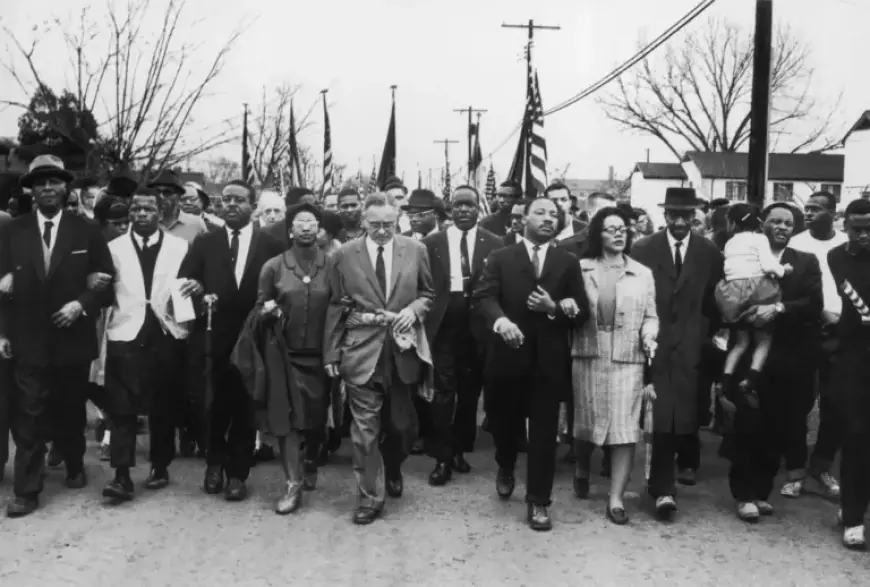
Since the beginning of President Donald Trump’s second term, there has been a concerted effort to dismantle DEI measures. These programs, which have evolved over decades, trace their roots back to the Civil Rights Movement of 1954 to 1968. Initiatives like President Lyndon Johnson’s 1965 Executive Order No. 11246 mandated nondiscrimination in federal employment. This order required compliance reports from federal contractors, ensuring adherence to equal opportunity laws.
The Impact of Executive Orders
In a controversial move, Trump issued an executive order declaring DEI programs “illegal.” He argued that such programs compromised the spirit of existing civil rights legislation. According to Kiesha Bross of the NAACP, diversity efforts extend beyond hiring practices; they encompass providing equitable resources across different federal agencies.
- DEI programs are vital for ensuring representation and support for marginalized groups.
- Major corporations, including Google and Coca-Cola, have dismantled DEI initiatives to align with the administration’s stance.
Flipping the Civil Rights Narrative
The Trump administration’s narrative posits that anti-discrimination measures have become discriminatory themselves. For instance, the administration has signaled plans to end a longstanding “disparate impact” policy, stating that considering race in governance violates the Civil Rights Act of 1964.
Additionally, the Equal Employment Opportunity Commission (EEOC) has launched a campaign inviting white men to file discrimination lawsuits, suggesting that this demographic is being overlooked under current policies. Bross highlights that these maneuvers represent a larger initiative to reinterpret civil rights legislation in a way that diminishes its original intent.
Consequences on Employment and Communities
The attack on civil rights programs has led to alarming unemployment rates among Black Americans. By December 2025, the unemployment rate for Black individuals reached 7.5%, nearly double that of the general populace at 4.4%. Black women, in particular, have been disproportionately impacted.
- In an October 2025 job fair, 80% of attendees were Black women.
- Approximately 300,000 workers were pushed out of the job market within three months in 2025.
Legal Challenges to Voting Rights
Beyond employment challenges, there are efforts to weaken the Voting Rights Act of 1965, currently highlighted by the case Louisiana v. Callais. This case addresses the constitutionality of congressional district maps that inadequately represent Black constituents in Louisiana, contravening Section 2 of the Voting Rights Act.
With the Supreme Court set to hear arguments, there is fear that a ruling could effectively nullify essential protections within the Voting Rights Act. Critics argue that interpreting districting processes as “race blind” disregards historical context and practical realities.
Conclusion
The conservative redefinition of civil rights principles poses a challenge to decades of progress. As the federal government shifts away from foundational principles of equity and representation, communities of color face significant setbacks. Organizations and individuals committed to civil rights must remain vigilant to protect the gains of the past against these radical changes.