Rising Oil Prices Challenge Struggling Trucking Industry

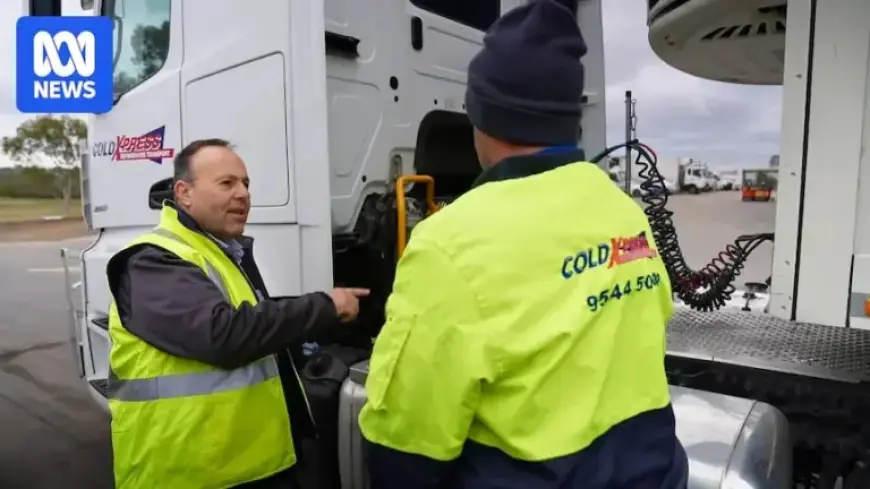
The escalating prices of oil are creating significant challenges for Australia’s ailing trucking industry. Recently, global oil prices surged to approximately $US114 a barrel. This spike is largely attributed to rising geopolitical tensions in the Middle East, which have caused disruptions in critical shipping routes.
Impact of Rising Oil Prices on Trucking
Trucking companies, such as Cold Xpress, are now faced with difficult choices: either absorb rising costs or pass them on to customers. CEO John Di-Losa stated, “We can’t absorb the increase. We are passing the cost on [to our clients].” For every 5 cents that fuel prices rise, his company adjusts invoices by adding 1.55 percent.
In 2025, one in twelve road transport businesses shuttered due to escalating operational costs. According to Mathew Munro, the head of Australia’s Trucking Association, “Fuel is typically one of the top three costs for a trucking business. Any increase in fuel prices has a big impact.” He emphasized that trucking companies need to engage customers about adjusting fuel levies or rates to cope with these rising costs.
Challenges Faced by Trucking Companies
Prior to recent geopolitical events, Di-Losa had already implemented multiple changes within his business to remain competitive. Despite operating a fleet of up to 180 trucks daily, the company struggles with shrinking profit margins. He noted, “Every year we’re growing, but the bottom line seems to be shrinking.”
- Increased operational costs: Mechanical bills, refrigeration expenses, land tax, and site rates are all rising.
- Drastic land tax increases: In 2021, Di-Losa paid $96,000 and $80,000 in land tax for his two sites. These figures jumped to $402,000 and $322,000 last year.
- Diversification efforts: To avoid passing costs to clients, Di-Losa has expanded services, including pick and packing and interstate line haul operations.
According to Patrick Coghlan, CEO of CreditorWatch, last year’s insolvencies within the trucking sector indicated about a 40 percent increase compared to 2024. “They’re under a lot of pressure at the moment,” he remarked, noting the challenges businesses face with rising costs and declining consumer spending.
Economic Implications for Australia
Australian Treasurer Jim Chalmers has warned that consumers may expect price increases due to the economic uncertainties stemming from the ongoing conflict in the Middle East. Coghlan highlighted a substantial rise in defaults by trading partners of freight businesses, signifying growing financial instability.
Profitability and Sustainability in the Industry
Most operators in the trucking industry maintain profit margins of less than 3 percent, providing very little leeway to absorb increased costs. Phil Bullock, a director at NineSquared, underscored that structural issues like driver shortages add to the industry’s ongoing struggles.
With rising fuel costs and operational challenges, the freight and logistics industry—a critical component of Australia’s economy—faces substantial strain. The industry contributes around 8 percent to the national GDP, moving 90 percent of everyday goods. As Bullock noted, “When the trucking industry is under pressure, supply chains are under pressure.”
Government Support and Industry Reform
To address these challenges, calls for government intervention have emerged. Possible reforms could target systemic issues, such as driver shortages and fair contracting practices. The federal government has announced initiatives to combat “sham contracting” and provide support for fair competition within the industry.
As fuel prices continue to rise, it remains critical for the trucking industry to adapt in order to survive amid these economic pressures. Companies must explore new revenue models while engaging with customers to discuss pricing adjustments necessitated by these changes.