Flexible Feline Spines Unlock Secrets to the “Falling Cat” Phenomenon

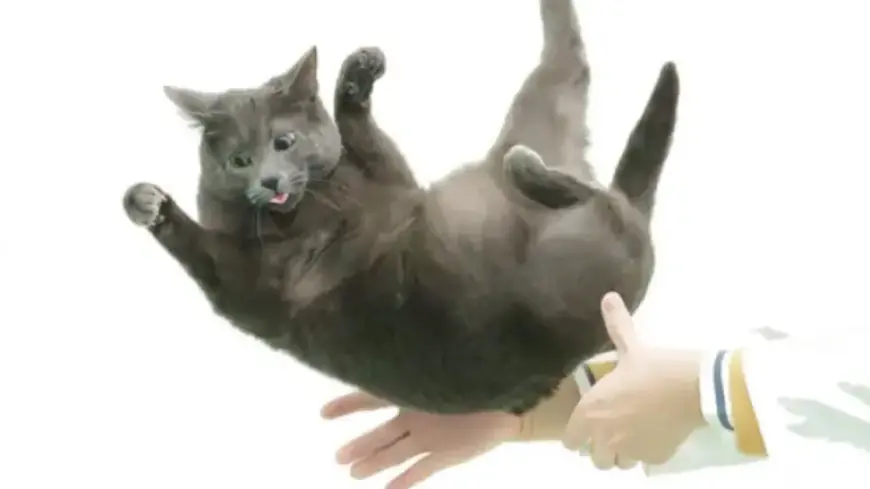
Feline agility during a fall has intrigued scientists for centuries. The phenomenon of cats always landing on their feet, often referred to as the “falling cat” phenomenon, has led to various studies and hypotheses. Recent research adds new insights into how flexible feline spines contribute to this remarkable ability.
The Science Behind the “Falling Cat” Phenomenon
Research into cat dynamics dates back to the 1700s. Insights have evolved, particularly following a recent paper published in the journal The Anatomical Record. This study focuses on analyzing the flexibility of a cat’s spine and how it aids in their unique landing capabilities.
Historical Context
One pivotal moment in this field was in 1894 when French physiologist Etienne-Jules Marey captured high-speed photographs of a falling cat. The images shocked his contemporaries and raised questions about the mechanics of feline falls.
Hypotheses on Cat Recovery Mechanics
Over the years, scientists have proposed several models to explain how cats manage to land on their feet:
- Tuck and Turn: This model suggests that a cat pulls in one set of paws to rotate its body.
- Falling Figure Skater: Proposed by physicist James Clerk Maxwell, this hypothesis states that a cat adjusts its angular momentum by manipulating its paws.
- Bend and Twist: This theory posits that bending at the waist allows for counter-rotation of body segments.
- Propeller Tail: In this model, the tail acts like a propeller to reverse body rotation.
Current Insights and Theories
Greg Gbur, a physicist from the University of North Carolina, Charlotte, previously indicated that the bend-and-twist motion was key to a cat’s ability to right itself in mid-air. However, Gbur’s latest research challenges this assumption. He is reconsidering the significance of the tuck-and-turn motion, suggesting that it plays a more crucial role than previously thought.
Gbur emphasizes the complexity of cat movement. While the bend-and-twist may be fundamental, the use of tails and paws also adds intricate layers to their falling dynamics. Understanding these mechanisms not only reveals the secrets of feline agility but also contributes to advancements in robotics and physical science.
Conclusion
The study of how cats land on their feet continues to evolve, revealing the fascinating flexibility of their spines. Ongoing research into this subject will undoubtedly yield further insights, enhancing our understanding of feline biomechanics and inspiring innovations in various fields.