Trucking Industry Faces Challenges Amid Rising Fuel Prices

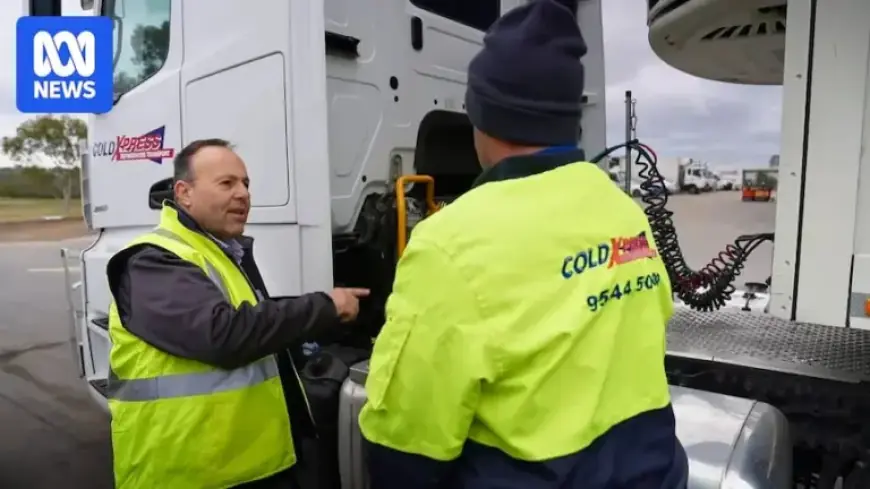
Rising fuel prices are creating significant challenges for Australia’s trucking industry, which is already under strain. Recently, global oil prices surged to approximately $US114 per barrel due to geopolitical tensions in the Middle East, disrupting oil shipments. This situation has forced trucking companies, such as Cold Xpress, to either absorb these rising costs or pass them on to clients.
Impact on Trucking Companies
John Di-Losa, CEO of Cold Xpress, stated, “We can’t absorb the increase,” suggesting that the company must raise prices for clients in response to fuel hikes. Specifically, Di-Losa mentioned that for every five-cent increase in fuel prices, he adds 1.55 percent to invoices.
- One in 12 road transport businesses closed in 2025.
- Fuel costs are among the top three expenses for trucking firms.
- Insolvencies in the trucking sector rose by 40 percent last year.
Mathew Munro, from the Australian Trucking Association, echoed Di-Losa’s sentiments. He emphasized that trucking companies cannot be expected to absorb rising fuel prices. Instead, he suggested that they should reassess their expenses and discuss fuel levy adjustments with customers.
Financial Pressures Within the Industry
Despite operating up to 180 trucks daily, Di-Losa noted that profit margins are declining. He pays nearly $1 million annually in land tax alone, with taxes increasing sharply from $96,000 and $80,000 in 2021 to $402,000 and $322,000, respectively, in 2022. To combat these financial pressures, Cold Xpress has diversified its business model to include additional services.
Economic Consequences of Rising Costs
As a vital component of the national economy, the trucking industry moves 90 percent of goods consumed in Australia. However, rising costs are straining both consumers and businesses. With profit margins dwindling to less than 3 percent for most companies, stakeholders are concerned about sustainability.
- Consumer discretionary spending is decreasing, affecting delivery volumes.
- Australia faces potential price hikes due to the economic fallout from Middle Eastern conflicts.
Patrick Coghlan, CEO of CreditorWatch, reported a significant rise in payment defaults among trading partners, signaling increased insolvency risks for road freight companies. As the industry navigates these challenges, many companies are at a breaking point.
Government and Industry Response
Experts suggest that the government should provide more support to address issues like driver shortages and ensure fair contracting practices. Initiatives like the Closing Loopholes reform, introduced in 2024, aim to protect workers and stabilize the industry.
Ultimately, as the health of the trucking sector deteriorates, the repercussions will extend to consumers, potentially leading to fewer deliveries and rising prices for everyday goods.
The trucking industry is essential to Australia’s economy, contributing approximately 8 percent to the GDP. As cost pressures mount, the focus must shift towards viable strategies for maintaining service and protecting workers within this vital sector.