White House Summit May Influence Arctic’s Future Strategy

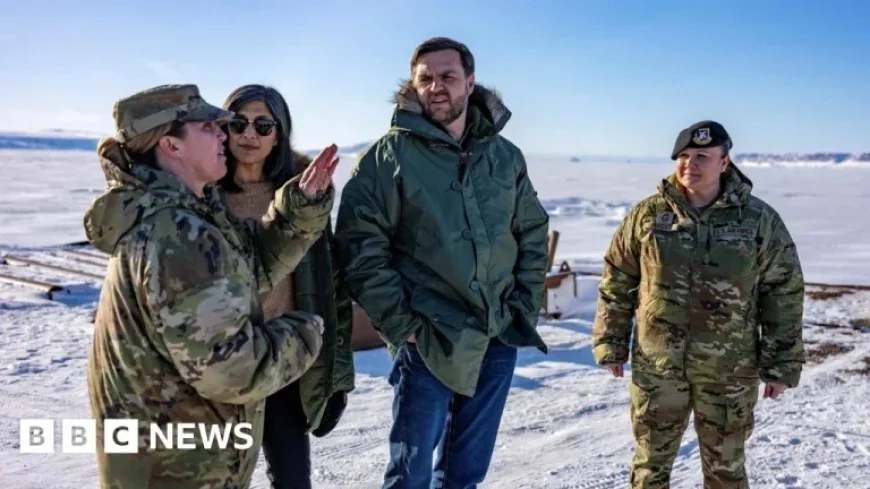
The upcoming White House Summit is set to shape the future strategy of the Arctic, particularly concerning Greenland, the world’s largest island. Hosted by US Vice President JD Vance, the summit includes the Danish and Greenlandic foreign ministers and US Secretary of State Marco Rubio. The discussions focus on Greenland’s sovereignty amidst growing international attention and geopolitical tensions.
Greenland’s Sovereignty at Risk
Concerns are running high in Nuuk, the capital of Greenland, where many citizens feel the nation’s autonomy is under threat. The summit coincides with increased international interest in Greenland, especially from the US. President Donald Trump has stated his intention to acquire the island, claiming it to be vital for national security.
Public Sentiment in Greenland
- Local voices express a strong desire for independence and self-management.
- Amelie Zeeb, a Greenlander, emphasized, “Our country is not for sale.”
- Writer Sivnîssoq Rask articulated fears for the future and the well-being of young families.
With significant US military actions abroad, including in Venezuela, the Greenlanders are increasingly uneasy about their nation’s future. National pride and the desire for sovereignty resonate deeply within the populace.
Geopolitical Dynamics
Greenland is a semi-autonomous territory of Denmark. The Danish Prime Minister Mette Frederiksen warned that any forceful US acquisition would jeopardize the long-standing NATO alliance. The negative impact on US-European relations could be profound, especially given the current geopolitical climate.
NATO’s Strategic Focus
In response to perceived threats from Russia and China, NATO has begun discussions on enhancing military capabilities in the Arctic. Current proposals include:
- Increasing troop deployments.
- Establishing a maritime “Arctic Sentry” similar to the “Baltic Sentry.”
- Improving surveillance and defense initiatives in Greenland and its surrounding waters.
The UK and Germany are leading efforts to bolster NATO’s presence, reflecting heightened security concerns in the region.
Implications of US Interests
Greenland’s geographical significance has long been recognized, with its proximity to both North America and the Arctic. Historically, the US occupied Greenland during World War II to deter Nazi Germany. Today, the island holds potential for economic gains through its rich natural resources.
Future of US-Greenland Relations
While discussions may revolve around security concerns, analysts speculate that the US administration’s interest extends to economic opportunities, particularly in a rapidly changing Arctic landscape. As climate change opens new shipping routes and access to resources, Greenland’s strategic importance escalates.
The upcoming summit represents a critical juncture. Greenlandic Prime Minister Jens-Frederik Nielsen declared a geopolitical crisis, reinforcing that the nation’s preference remains with Denmark over the US. The outcomes of this meeting could redefine the future of the Arctic and the relations between NATO allies.
Greenlanders and surrounding nations are closely monitoring the developments. The decisions made in Washington could have profound implications, challenging not just local sovereignty but also the dynamics of international alliances.