

























Oil Prices Surge on Day 5 of Middle East Conflict

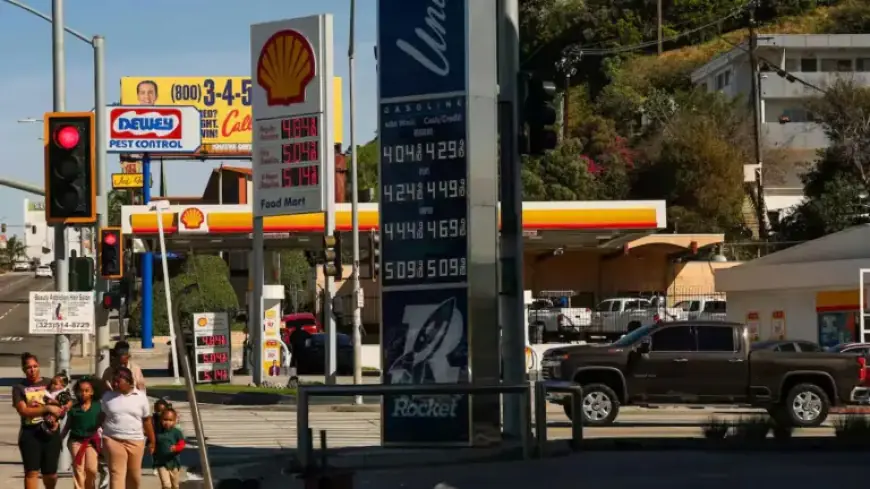
Oil prices experienced a notable increase on Wednesday amid ongoing tensions in the Middle East and disruptions to maritime traffic in the Strait of Hormuz. The conflict shows no signs of de-escalation, contributing to rising concerns in the global oil market.
Current Situation in the Strait of Hormuz
The Iranian Revolutionary Guard Corps claimed full control over the Strait of Hormuz, a critical passage for global oil trade. This proclamation has heightened fears of further disruptions in an already volatile region. Earlier, U.S. President Donald Trump stated that the U.S. Navy could escort oil tankers through the strait if necessary.
Impact on Oil Prices
As of 10:35 GMT on Wednesday, the price of North Sea Brent crude for May delivery surged by 1.81%, reaching $82.87 per barrel. Simultaneously, West Texas Intermediate crude, scheduled for the same month, increased by 1.09% to $75.37 per barrel.
Production Slowdown and Market Reactions
- Oil production in Iraq has faced significant disruptions.
- Reports indicate that Iraq has halted production equivalent to 450,000 barrels per day.
- This production halt has caused stockpiles to reach a critical level.
Analysts suggest that restarting production could take considerable time once it has been interrupted. Arne Lohmann Rasmussen from Global Risk Management mentioned that military convoys in the region could prove more complex to organize than anticipated, reinforcing fears in the market.
International Response and Future Outlook
In response to these developments, the International Energy Agency (IEA) is set to facilitate the opening of strategic reserves in the U.S. and worldwide, which may help mitigate price increases. Additionally, an extraordinary meeting of IEA member countries has been convened to address potential market disruptions.
Gas Prices in Europe
The European gas market has experienced fluctuations as well. Although the European gas price skyrocketed by over 65% early in the week, it showed signs of stabilization on Wednesday. The Dutch TTF futures contract, a key benchmark for natural gas in Europe, declined by 2.54% to €52.91 per megawatt-hour.
Market analysts note that the situation remains fluid, with ongoing concerns over maritime security in the Strait of Hormuz influencing both oil and gas prices. As events unfold, volatility is expected to continue in the weeks ahead.