























Echinus Geyser Erupts Again: U.S. Geological Survey Reports

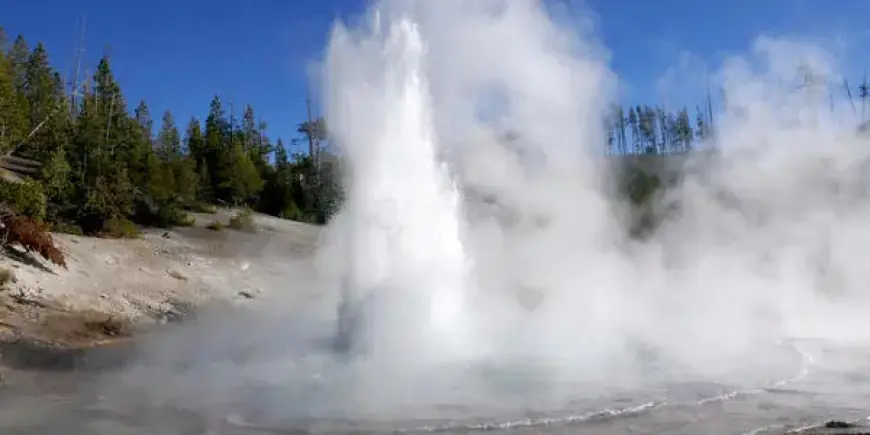
The Echinus Geyser, located in the Norris Geyser Basin of Yellowstone National Park, has recently erupted after a significant period of dormancy. According to the U.S. Geological Survey, this event is noteworthy as Echinus is the world’s largest acidic geyser.
Echinus Geyser: An Overview
Named by mineralogist Albert Charles Peale in 1878, Echinus Geyser is unique due to its acidic water. The geyser pool measures about 20 meters (66 feet) across. Unlike other geysers, its acidic composition results from a mix of acidic gases and neutral waters, not high concentrations of acid. This combination leads to fascinating mineral deposits and a distinct red coloration at the geyser’s edge.
Historical Eruption Patterns
Historically, Echinus Geyser experienced varying eruption activity. In the late 20th century, it was known for its regular eruptions, often occurring with intervals of 40 to 80 minutes.
- Pre-1948: Mostly dormant with occasional eruptions.
- 1970s: Regular eruptions at intervals of 40-80 minutes.
- 1980s-1990s: Eruptions sometimes lasted over 90 minutes, reaching heights of 23 meters (75 feet).
However, by the early 2000s, eruptions became less frequent, prompting temperature monitoring to track any changes in seismic activity. In 2010, sporadic eruptions were documented, followed by a resurgence in 2017.
Recent Eruptions in 2026
Echinus Geyser has shown renewed activity starting in early February 2026. The geyser erupted on February 7, marking the first eruption since December 2020. Subsequent eruptions were recorded on February 9, 12, and 15. Currently, eruptions occur every 2 to 5 hours and reach heights of 6 to 10 meters (20 to 30 feet).
Temperature Monitoring
Temperature spikes in the geyser’s outflow channel signal eruptive activity. The recent data indicates:
- Initial baseline temperatures followed by spikes up to 70 °C during eruptions.
- Surges recorded at 40-50 °C, indicating increased water flow without full eruptions.
Future Predictions
While there is hope for continued eruptions into the summer months, Echinus Geyser is known for its unpredictable activity patterns. Visitors are encouraged to monitor updates via temperature graphs provided by the Yellowstone Volcano Observatory.
As the situation evolves, many await the possibility of viewing continued eruptions in the beautiful Norris Geyser Basin, a reminder of the dynamic nature of this geothermal wonder.