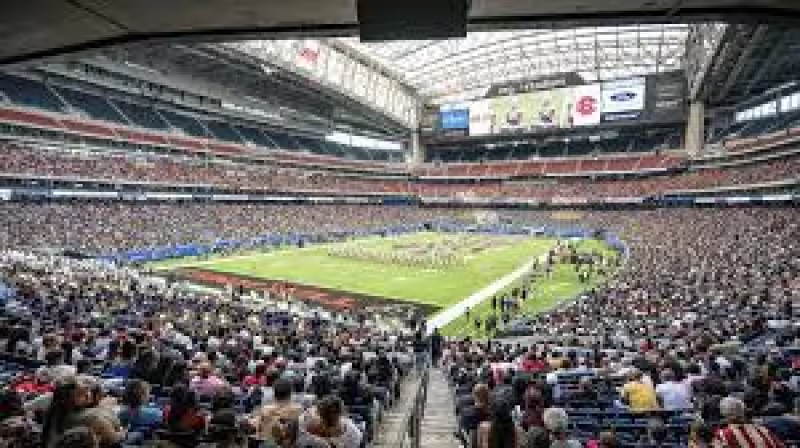
U.S. host cities for the 2026 FIFA World Cup are being asked to pay for transportation, safety and security — including expenses that extend beyond stadium gates — while FIFA retains the bulk of ticketing, media, sponsorship, concessions and parking revenue.
The arrangement is drawing scrutiny now because the tournament is approaching and the financial split is concrete: 11 U.S. host city committees are on the hook for costs that reach into airports, fan-fest sites and vehicles used in the competition, even as FIFA projects more than $11 billion in revenue and says it operates on a $2.7 billion budget.

How that division works in plain terms: FIFA keeps most commercial receipts tied to the event, while local organizers pick up public-safety details, transit operations and the logistics of moving fans and teams. That model is unusual for a World Cup run without a centralized local organizing committee and is part of why city officials are asking pointed questions about what they will get back, financially or in infrastructure gains.
The unease is not new. In the fall of 2021, FIFA executives crisscrossed North America pitching host cities. At SoFi Stadium, Kathryn Schloessman raised her hand and asked, "So, what exactly do we get out of this?" A senior FIFA executive answered, "Hosting this tournament will put your city on the map." The exchange captures the core selling point FIFA used and the skepticism it met on the ground.
FIFA has promoted a report that puts U.S. economic impact at $30.5 billion and the federation’s president has repeatedly defended FIFA’s role — saying Wednesday that "every dollar goes back into football" and that the organization "has to invest in the countries no one else invests in: Sierra Leone, East Timor, Vanuatu…" Even so, local leaders point to softer-than-expected travel and hotel demand so far, which undercuts the brighter revenue projections cities were sold on.

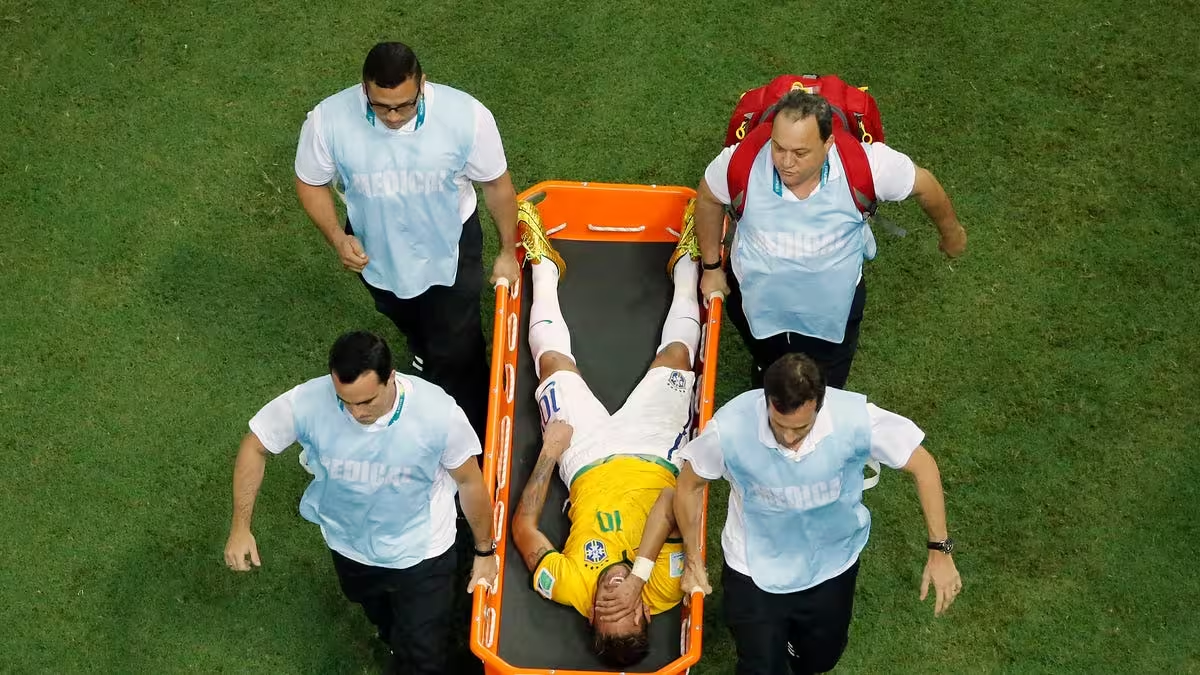

The arithmetic matters. Eleven U.S. host cities will stage matches as part of the expanded 48-team tournament; the overall host field was pared from 23 cities to 16. Some communities will host multiple matches — eight will be played at MetLife Stadium in the New York–New Jersey region — and each venue brings a different local price tag when it comes to policing, transit capacity and fan zones.
Those costs are not theoretical. Responsibilities extend to FIFA Fan Fest locations, airport coordination and vehicles that shuttle teams and officials. For municipal budgets, that means planning for overtime, leasing or repurposing buses and vans, and standing up temporary security measures that remain outside the revenue streams FIFA controls. The result is a separation of risk and reward: FIFA captures the commercial upside; cities absorb most of the operational downside.
That mismatch has already produced friction. In New York–New Jersey and Boston, rows over transit pricing and who pays for expanded service have become headline issues in local preparations. Those fights illustrate the practical consequence of the agreement: even if the World Cup raises a city's profile, the immediate fiscal reality can be added bills to city budgets with no guaranteed direct payback.
The central unanswered question is blunt: how much will each U.S. host city ultimately spend, and what, if anything, will they receive back in direct financial terms? The public figures — FIFA’s revenue projection of more than $11 billion, its $2.7 billion operating budget and the $30.5 billion economic-impact claim — offer broad frames but not the localized accounting cities need to balance their ledgers.
With the tournament months away, the coming weeks and months will test whether host cities can negotiate clearer cost-sharing, find ways to capture more local revenue from fan activity, or absorb losses as the price of staging a global event. For now, the arrangement leaves 11 U.S. host city committees holding the bills while FIFA keeps most of the takings — and leaves the question of net local benefit unresolved.