

























View Rare Comet PanSTARRS Tonight Before It Vanishes Forever

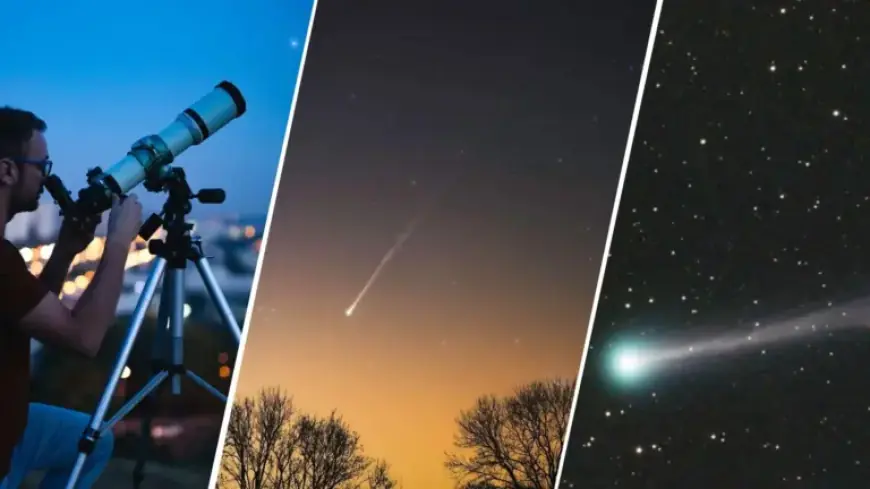
Skywatchers should head away from city lights before dawn on April 17. You can view rare Comet PanSTARRS tonight, so plan accordingly.
Discovery and recent behavior
C/2025 R3 was found in September 2025 by Pan-STARRS telescopes. Those instruments operate near Haleakala summit on Maui.
The comet has brightened noticeably as it moved inward. Observers logged an estimated magnitude of +4.7 in the Comet Observation Database.
How bright and how to see it
A magnitude +4.7 object can appear as a faint blur to the unaided eye from dark locations. The human eye can detect objects down to about magnitude +6.5 under ideal skies.
Use 10×50 binoculars to pick out the glowing nucleus. Long-exposure photography will reveal the comet’s tail and subtle structure.
Viewing window
For the best chance, arrive about 90 minutes before sunrise. Find a location with a clear view of the eastern horizon.
Locate the Great Square of Pegasus rising low in the east. The comet sits roughly five degrees above Algenib, near the square’s lowest star.
Perihelion and the comet’s fate
Comet PanSTARRS reaches perihelion on the night of April 19. That is its closest approach to the sun.
As it nears the sun, solar glare will rapidly wash it out. View it now, before it vanishes forever from Northern Hemisphere skies.
Trajectory after closest approach
After perihelion, the comet will move into Southern Hemisphere skies. It will track through Pisces, Cetus, Eridanus and Orion.
Orbital calculations indicate the object will not return within human lifetimes. Many comet chasers hoped it might become the great naked-eye comet of 2026.
Practical tips
- Choose a dark site away from urban light pollution.
- Bring binoculars or a camera capable of long exposures.
- Use the width of three middle fingers at arm’s length to estimate five degrees.
If you capture images or observations, share them with Filmogaz.com. We welcome reader photos and brief captions for possible publication.