
























Revolutionizing Ranching and Conservation with Cutting-Edge Technology

Ranchers across the American West are turning to digital tools to manage livestock and protect wildlife. Virtual fencing uses collars, transceivers and software to set movable boundaries without miles of wire.
A costly problem and a search for alternatives
Alan and Jared Williams run a cattle outfit based in Delta, Utah, and work ground in southern Idaho. Last spring Alan accepted a federal grant of roughly $250,000 to upgrade fences to wildlife specifications.
New fencing can cost up to $30,000 per mile. In July the Williamses spent $27,000 replacing two sections. Two weeks later elk ran through the new fence and wrecked it. Neighbors alerted Alan when cattle escaped.
How virtual fences function on ranches
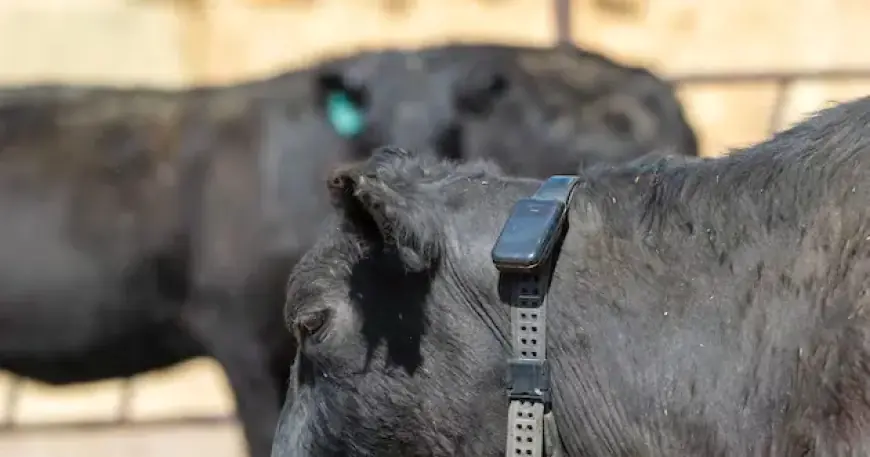
Systems from Nofence, Vence, Gallagher and Halter rely on collars and cloud software. Collars emit light, sound and vibration, and deliver a small shock as a last resort.
Each animal’s position is tracked against virtual boundaries. Ranchers draw, move and remove fences in an app on a phone or tablet.
Adoption pathway
Alan first saw the technology at Husker Harvest Days in Grand Island, Nebraska. He contacted Halter in August and began using collars by December.
Halter collars include solar panels. The company entered the U.S. market in 2020 and has operated since 2016 from New Zealand.
Economic and management benefits
Virtual fencing can reduce costs tied to building and repairing physical barriers. It also saves time spent locating and rounding up livestock.
Halter offers a subscription: collars are provided at no upfront charge. The annual fee is $72 per cow. Required wifi towers cost $4,500 each, plus $600 yearly.
For the Williams operation, initial setup ran about $26,000. He says the collars helped extend grazing by three to four weeks in one season.
Conservation gains and broader impact
About 620,000 miles of fence cross the West on public and private land. Those fences harm migrating ungulates and fragment habitat.
Virtual fencing can remove barriers and create flexible grazing patterns. On public land, cattle can be steered away from riparian zones and sensitive habitat. Colorado projects already use collars to help restore waterways.
PERC published a report titled “Virtual Fencing for Conservation.” Sophie Gilbert, a senior researcher and wildlife ecologist, authored the report. Travis Brammer is PERC’s director of conservation and supports the technology.
Funding and scale
PERC provided almost $500,000 in direct payments for virtual fencing last year. This year PERC plans $200,000, paired with additional funds from the Ricketts Conservation Foundation.
Halter reports growing demand in the Mountain West, with concentrations in Montana, Wyoming and Colorado. The company is approaching 100,000 collared cattle.
Limits and next steps
Cost remains a barrier for some ranches, especially for large herds. Connectivity is another challenge in remote pastures.
Early adopters say the systems still need feature improvements. Ideas include GPS-linked collars and integration with irrigation or forage-monitoring tools.
Many observers call this shift Revolutionizing Ranching and Conservation with Cutting-Edge Technology. The approach offers producers new grazing control. It also opens real possibilities for voluntary, landscape-scale conservation.
Filmogaz.com contacted ranchers, industry representatives and conservation researchers for this report. Corrections: the PERC report was authored by Sophie Gilbert, not Travis Brammer.