

























Boston Marathon Weather: Snow Squalls and the ‘Run for the Hoses’ History

The Boston Marathon began in 1897 and holds the title of the oldest marathon in the United States. It runs each April on Patriot’s Day through New England’s famously changeable spring weather. Runners routinely face wide swings in conditions on race day.
Historical Weather Extremes
Heat and Record Days
Temperatures can shift dramatically between morning and afternoon. Mornings in the 50s can turn to 80s by evening, affecting race strategy and safety.
In 2011, conditions combined a cool Hopkinton start of 46 degrees with a warmer finish of 55 degrees in Boston. A strong tailwind helped produce the course record of 2:03:02, set by Geoffrey Mutai of Kenya.
The following year, 2012, saw a severe heat event. Readings began in the 60s and climbed to the mid- and upper-80s. Organizers urged runners to slow down or defer and medical stations saw many heat-related cases.
The 1976 near-90-degree stretch spawned the well-remembered ‘Run for the Hoses’ history. Spectators sprayed runners with water during the early miles before a cooling seabreeze near the city.
Cold, Rain, and Snow
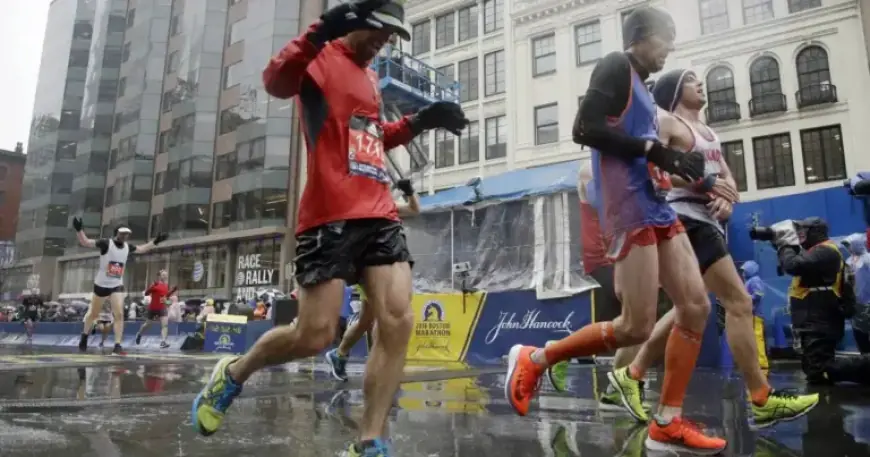
Cold and wet conditions have also defined several editions. In 2018, temperatures hovered in the 30s and 40s with wind-driven rain. Hypothermia became a concern and elites and amateurs alike struggled.
Desiree Linden won that year, becoming the first American woman to win in 33 years. Snow events have occurred as well, with light snow showers reported in 1961 and 1967. Earlier years, including 1908 and 1925, noted minor snow without much accumulation.
Reporters and forecasters sometimes reference Boston Marathon Weather: Snow Squalls when spring storms threaten the route. Precipitation can turn the race into a test of survival as much as speed.
Course Layout and Wind
The point-to-point course makes wind a decisive factor. A strong tailwind can propel fast times, as in 2011. Conversely, an easterly headwind can make the approach to Heartbreak Hill brutal.
Wind direction often determines whether elites chase records or manage damage control. The course layout leaves no shelter for long stretches.
Frequency, Trends, and Preparation
Climate trends suggest more frequent heat challenges in the future. Most years record temperatures above 55 degrees on race day. Significant measurable rainfall occurs in roughly one in five editions.
Runners must prepare for all outcomes. Strategies include layered clothing, deliberate hydration, and pacing adjustments. Race officials also adapt medical and logistical plans accordingly.
Unusual Disruptions
External events have affected participation in notable years. In 2010, the Eyjafjallajökull volcanic eruption in Iceland disrupted European travel. Hundreds of runners could not reach the race because flights were grounded.
Weather remains integral to the Boston Marathon’s identity. It shapes outcomes and creates drama on Patriots’ Day each April. Reporting for Filmogaz.com.