
























Framework CEO Criticizes PC Industry: ‘Own Nothing and Be Happy’ Approach

The PC industry is currently grappling with numerous challenges, spanning supply chain issues to rising costs. Framework, a notable player in this space, has articulated growing concerns about the industry’s trajectory. CEO Nirav Patel highlighted a significant shift in computing paradigms, stating, “The computer in the cloud has increasingly greater economic output than the computer in the hand.” This shift raises questions about ownership in the future of personal computing.
Framework’s Perspective on Cloud Computing
Patel’s comments reflect a broader fear among PC enthusiasts. He warned that the trend favored cloud computing, suggesting that it will dominate as supply constraints persist. “What does this all mean? The industry is asking you to own nothing and be happy,” he warned, reflecting a sentiment shared by many in the PC community.
Impact of the RAM Crisis
The ongoing RAM crisis has led Framework to implement price increases. Recently, they raised costs for their SSDs and prebuilt configurations significantly. Framework’s experience mirrors that of other companies facing similar challenges.
- SSD prices for 4TB or higher have increased.
- The price of the Framework Laptop 16 with 64GB DDR5 RAM went up.
- Asus also adjusted pricing on its new Zenbook A16 from $1,600 to $1,700 shortly after launch.
Market Trends and Future Outlook
Despite growth reported in early 2026, analysts from IDC indicate a troubling trend for the industry. Their recent report suggests that many companies may face challenges moving forward. The positive growth of some PC makers could falter, especially in light of deteriorating economic conditions and geopolitical tensions that add strain to the market.
Isaac Ngatia, senior research analyst at IDC, noted that global logistics challenges are affecting pricing for consumers. This situation is exacerbated by the ongoing war in Iran, which further complicates the outlook for PC manufacturers.
Adapting to Changing Demands
The demand for high-bandwidth memory (HBM) driven by AI datacenter projects has shifted the focus of major semiconductor manufacturers like Samsung, SK Hynix, and Micron. Instead of catering to consumer electronics, these companies are prioritizing the AI sector, leading to skyrocketing prices for components.
- Prices of DRAM and NAND flash have seen significant increases.
- Patel remarked, “Computers are becoming the self-driving car that takes you directly to the destination.”
Looking Ahead
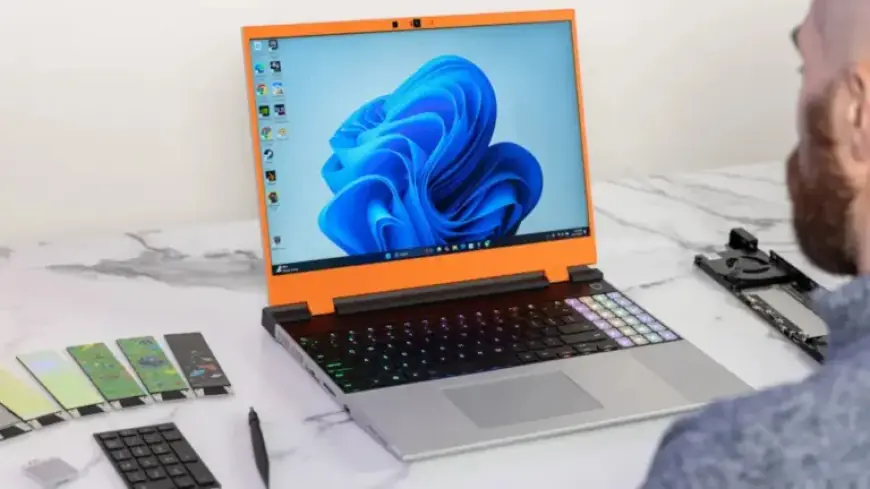
Framework is set to announce new products soon, hinting at a possible integration with Linux to reduce costs. The company’s current models, including the Framework Laptop 13 and 16, offer options for buyers to customize their systems, either by installing Linux or opting for Windows 11.
Ultimately, the landscape of personal computing seems to be shifting toward a luxury model, as ownership becomes a growing concern. The future remains uncertain, but companies like Framework are positioning themselves to adapt to these changes.