





















EV Charger Queues Expose Gaps in Charging Infrastructure

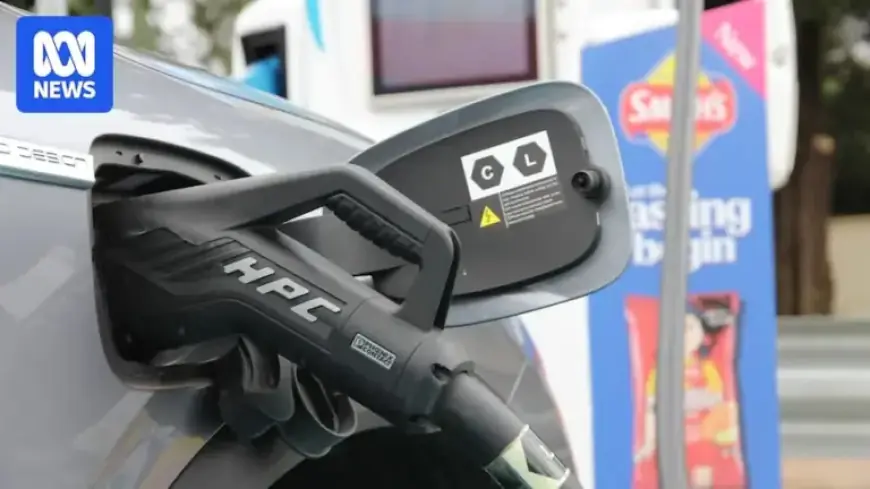
The recent surge in electric vehicle (EV) sales in Australia has highlighted significant gaps in the charging infrastructure, especially in regional areas of New South Wales (NSW). Long queues at charging stations during the Easter school holidays have raised concerns about the adequacy of current resources, particularly outside eastern NSW.
EV Charger Queues during the Easter Holiday
On Easter Monday, a notable line formed at a charging station in Coolac, located approximately 20 kilometers from Gundagai along the Hume Highway. Over 20 vehicles queued for access to one of the site’s 12 EV chargers. This incident exemplified the increasing demand for EV charging amid the growing popularity of electric vehicles.
Charging Infrastructure Shortages
Despite a surge in EV sales, including a record 22.9 percent of total vehicle sales in March 2023, charging stations remain concentrated in coastal regions. Mapping data indicates that areas like Dubbo and Tamworth have limited infrastructure, raising concerns for drivers contemplating longer inland trips. Cameron Dooner, a Wagga Wagga resident who recently acquired an EV, expressed hesitation about venturing into more remote areas due to insufficient charging options.
- Over 20 cars lined up at a charging station in Coolac.
- 22.9% of vehicle sales were electric in March 2023.
- 70% increase in EV sales compared to last year.
- Only 12 EV chargers available at Coolac.
Rising Demand for EVs and Charging Solutions
Recent data from the NRMA indicated a 19 percent increase in the usage of EV chargers in March. Analysts anticipate this trend to continue, particularly as fuel prices rise. Julie Delvecchio, CEO of the Electric Vehicle Council (EVC), remarked on the holiday weekend’s pressure on the public charging network. She noted that planning ahead is crucial for accommodating the needs of EV owners.
Government Initiatives and Future Plans
The Department of Climate Change, Energy, the Environment and Water (DCCEEW) has collaborated on the installation of over 2,000 chargers. An EV Public Charging Master Plan, announced in 2021, aims for EVs to comprise 50 percent of new car sales by 2030 as part of a $209 million investment in charging coverage.
Addressing Infrastructure Gaps
The EVC advocates for a unified national charging strategy to meet the growing demand. They stress the importance of developing reliable charging infrastructure, particularly in rural areas, to prevent drivers from feeling stranded. Gemma Purcell, an EV owner in regional NSW, noted a significant increase in EV usage in her community, although she typically limits her travel distance due to charging concerns.
- The DCCEEW has invested in over 2,000 chargers.
- The goal is 50% of new car sales to be electric by 2030.
- Public charging infrastructure is crucial for long-distance confidence.
As the demand for electric vehicles continues to rise, addressing the challenges associated with charging infrastructure becomes increasingly critical. For now, many EV owners remain cautious about longer journeys until reliable charging solutions are in place, particularly in less populated regions.