























Gary Anderson Unveils Battery Breakthrough to Revolutionize F1 2026

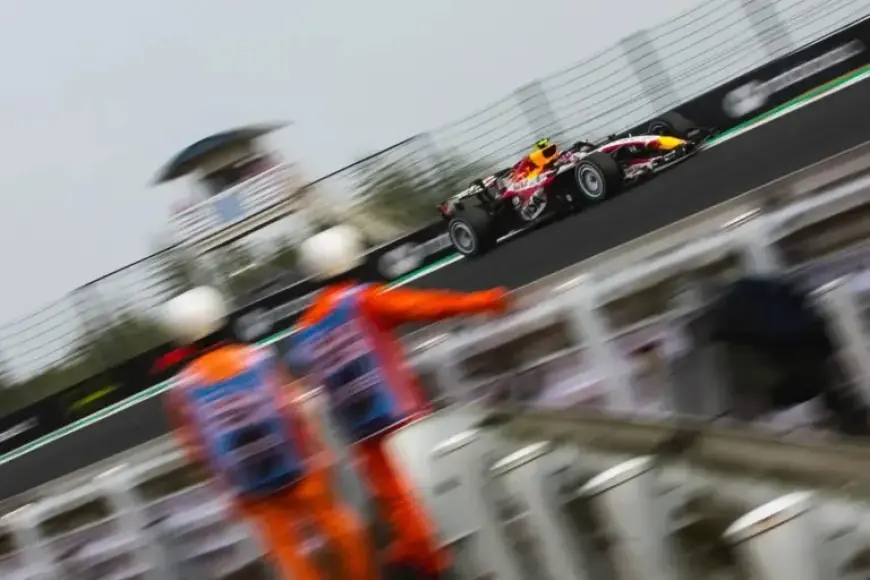
Gary Anderson says a battery breakthrough could help revolutionize F1 2026. He urged urgent rule talks between the FIA, Formula 1 and teams. A crunch meeting is scheduled for April 9 to address these issues.
Context and concerns
Anderson argued drivers must retain clear control over speed and braking. He warned current systems reduce driver responsibility in qualifying. Charles Leclerc has publicly complained about the loss of on-edge qualifying laps.
Anderson recalled a 1977–78 McLaren anecdote to illustrate driver control. He used it to stress that steering and throttle input should be direct and obvious to fans.
Suzuka qualifying as a baseline
Anderson used Oscar Piastri’s 2026 qualifying lap at Suzuka as a reference. GP Tempo provided timing data for the analysis.
Piastri’s lap time was 89.132 seconds. The lap split was 59 seconds at full throttle, 14 seconds at full braking, and 16 seconds at part throttle.
Energy and harvesting numbers
Starting with a full 4MJ battery gives about 11.5 seconds of full power. Current harvesting on that Suzuka lap was about 8MJ per lap. Combined, that yields roughly 12MJ available that lap.
That 12MJ translates to about 34.5 seconds of full-power capability. Drivers request full power for about 59 seconds of the lap, so this equals roughly 58% of the demand.
Present harvesting limits are 250kW for super clipping and 350kW for lift-and-coast or braking. If braking harvested at 350kW for 14 seconds, it would add about 3.5MJ. That would raise total available energy on lap to roughly 7.5MJ when starting battery is included.
Anderson also noted a speed reduction period. For 18 seconds the speed falls even with full-throttle input. Using the ICE to drive the MGU-K in that window could increase harvesting, but would leave only about 100kW from the ICE to propel the car.
Technical comparisons
| kW out | 350 | 300 | 250 | 200 |
|---|---|---|---|---|
| kW in | 250 | 300 | 350 | 350 |
| kW‑in potential (kJ) | 8000 | 9600 | 11200 | 11200 |
| kW in vs kW out (%) | 47% | 65% | 91% | 114% |
Priorities identified
- Closing speeds. Drivers must not be forced to drive artificially slowly.
- Restore on-edge qualifying laps. Qualifying should reward maximum driver effort.
- Prevent drivers running out of power before the end of straights.
Anderson proposed a pre-event power request process. Teams would submit circuit power requests 28 days before an event. The FIA would average these and publish a limit 21 days before the race.
Proposed solutions
- Raise the super clipping limit from 250kW to 350kW to reduce lift-and-coast reliance.
- Limit MGU-K deployment to 200kW to balance output and input.
- Consider stricter recharge limits, with options from 9MJ down to 6MJ.
- Keep a 4MJ battery pack specification while clarifying recharge allowances per circuit.
- Allow active aero activation whenever the driver is above 95% throttle and below 5% braking.
- Resist raising fuel flow limits for 2027. Instead, seek better harvesting methods.
- Explore additional harvesting from front-axle motors and a small MGU-T. Standard suppliers would supply these units.
- Simplify the regulations to make them clearer for teams and fans.
Anderson estimated cutting MGU-K deployment could reduce peak power from near 1,000 horsepower to about 800 horsepower. He suggested this would cost roughly two seconds in lap time. He judged this preferable to current lift-and-coast tactics.
He also proposed operational safeguards for super clipping. One idea was a button-activated system that warns following drivers. Another idea restricted super clipping to straights and required two car widths of lateral space.
The April 9 meeting will test these proposals. Anderson hopes the changes will restore driver control and improve spectacle.
This report is published by Filmogaz.com.