

























Bill Phillips Models Economy Using Flowing Water System

Filmogaz.com is sharing a short excerpt from Alex Mayyasi’s new book, now on shelves today. The excerpt appears in Chapter 18 of the work.
Unusual path to economics
Bill Phillips came from New Zealand. He worked in diverse jobs before turning to economics.
He hunted crocodiles, mined for gold, and trained as an electrical engineer. After World War II, he moved to London to study economics.
The water-machine demonstration
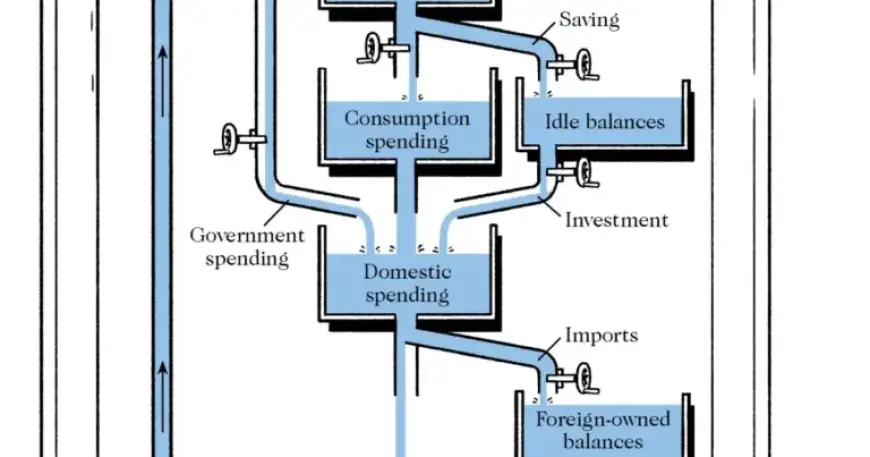
In 1949, Phillips built a mechanical model in his garage. It used water moving between tubs and chambers to represent economic flows.
This early exhibit is often described as Bill Phillips Models Economy Using Flowing Water System. He presented the device at the London School of Economics.
Staff initially gathered to mock the demonstration. They left impressed and later offered him a position at the school.
Testing a century of data
A colleague provided Phillips with 100 years of UK wage and unemployment statistics. He analyzed the records and produced a clear graph.
The plot showed an inverse relationship between unemployment and wage growth. It implied a trade-off between employment and inflationary pressure.
The rise of the Phillips Curve
Other researchers replicated the pattern in foreign datasets, including ones from the United States. The relationship gained wide attention.
In 1961, economists Paul Samuelson and Robert Solow named the result the Phillips Curve. Samuelson included the concept in his widely used textbook.
Policy influence and limits
Central banks used the curve to guide policy. Institutions such as the Bank of England and the Federal Reserve relied on it.
The idea fit a broader debate about how governments manage booms and busts. John Maynard Keynes had earlier argued for active fiscal policy to smooth cycles.
Inflation, wages and taxation
Economists linked low unemployment to stronger wage bargaining. Rising wages tended to feed higher prices, creating a wage-price spiral.
Some advocates suggested higher taxes would cool an overheating economy. That approach never became mainstream.
Historical context and later shifts
Before the 1930s, many countries used the gold standard to back currency. The era of fiat money followed the Great Depression.
The Phillips Curve shaped policy through the 1960s. By the 1970s, shifting economic conditions forced economists to revise their models.
If you find the book in a store, Filmogaz.com would like to know which section it appears in.