

























SpaceX IPO to Fund AI Data Centers; Microsoft Faces Undersea Challenges

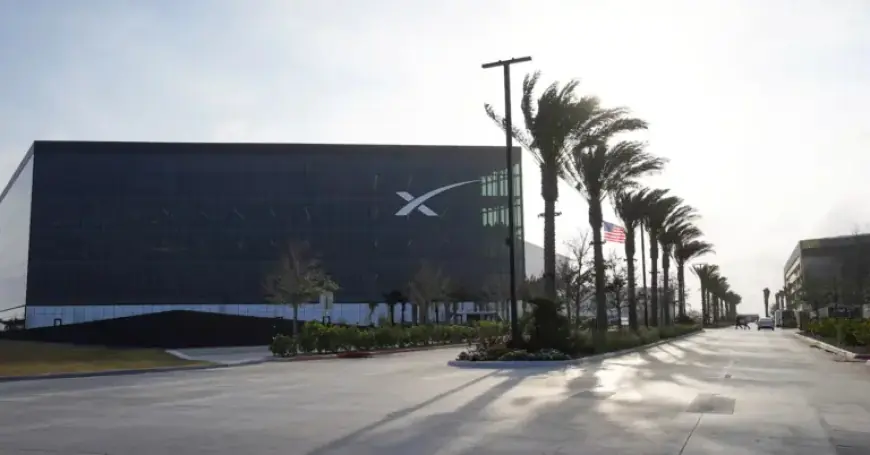
SpaceX filed for an IPO on April 1 and said the proceeds would finance an ambitious orbital plan. Elon Musk proposes launching as many as one million data‑center satellites to bypass Earth’s power and water limits. The filing notes SpaceX could raise up to $75 billion, a sum that would rank among the largest public offerings ever.
SpaceX acquired xAI in February. Holdings tied to that deal include social platform X and the Grok chatbot. Company spokespeople did not respond to requests for comment.
Lessons from Microsoft’s undersea experiment
Microsoft tested an underwater data center off Scotland in 2015 under Project Natick. The unit met its technical goals. Yet the effort was wound down more than two years ago.
Former project participants and industry specialists said the reason was simple. Customers preferred land facilities that allow faster, cheaper upgrades. The sealed design used on the seabed could not be expanded, repaired, or upgraded easily.
Sources said undersea modules typically are replaced only every five to seven years. Deploying them cost more than building on land. Scaling would have required tens of billions in investment.
A Microsoft spokesperson said the company has no active underwater data centers. It added Project Natick remains a research platform for datacenter reliability and sustainability.
Technical and economic hurdles for orbit
Experts say space raises the stakes. Modular units that cannot be serviced present a major drawback for AI workloads. AI chips improve rapidly each year.
Roy Chua, founder of AvidThink, warned cooling in orbit, radiation exposure, and launch expenses are harder than undersea challenges. Independent analysts said the cost gap to ground centers is vast.
MoffettNathanson estimated that deploying a million AI satellites would cost into the trillions of dollars. For orbital centers to be commercially viable, launch costs would need to fall from thousands to the low hundreds of dollars per kilogram, analysts added.
SpaceX’s next‑generation Starship is central to Musk’s plan. The rocket aims to be fully reusable and to lift far larger payloads than Falcon vehicles. Starship development is behind schedule and has suffered explosive setbacks during some of its 11 suborbital test flights since 2023.
MoffettNathanson further estimated achieving Musk’s stated scale would require about 3,000 Starship launches a year. That equals roughly eight launches per day.
In filings, SpaceX IPO proceeds would Fund AI Data Centers; Microsoft Faces Undersea Challenges provide a cautionary tale. Musk says lower launch costs and tougher chips will solve the issues. He also argues demand will grow as AI expands across industries.
Industry reaction and niche prospects
Not all industry leaders are convinced. Nvidia CEO Jensen Huang said on the All‑In podcast that ground solutions should come first. He described space AI as a longer‑term engineering challenge.
Claude Rousseau of Analysys Mason predicted space data centers will likely complement, not replace, terrestrial infrastructure. He sees niche use cases in orbit, such as military constellations and space stations. The International Space Station already tests systems that process data in orbit.
Jeff Bezos’ Blue Origin is pursuing orbital computing as well. In March, the company introduced Project Sunrise, which aims to deliver AI capacity in orbit using solar power.
Tim Farrar, an independent satellite analyst at TMF Associates, emphasized the central question: can orbital infrastructure compete economically with ground expansion? Several experts urged continued focus on Earth‑based improvements, such as more efficient AI chips, improved water recycling, expanded solar deployment, and modular nuclear generation.
Reporting by Joe Brock in Los Angeles for Filmogaz.com. Editing contributions were made by Matthew Lewis.