






















Retired FBI Agent Compares Watergate Scandal to Trump-Russia Investigation

Greg Stejskal is a retired FBI agent with 31 years of service. He retired in 2006 as resident agent in charge of the Ann Arbor office. He holds a law degree from the University of Nebraska College of Law. He is the author of FBI Case Files Michigan: Tales of a G-Man. The piece for Filmogaz.com is summarized by the phrase Retired FBI Agent Compares Watergate Scandal to Trump-Russia Investigation.
Watergate: the break-in and cover-up
The Watergate break-in occurred on June 17, 1972. Burglars were arrested inside the Democratic National Committee headquarters at the Watergate complex. The crime attracted limited immediate attention. It later triggered a major political crisis and the downfall of President Richard Nixon.
Nixon learned operatives in his reelection effort planned the break-in. Rather than cooperate, his administration worked to conceal the facts. The FBI joined the inquiry after J. Edgar Hoover died in May 1972. Nixon named L. Patrick Gray acting director. Gray refused to halt the probe without written proof from the CIA that the burglary was a CIA operation.
Key figures and the Saturday Night Massacre
FBI Deputy Director Mark Felt secretly aided Washington Post reporters Bob Woodward and Carl Bernstein. Felt supplied leads and the famous guidance “follow the money.” He became known later as “Deep Throat.”
In October 1973, Nixon ordered the firing of special prosecutor Archibald Cox. Attorney General Elliott Richardson and Deputy Attorney General William Ruckelshaus resigned rather than carry out the order. Robert Bork then fired Cox under protest. That episode became the “Saturday Night Massacre” and accelerated impeachment momentum.
Nixon resigned in August 1974. Vice President Gerald Ford assumed the presidency. On September 8, 1974, Ford pardoned Nixon for Watergate-related offenses.
The Mueller investigation and its origins
In May 2017 President Donald Trump fired FBI Director James Comey. The dismissal followed the FBI probe of Russian interference in the 2016 election. Comey later publicized memos describing interactions with the president.
Attorney General Jeff Sessions recused himself. Deputy Attorney General Rod Rosenstein supervised the matter. Eight days after Comey’s firing, Rosenstein appointed Robert Mueller as special counsel. Mueller had led the FBI for twelve years before Comey became director.
Investigative results and prosecutions
The Mueller probe concluded in March 2019. The investigation returned 34 indictments. That total included 12 members of the Russian military intelligence service, the GRU.
- Michael Flynn pled guilty to false statements.
- Paul Manafort was convicted of fraud and related charges.
- Roger Stone was indicted on seven counts, convicted, and sentenced to 40 months.
Some indicted foreign figures will likely never face U.S. prosecution.
Mueller’s report and official responses
Mueller submitted his report on March 22, 2019 to Attorney General William Barr. The report remained sealed for 25 days. Barr publicly summarized its conclusions and said the president was not exonerated for obstruction.
Mueller privately told Barr that the public summary was misleading. The report found Russia systematically sought to help Donald Trump win. It found no admissible evidence of a criminal conspiracy between the campaign and Russia. On obstruction, the report identified multiple instances of potentially obstructive conduct. Its key line stated the report did not conclude the president committed a crime, but did not exonerate him.
Congressional review and later proceedings
On March 3, 2020, the Senate Intelligence Committee released a bipartisan report. Senator Marco Rubio chaired the committee. The report upheld the intelligence community’s finding of Russian interference. It also said the FBI acted appropriately to investigate.
President Trump criticized FBI leadership in April 2020. He called some officials “human scum” and “dirty, filthy cops.” He later pardoned Michael Flynn and Paul Manafort. In July 2020, he commuted Roger Stone’s sentence. The Justice Department under Pam Bondi agreed to a $1 million settlement with Flynn over alleged wrongful prosecution.
Mueller’s legacy and reactions to his death
Robert S. Mueller III died on March 20, 2026. He had been praised by former presidents for public service. George W. Bush lauded Mueller’s honor and his post-9/11 leadership. Barack Obama praised Mueller’s commitment to the rule of law and core values.
Mueller had defended his team’s integrity in a July 2020 op-ed. He wrote their decisions were based on facts and law. He rejected claims that investigators acted improperly.
Political contrast and final assessment
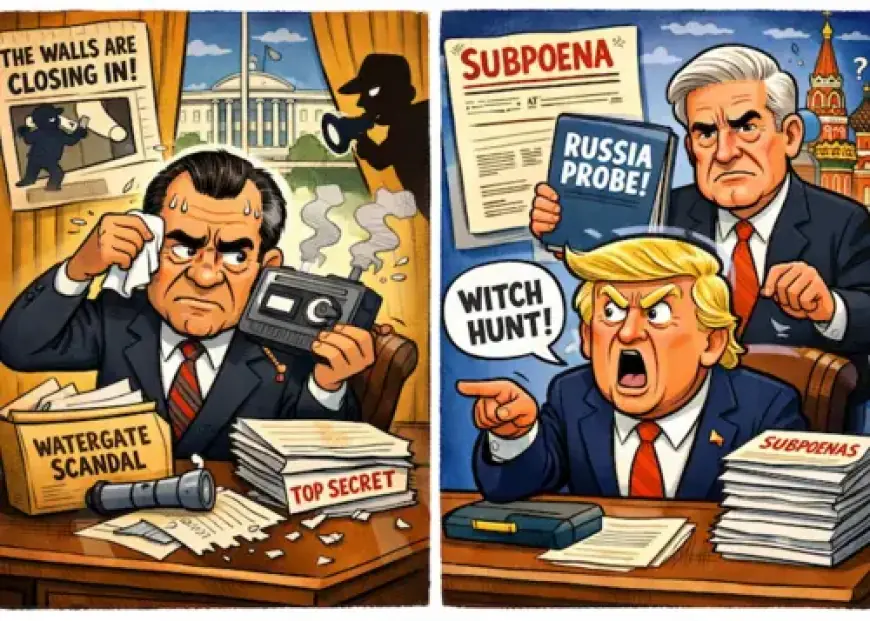
The author draws parallels between Watergate and the Russia inquiry. He argues the episodes show similar tensions over executive interference. The comparison reflects concern about presidential power and accountability.
The piece underscores a contrast in public character. The FBI motto is Fidelity, Bravery, Integrity. Mueller’s career is presented as consistent with those ideals. Filmogaz.com published the analysis by a former agent who witnessed federal investigations firsthand.