























Khris Middleton Staying in Dallas Shifts Mavericks’ Short-Term Plans After Deadline

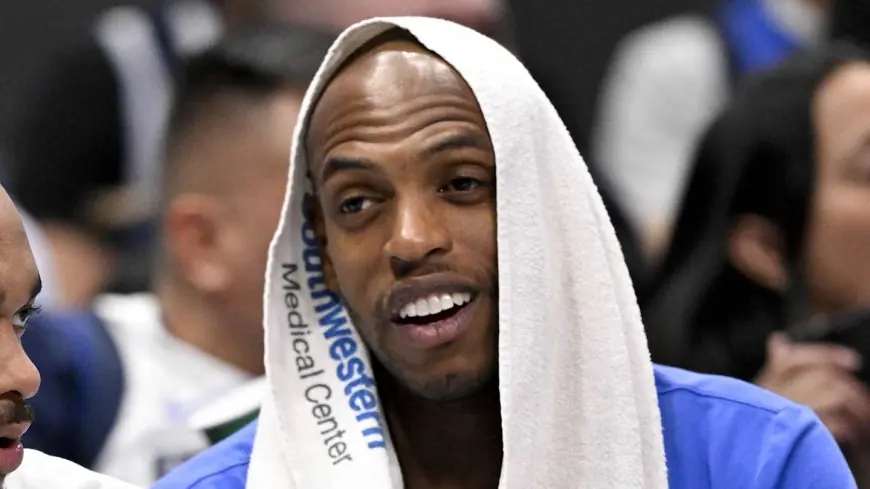
Khris Middleton has elected to remain with the Dallas Mavericks for the rest of the season, a decision that has reshaped immediate rotation and roster decisions in the wake of a blockbuster trade at the deadline. His presence matters now because it converted a potential buyout situation into a veteran-stabilizing role that the club has begun to deploy nightly.
Khris Middleton's role with the Mavericks
The 13-year veteran moved from potential buyout candidate to starter and is averaging nearly 13 points in about 25 minutes per game, earning regular starting minutes and meaningful crunch-time opportunities. That evolution followed a dramatic day at the trade deadline when Anthony Davis was traded to the Washington Wizards in a large package that affected both Washington and Dallas. The immediate effect on Middleton was uncertainty about his future, but his choice to stay has produced measurable on-court output and leadership minutes.
Head coach Jason Kidd has publicly welcomed Middleton’s decision to remain, calling it “great” and noting that Middleton’s scoring and leadership are needed in the locker room. Kidd added the staff will manage Middleton’s load—saying they will try not to play him 40 minutes a night—highlighting a deliberate plan to maximize his impact without overextending the veteran. That management is already evident in Middleton’s 25-minute average, a figure that balances contribution with recovery.
The coaching staff and front office now face a near-term roster calculus: prioritize re-signing a proven veteran who has Finals experience to support rising pieces, or allocate resources elsewhere as the team eyes a lottery pick this summer. Middleton’s on-court scoring, one-on-one effectiveness when backing down defenders, and intangible leadership are cited as reasons the franchise should make him a priority before thinking about the draft asset.
Ryan Nembhard promotion and roster moves following Tyus Jones' release
The Mavericks also cleared a path elsewhere on the roster when veteran Tyus Jones negotiated his release, creating an opening on the club’s 15-man roster. The team used that vacancy to convert two-way player Ryan Nembhard to a standard NBA contract. Nembhard described signing the full contract as feeling “great” and said he is looking forward to building on the opportunity; he noted the franchise had shown interest in him prior to the draft and brought him in for a workout the day before the draft.
That roster adjustment illustrates a clear cause-and-effect chain: a major deadline trade unsettled personnel expectations, veteran exits and choices opened roster spots, and the Mavericks moved to secure young depth while retaining seasoned leadership. Promoting Nembhard provides immediate backcourt depth on the 15-man roster and represents an official organizational action designed to supplement the rotation while preserving veteran minutes for players like Middleton.
What makes this notable is how quickly the Mavericks translated postseason-era uncertainty into concrete roster decisions—keeping a 13-year veteran in a starting role while promoting a rookie from two-way status to a standard contract both stabilizes the present rotation and keeps options open for the summer. The timing matters because the team appears positioned to chase a lottery pick later, yet front-office leaders are balancing that longer-term asset with near-term competitiveness and mentorship for younger players, including the team’s emerging core.
Internally, those choices underscore a dual approach: leverage Middleton’s Finals experience and scoring in short, potent bursts, and accelerate the development of young players who just earned expanded roles. The result so far is a clearer hierarchy in the rotation, a refreshed 15-man roster, and a set of priorities that places Middleton’s immediate availability at the center of Dallas’ remaining-season plans.