






















Senegal at a Risky Crossroads: PM Sonko Says Pastef Could Quit Government if President Diverges from Party Vision

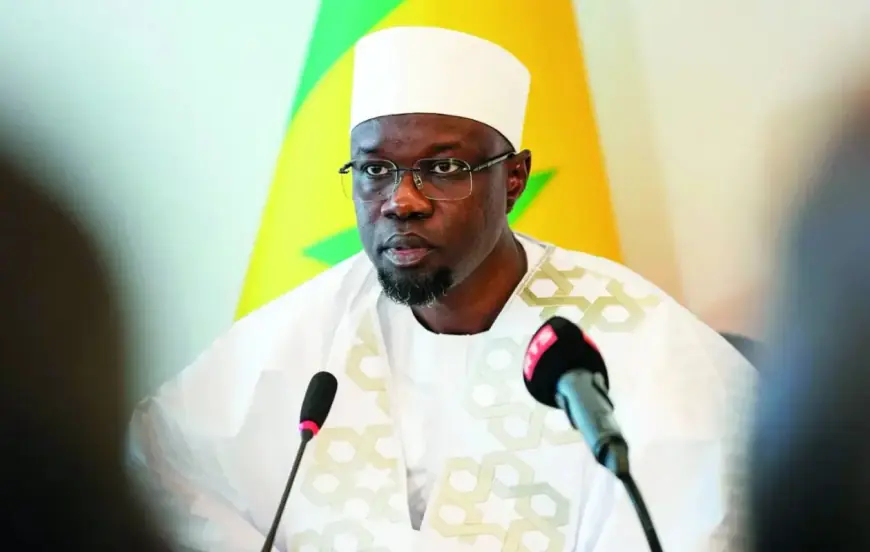
Why this matters now: senegal faces simultaneous political and financial fragility. Prime Minister Ousmane Sonko has signaled a willingness to pull Pastef out of government and return to opposition if President Bassirou Diomaye Faye breaks from the party's vision, a threat that lands against a backdrop of university violence, stalled IMF negotiations and a previously frozen $1. 8 billion lending programme.
Risk and uncertainty in Senegal’s ruling arrangement
Here’s the part that matters: a split would change who governs and how fast the country can secure external cash. Sonko framed the relationship as workable when the president is aligned with the party; when alignment breaks down, he described the current set-up as a "soft power-sharing" arrangement that could move to "more difficult cohabitation" or see Pastef revert to opposition. Pastef holds a parliamentary majority, and Sonko said the party "has no problem with either of these options. "
Tensions are high after violence at universities and long, drawn-out talks with the International Monetary Fund as senegal battles to raise cash and negotiate a new lending programme. The IMF froze a $1. 8 billion programme in 2024 after Sonko's government uncovered misreported debts by the previous administration estimated at more than $11 billion. Any suggestion of discord raises the possibility of further delays in negotiations with the IMF.
What Sonko actually said and the coalition fault lines
Speaking in a live broadcast, Sonko said the debate over the two leaders' relationship would be moot if the president is aligned with his party; otherwise, they would manage differences and seek common ground. He warned that a clearer break would force a choice between a strained cohabitation or an opposition return for Pastef. The warning follows an episode in November when the two camps issued conflicting statements over the leadership of the ruling coalition.
Sonko's political arc in recent years features a notable pivot: he emerged as a popular opponent under the previous administration, was barred from running in the 2024 presidential election because of a legal conviction, and selected little-known Bassirou Diomaye Faye — a longtime aide and Pastef member — as his replacement candidate. After that election outcome, Faye appointed Sonko as prime minister.
Coalition controversies: newcomers, mergers and party claims
Sonko has stressed he is not opposed to coalitions in principle. He insisted Pastef will form alliances but will not accept attempts by others to lead Pastef when the party already claims political weight from the ballot box, especially from the 2024 elections. He argued some actions are designed to create internal divisions rather than strengthen unity, and he identified certain newcomers from the 2024 campaign as the primary agitators — saying that "95% of the noise comes from them. "
The party points to a history of mergers since 2015 and ongoing collaborations; it highlighted examples of constructive partnerships with figures like Cheikh Tidiane Dièye and Aïda Mbodj and noted that it has granted parliamentary and ministerial positions to allies. A brief note in the original coverage even suggested the use of emojis in comment threads, an odd editorial aside included in the same write-ups.
What's easy to miss is that the internal framing — mergers since 2015 and the emphasis on ballot-box legitimacy from 2024 — is being used to justify a hard line against perceived newcomers, not simply to defend coalition practice.
Debt, markets and the IMF: the tangible fallout
Financial signals have already reacted to political noise. When Sonko announced that the IMF had proposed a debt restructuring which he said Senegal would not accept, the country's international bonds moved sharply lower at the time. The previously mentioned 2024 freeze of a $1. 8 billion programme followed the discovery of misreported debts estimated at more than $11 billion by the prior administration. Those facts underline why political cohesion — or its absence — matters directly for negotiations and market access.
Micro Q&A: quick clarity on the essentials
- Could Pastef actually quit the government? Sonko said he was willing to take Pastef out of government and return to opposition if President Faye breaks from the party's vision; he framed the options as difficult cohabitation or a reversion to opposition.
- What sparked the visible strain? Notable flashpoints include November conflicting statements about coalition leadership and Sonko's public remarks on IMF debt restructuring that moved markets; Sonko also attributes much of the current noise to newcomers from the 2024 elections.
- Who are the principal actors named in the coverage? Ousmane Sonko, President Bassirou Diomaye Faye, Cheikh Tidiane Dièye and Aïda Mbodj are identified in the material; Pastef is the party at the center of the dispute.
Other headlines and financial notes that appeared alongside the coverage
Several unrelated items were included in the same material: the S&P 500 was said to be on track for double-digit earnings growth with more than half of companies having reported Q4 results; a public figure named KC Concepcion had spoken about a speech impediment multiple times ahead of the 2026 NFL Draft; with power conferences finishing regular seasons, 15 conference tournaments were noted as getting underway; Nvidia's fourth-quarter results were highlighted as due after the closing bell on a Wednesday; and a historical gold-price comparison observed that $1 million in 1900 could buy 53, 000 ounces of gold, which would be worth $278 million today.
Contributors: Portia Crowe and Ngouda Dione; edited by Alison Williams. Email: info@devdiscourse. com Phone: +91-720-6444012, +91-7027739813, 14, 15.