
























Pokémon Presents sets the 2026 agenda with Gen 10 reveal and a Switch 2 pivot

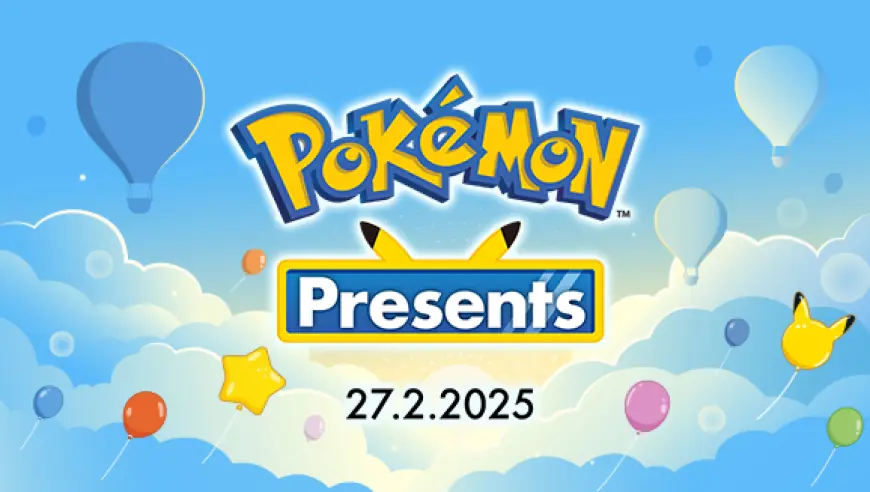
Pokémon’s latest Presents, aired Friday, Feb. 27, 2026 at 9:00 a.m. ET for the franchise’s 30th anniversary, delivered the clearest signal yet of where the series is headed: Generation 10 is real, it’s called Pokémon Winds and Pokémon Waves, and it’s being built around the capabilities—and the commercial gravity—of Nintendo Switch 2. The show also doubled down on a second, equally deliberate strategy: keep the broader ecosystem busy with steady updates, re-releases, and competitive-focused projects while the next mainline generation takes a longer runway.
The headline, in plain terms, is timing and platform. Winds and Waves is set for 2027 rather than the near-term cadence fans have gotten used to, and that delay reads less like hesitation than an attempt to buy polish, performance headroom, and a cleaner global launch.
Winds and Waves makes Gen 10 official, with new starters Browt, Pombon, and Gecqua
The anchor reveal was Pokémon Winds and Pokémon Waves, the paired Gen 10 mainline titles. A short first look showed a tropical, island-rich setting with towns hugging the waterline and a travel-forward vibe that fits the title: movement is the identity, not just the backdrop. The most instantly sticky part of the reveal, as always, was the starter trio—Browt, Pombon, and Gecqua—now already being parsed for typing clues, evolution predictions, and the usual “which one is secretly the best” arguments.
Browt lands as the early partner for players who like their starter to read as earnest and capable from the first cutscene. Pombon is engineered to go viral: compact silhouette, friendly expression, and a name that practically invites nicknames. Gecqua rounds out the trio with a sleeker, amphibian-like profile that feels built for the game’s implied water travel and agility. None of the starters’ final evolutions were shown, which is no accident; the franchise has learned that holding those back keeps the community’s imagination doing free marketing for months.
The other major point is the long gap to 2027. For fans, that can feel like a drought. For the people building the game, it’s an argument: if the series wants larger spaces, richer traversal, and fewer technical compromises, it needs time. Winds and Waves being framed as a Switch 2 project also raises expectations immediately—because once you sell “new hardware” as the answer, you inherit less patience for old problems.
Nintendo Switch 2 becomes the center of gravity for the whole slate
The presentation’s subtext was that Switch 2 isn’t just a new box; it’s a new organizing principle. Putting Gen 10 on the new system turns Pokémon into a hardware driver again, the way it has been at key moments in the franchise’s history. It also reshapes the conversation around accessibility: a portion of the audience will now experience “the new Pokémon” as inseparable from a console upgrade.
That’s a calculated trade. The upside is obvious—more power, more headroom, more stability, and a cleaner baseline for the next generation’s design ambitions. The downside is equally obvious—friction. Every exclusivity move creates a group of fans who feel pushed rather than invited. The series can absorb that tension, but only if Winds and Waves justifies the leap with a visibly smoother, more confident experience.
The presentation supported that framing with a parallel beat of nostalgia and bridge content: re-releases and legacy titles designed to keep long-time players engaged, and to give newer players a way to explore past eras without scavenger-hunting old hardware.
Classic re-releases and a GameCube-era return keep the nostalgia engine running
Alongside the Gen 10 reveal, the show leaned hard into the anniversary mood. Pokémon FireRed and Pokémon LeafGreen were positioned as accessible, modern-era downloads, with integration that makes it easier to carry collections forward. Separately, a notable GameCube-era title, Pokémon XD: Gale of Darkness, was announced for a March 2026 return via Nintendo’s classic library offering. That’s not a mainline headline, but it matters for a different reason: it’s the kind of deep-cut release that signals the company is willing to mine its back catalog beyond the most obvious hits.
This nostalgia push isn’t just sentiment. It’s a retention tool. The longer Gen 10 takes, the more important it becomes to keep players feeling like they’re still “in” the Pokémon moment—opening older adventures, rebuilding teams, and reconnecting with eras they missed.
Pokémon Champions and the competitive lane: one game, one job
Another key announcement was Pokémon Champions, described as a battle-focused experience slated for April 2026 on Switch consoles, with a mobile version planned later. The significance is structural: Champions is a bet that competitive battling can stand on its own without dragging the rest of a sprawling RPG behind it.
If that works, it solves a long-standing tension inside Pokémon’s modern identity. Some players want story and exploration. Others want clean, standardized battles with fast matchmaking and clear rules. Trying to satisfy both audiences inside one mainline game creates compromises. A dedicated battle client can reduce those compromises—if it’s supported, balanced well, and treated as a real pillar rather than a side project.
The rest of the ecosystem: constant motion while Gen 10 cooks
Much of the runtime, as expected, went to live-service updates: new events, time-limited missions, and anniversary campaigns across multiple games. That’s the business reality of the franchise in 2026. A Presents broadcast isn’t only a hype machine for the next big RPG; it’s also a coordination moment for a network of games that all compete for the same attention.
The deeper logic is simple: if Winds and Waves is a 2027 payoff, then 2026 must be a year of momentum management. Keep players logging in. Keep them collecting. Keep them battling. Keep them nostalgic. Keep them curious. That way, when the first real gameplay deep dive for Gen 10 arrives, the audience is already warm.
What happens next: the five tells that will define the Winds and Waves cycle
The next months will be shaped by a few predictable triggers. First, the region’s full identity—its name, cultural inspiration, and map structure—will be the anchor that makes Winds and Waves feel distinct beyond its title. Second, the game’s exact open-world structure will matter more than any single new monster: seamless world, segmented zones, or hybrid design will determine how it plays and how it performs. Third, the starter evolutions will surface, and the tone of fandom will instantly shift from curiosity to combat over taste. Fourth, the multiplayer question will sharpen: a travel-forward, island-heavy game invites social exploration, but delivering that smoothly is harder than teasing it. Fifth, Switch 2 performance will be the unspoken headline: stable frame rate and responsive traversal will be the proof that this generation is a reset rather than a repeat.
For now, Pokémon Presents did what it needed to do. It answered the biggest question—what’s next—and replaced it with a better one: if Gen 10 is getting more time and new hardware, will Winds and Waves finally feel like the fully realized Pokémon world fans have been waiting for?